
Change is one of the few experiences that every person shares. Careers shift, relationships evolve, unexpected challenges appear and the plans we once felt certain about can suddenly become unclear. Although we often search for ways to control these moments, many wisdom traditions suggest another approach: learning how to become more aware of change itself.
The I Ching, also known as the Book of Changes, is an ancient Chinese text that offers a unique perspective on uncertainty. Rather than presenting life as something fixed, it describes reality as a continuous process of transformation. Its teachings invite us to observe situations carefully, understand changing conditions and respond with greater awareness.
For many people today, the I Ching is still relevant because modern life hasn’t removed uncertainty. In many ways, constant information and rapid change have made the ability to pause and reflect even more valuable.
Moving beyond the idea of prediction
The I Ching is sometimes misunderstood as simply a method of fortune-telling. However, its deeper purpose isn’t about receiving a guaranteed answer about the future.
Instead, it encourages a different type of question.
Rather than asking: “What will definitely happen?”
We can ask: “What is happening now, and how can I respond wisely?”
This shift changes the relationship we have with uncertainty. Instead of treating unknown situations as problems to eliminate, we begin to see them as opportunities for awareness.
A mindful practice doesn’t remove difficulties from life. It helps us meet those difficulties with a clearer mind.
The I Ching works in a similar way. The symbols, hexagrams and changing lines provide a framework for reflection. They encourage us to look at our circumstances from another perspective and consider patterns that we may have overlooked.
Understanding change through hexagrams
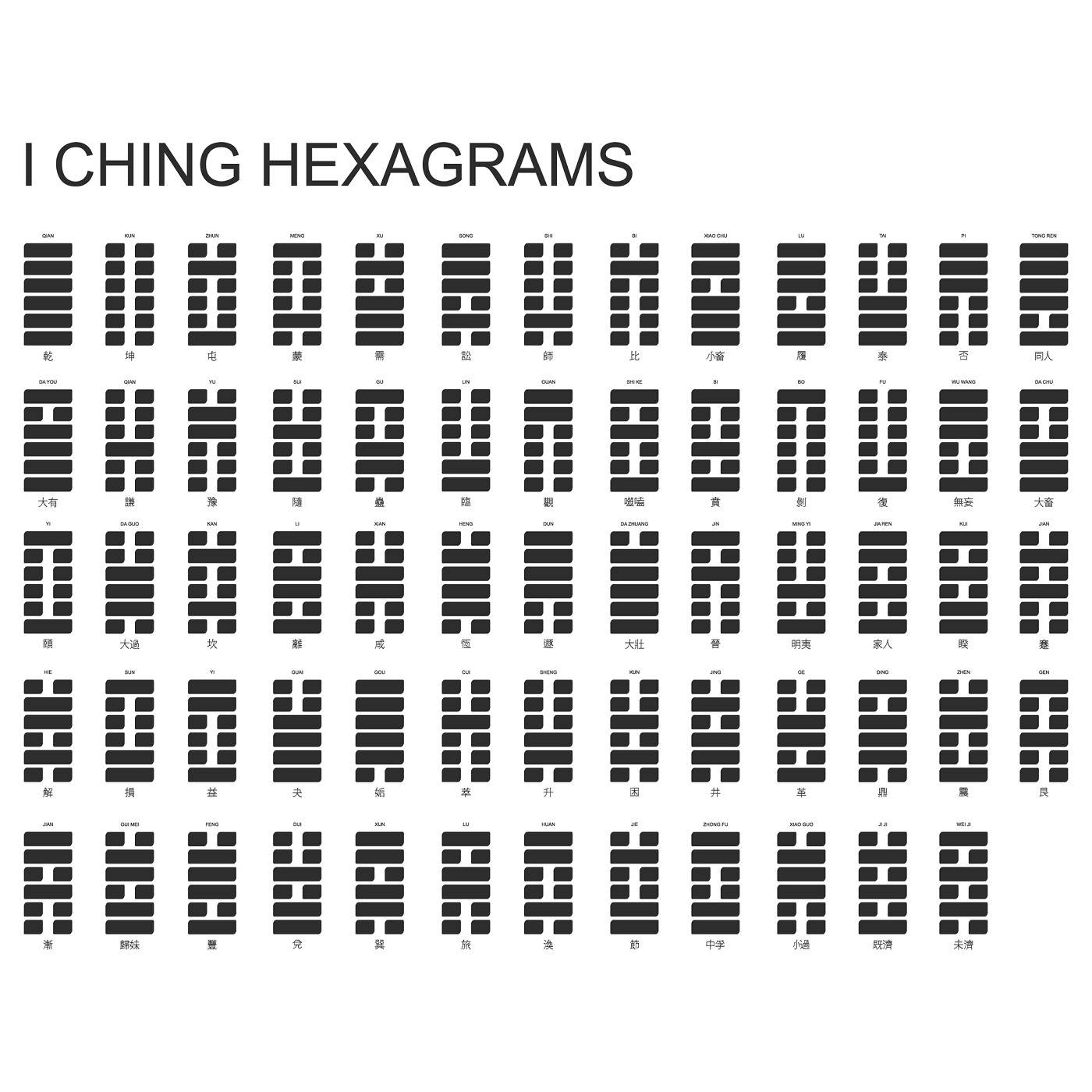
The I Ching is built around 64 hexagrams, with each representing a particular situation or pattern of change. These symbols aren’t simple labels for good or bad outcomes. They describe different conditions and possibilities.
The purpose isn’t to categorize life into success and failure but to recognize the qualities of the moment we’re experiencing.
The I Ching encourages a pause before action. It invites us to ask:
- “What is the nature of this situation?”
- “What forces are influencing this moment?”
- “What response would create more harmony?”
Finding wisdom during uncertain periods
Many difficult periods in life share a common feeling: the desire for certainty.
When facing a major decision, we often want someone or something to tell us exactly what will happen. However, certainty is rarely available. Life changes because circumstances, people and perspectives continue to develop.
The wisdom of the I Ching is that uncertainty doesn’t have to be viewed as a weakness.
Change can be a source of learning. A difficult situation may reveal something about our priorities. A period of waiting may teach patience. A transition may encourage us to develop qualities we didn’t know we needed.
A modern practice of reflection
Ancient traditions often remain meaningful because they address experiences that never become outdated.
The I Ching can be approached as a personal reflection practice that consists of these four steps:
- Before making an important decision, take time to examine your situation.
- Notice your emotions and assumptions.
- Consider different perspectives.
- Reflect on what kind of response aligns with your values.
The value isn’t in receiving a simple answer. The value is in creating a moment of awareness.
Embracing the flow of change

The central message of the I Ching is not that we can avoid change. Change is the nature of life. The deeper lesson is learning how to participate in change with awareness.
When we accept that circumstances are always moving, we become less attached to controlling every outcome. We can respond more thoughtfully, remain open to new possibilities and develop a deeper relationship with ourselves.
The I Ching reminds us that uncertainty isn’t an empty space that’s waiting to be filled with answers. It’s a living process through which understanding can grow.
Sometimes wisdom doesn’t come from knowing exactly what will happen next. Sometimes wisdom comes from learning how to meet whatever comes next.
«RELATED READ» MEGA-GEM: How mindfulness and gratitude complement each other»
images: Depositphotos