
There are moments in life when the things we spend so much time chasing suddenly seem very small.
A diagnosis can do that. So can grief, chronic pain or the loss of someone we love. A season of depression or spiritual desolation can also cause us to reconsider our priorities and question what truly brings meaning and fulfillment to our lives.
And other times, it’s simply the slow accumulation of disappointment and the realization that despite doing everything “right,” life can still break our hearts. That makes us question what we’re ultimately striving for and whether the things we’ve spent our lives pursuing were ever meant to fulfill us in the first place.
Prolonged suffering has a strange way of rearranging our priorities.
Perhaps that is because, somewhere beneath the noise of daily life, we know we were never meant to stay here forever.
We’re all walking somewhere
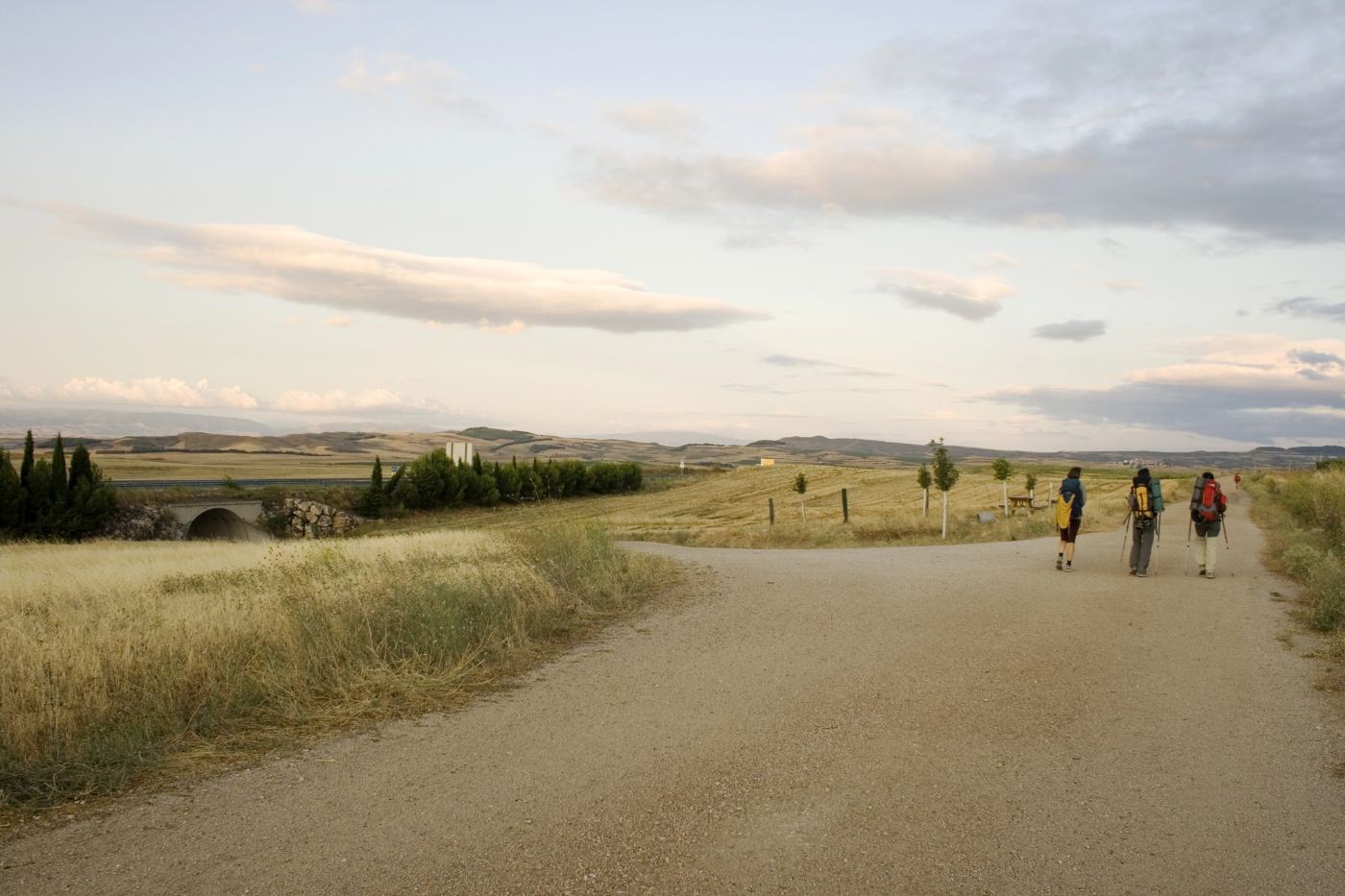
I’ve increasingly come to think of life as a pilgrimage, and a pilgrimage isn’t a vacation.
The road can be beautiful, certainly, but it can also be exhausting. There are stretches where the landscape opens before us and everything seems illuminated, just as there are others where we walk through darkness and wonder how much farther we can possibly go.
Life is much the same.
We build careers, raise families, fall in love, make mistakes, repair relationships and accumulate things we eventually leave behind. We celebrate births and mourn deaths. Our bodies grow stronger, and then—eventually—weaker.
Yet beneath all this movement lies a question humanity has been asking for thousands of years: Is this all there is?
Across cultures, religions and centuries, human beings have wrestled with death, morality, eternity and the meaning of existence. We seem uniquely aware not only that we will die, but that somehow death feels profoundly contrary to our longing.
We want love to last, and we inherently want goodness to matter. We also want injustice to be answered, and we want the people we love not to disappear into nothingness. Perhaps those desires tell us something.
Something written upon the heart
Christianity, for example, has traditionally spoken of natural law: the idea that certain truths about good and evil are woven into human nature itself, and can be recognized through reason.
You don’t necessarily need to know Christ personally to recognize that torturing an innocent person is wrong, and you don’t need theological training to understand the beauty of sacrifice, compassion, courage or mercy.
We recognize something noble in the person who runs into danger to save a stranger. We even understand, instinctively, that betraying someone who trusts us is different from keeping our word.
Why?
Certainly, culture influences morality, and human beings disagree enormously about how moral principles should be applied. Yet our persistent search for justice, goodness, meaning and truth raises a deeper question: Why are creatures formed entirely by an indifferent universe so preoccupied with what ought to be?
For me, natural law isn’t a mathematical proof of God, as faith itself can’t be reduced to an equation. It’s something subtler; something we recognize that is, rather than something we must always prove.
Perhaps this is a suggestion that the universe isn’t meaningless after all, and the longing for goodness that’s written into the human heart points towards goodness itself.
When the pilgrimage hurts
It’s much easier to speak beautifully about pilgrimage when the road is gentle and the journey is full of wondrous things. Nevertheless, this becomes considerably harder when your body hurts every day or when continuous loss is close to your heart.
In my own experience, I can confirm that chronic illness changes your relationship with time, and grief divides life into a type of before and after. Desolation can make even previously comforting beliefs feel distant. There are seasons when suffering doesn’t make us feel closer to God or goodness at all. Sometimes it simply hurts.
And there is something deeply universal about that.
Pain doesn’t ask about our religion, nationality, income or philosophy before entering our lives. The Christian grieves. The atheist grieves.
Pain doesn’t ask about our religion, nationality, income or philosophy before entering our lives. The Christian grieves. The atheist grieves. The wealthy become ill, as do the poor. Every human body is vulnerable, and everyone who loves deeply eventually encounters the possibility of loss.
Suffering is one of the uncomfortable languages all of humanity shares.
With this said, I don’t believe this means every tragedy happens because God deliberately sends it to teach us something. Some suffering is simply the consequence of living in a wounded world, and neat explanations can become cruel when they’re offered to someone in pain.
But suffering can also be a teacher, as it strips away our illusions and forces us to confront the present that we may have otherwise been running or hiding from under the guise of being busy and productive.
Pain and suffering reminds us that control was never entirely ours, and exposes how fragile the things we thought were permanent truly are. Thankfully, sometimes, amid that stripping away, we begin asking different questions.
Not, “How successful am I?” But, “Whom have I loved?”
Not, “How much have I accumulated?” But, “Who am I becoming?”
Not merely, “How long will I live?” But, “What am I living towards?”
These questions can prompt us to re-evaluate our lives, our goals and what we’re now going to spend our limited energy on. They redirect us—painfully, but faithfully—towards a better perspective, a better way of life in the end.
The road home
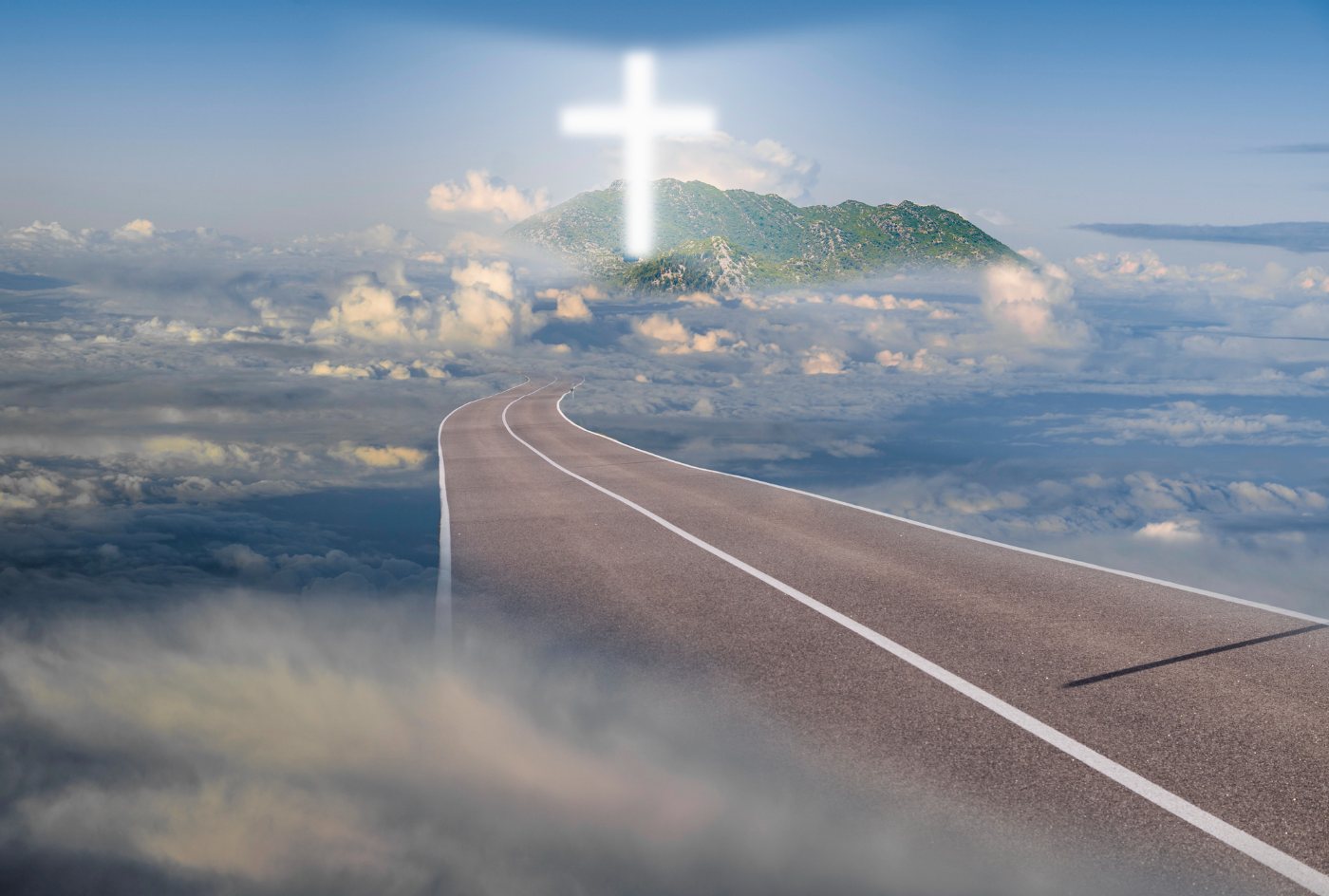
For Christians, the answer is ultimately a Person.
Jesus doesn’t promise that those who follow Him will avoid suffering. Christianity makes the far stranger claim that God entered suffering Himself—and that Christ stepped directly into human mortality, grief, abandonment and death, and transformed death from a wall into a doorway.
That changes the destination.
Heaven, then, isn’t simply a pleasant reward that’s waiting after an unpleasant life. It’s the fulfillment of this pilgrimage in our earthly life, and of the deepest human longing, which is complete communion with the God for whom we were created.
And if that is true, then heaven isn’t merely one concern among many. It changes the meaning of all the others.
Our bodies, relationships, joys and responsibilities matter deeply, but they matter within the horizon of eternity, which is ultimately the “endgame” for our souls. This may explain why even our happiest moments sometimes carry a peculiar ache. We try to hold them still and freeze them in time, knowing instinctively that we can’t. We realize that much like moments of suffering will pass, happy ones pass as well, eventually leaving us with only memories to hold onto.
Perhaps, the longing we spend our lives trying to name is simply the soul longing for and remembering where home is.
For those walking through a season of suffering, that home (and peace) may feel impossibly far away. Pain has a way of narrowing our vision until all we can see is the difficult stretch of road immediately before us. But a difficult road isn’t the same as a meaningless one.
There will be seasons when we walk with confidence and others when simply taking the next step is an act of immense courage. There may even be moments when we can’t feel God beside us at all. Yet, faith reminds us that His presence doesn’t depend upon our ability to perceive it.
Therefore, we don’t need to understand every mile of the journey. We need only keep walking, however slowly, trusting that suffering isn’t the final destination and there is still more road ahead.
And at the end of it, there is Home.
«RELATED READ» THE MORAL LIFE BEGINS WITH A QUESTION: “Why do I believe this is right?”»
images: Depositphotos