
Most of us inherit our moral worlds before we’re old enough to know that we’re inheriting them. Our parents teach us certain things. Religion teaches us others. Schools, friends, neighbourhoods and popular culture fill in the gaps. Our experiences do some of the teaching, too. Something that happened to us when we were young can quietly become a principle we carry for decades.
Eventually, though, life has a way of interrupting what we thought we knew. Someone we love does something we can’t understand. Someone who has been treated badly tells us a story that makes our own assumptions uncomfortable. We discover that something our society once considered normal was deeply cruel. Or we realize that a belief we have defended for years was never really examined. We simply inherited it.
That can be an unsettling realization. But it can also be liberating. We begin to ask a different question: “Why do I believe this?”
The trouble with being certain
There are things about which I have no desire to be neutral. Slavery is wrong. Genocide and torture are wrong. Deliberately humiliating or degrading another human being is wrong. I don’t mean that merely as a statement of personal taste.
But saying something is objectively wrong raises another question: What makes it wrong?
This is where moral philosophy becomes difficult. Some people believe moral truth is objective, something we discover rather than invent. Religious traditions have often located that truth in God. Others have grounded morality in reason, human dignity, flourishing or our obligations to one another. There are those who believe morality is largely constructed by human beings and shaped by culture.
I understand the appeal of that position. Human beings have disagreed about morality for as long as we have records of human beings. What one society regards as honourable, another may condemn. Ideas about family, punishment, sexuality, authority, property and obligation have varied enormously.
That should make us humble. But it doesn’t necessarily follow that every moral belief is equally valid. If morality were nothing more than whatever a particular society happened to approve, it would be difficult to explain the person who looks around at her own society and says, “No. This is wrong.”
That person has appeared again and again throughout history. The abolitionist says it about slavery. The civil rights activist says it about segregation. The person standing up for a persecuted neighbour says it about the hatred everyone else has learned to tolerate. Moral courage means refusing to accept the moral assumptions of the people around us.
The beliefs we carry
I find this question more interesting when I turn it on myself. Where did my own convictions come from?
If I believe something because my parents taught me, does that make it true? If my culture taught me, should I trust it? If my religious tradition says something is right, what does that actually mean? What interpretation am I bringing to the tradition? And if I have a powerful emotional reaction to something, is that my conscience speaking, or is it an old wound?
We don’t always know the difference between morality and fear. A person can become very good at calling fear a principle.
What we describe as strength is so often an unwillingness to reconsider ourselves. What we describe as weakness is so often simply tenderness. So often, our certainty has less to do with truth than with the need to feel safe.
This is one reason I think self-examination is an ethical practice. Before asking whether another person is wrong, I can ask what is happening inside me. Why does this particular issue make me so angry? What am I afraid of? What experience am I bringing into the conversation? What would I have to admit if the other person were partly right?
Those questions make self-deception a little harder.
The person standing in front of us
There is a point at which moral philosophy becomes about the human being standing in front of us.
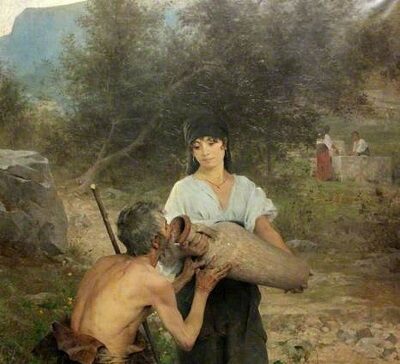
Someone is grieving, frightened or humiliated. Someone has made a terrible mistake. Someone whose politics are completely different from ours is suddenly in pain. We can continue discussing ethical principles, but there is also a person there.
The philosopher Emmanuel Levinas wrote extensively about the ethical significance of encountering another person. For him, responsibility begins not with a system of ideas but with the presence of the other. Ethics is not only about asking, “What is the rule?” It’s also about asking, “What am I responsible for here?”
Suppose I encounter someone who has done something terrible. Compassion doesn’t require me to pretend the harm didn’t happen. Justice still matters. Accountability and boundaries matter. But the person who has done harm remains a person.
That may be one of the hardest moral disciplines there is: refusing to let our judgment of someone’s actions erase their humanity.
It’s also difficult in the other direction. Compassion can’t mean abandoning the person who was harmed. We need enough tenderness to see suffering and enough courage to confront what causes it. I don’t always know exactly where that balance lies.
Living without having everything settled
I’ve taught philosophy long enough to know that people sometimes expect philosophical questions to end in philosophical answers, but they don’t always end that way. A good question becomes a better question, and that can be frustrating because we want conclusions. We want the moral equivalent of a map.
But human beings aren’t simple cases.
Take some of the questions we continue to argue about: capital punishment, abortion, physician-assisted dying, criminal justice, animal suffering, environmental responsibility, the obligations we owe to future generations. Reasonable people can reach very different conclusions, but that doesn’t prove that there is no moral truth. It just means that applying moral principles to actual human lives is extraordinarily difficult.
Humility doesn’t require us to abandon conviction. I can believe something is wrong and still recognize that I may not understand the entire situation. I can disagree with someone without deciding that they’re stupid, evil or beyond redemption. I can listen to an argument I expect to reject and still allow it to change me. If I enter every conversation only looking for evidence that I’m right, I’m not really listening.
I am merely waiting.
What suffering teaches us
Our moral imagination expands when we allow other people’s experiences to become real to us.
The stranger becomes somebody. The person we thought we understood turns out to have a history. The person we dismissed has a wound we didn’t see.
A statistic can tell us that someone is poor. A person can tell us what it feels like to choose between rent and food. A political argument can tell us that a system is broken. A human being can tell us what it is like to live inside that broken system.
I value stories. Stories complicate our judgments by introducing particulars. They make it harder to reduce people to categories. The stranger becomes somebody. The person we thought we understood turns out to have a history. The person we dismissed has a wound we didn’t see.
Not every story contains a moral truth, and empathy doesn’t settle every argument. But attention changes us. Empathy helps us become less certain, and that is exactly what we need.
A moral life requires attention
Morality has less to do with being a person who always knows what to do than with becoming the kind of person who pays attention.
Pay attention to the person in front of you, to your own motives. Pay attention to suffering and to the ways your assumptions were formed. Pay attention when your certainty feels especially satisfying.
There is something intoxicating about believing we’re unquestionably right because it relieves us of the burden of examining ourselves. But moral life asks us to remain awake.
We have to be willing to discover that some of our convictions are sound and others aren’t, and to change without becoming spineless. We have to learn how to hold a principle without turning it into a weapon. And we have to resist the temptation to confuse certainty with virtue.
The initial moral question remains
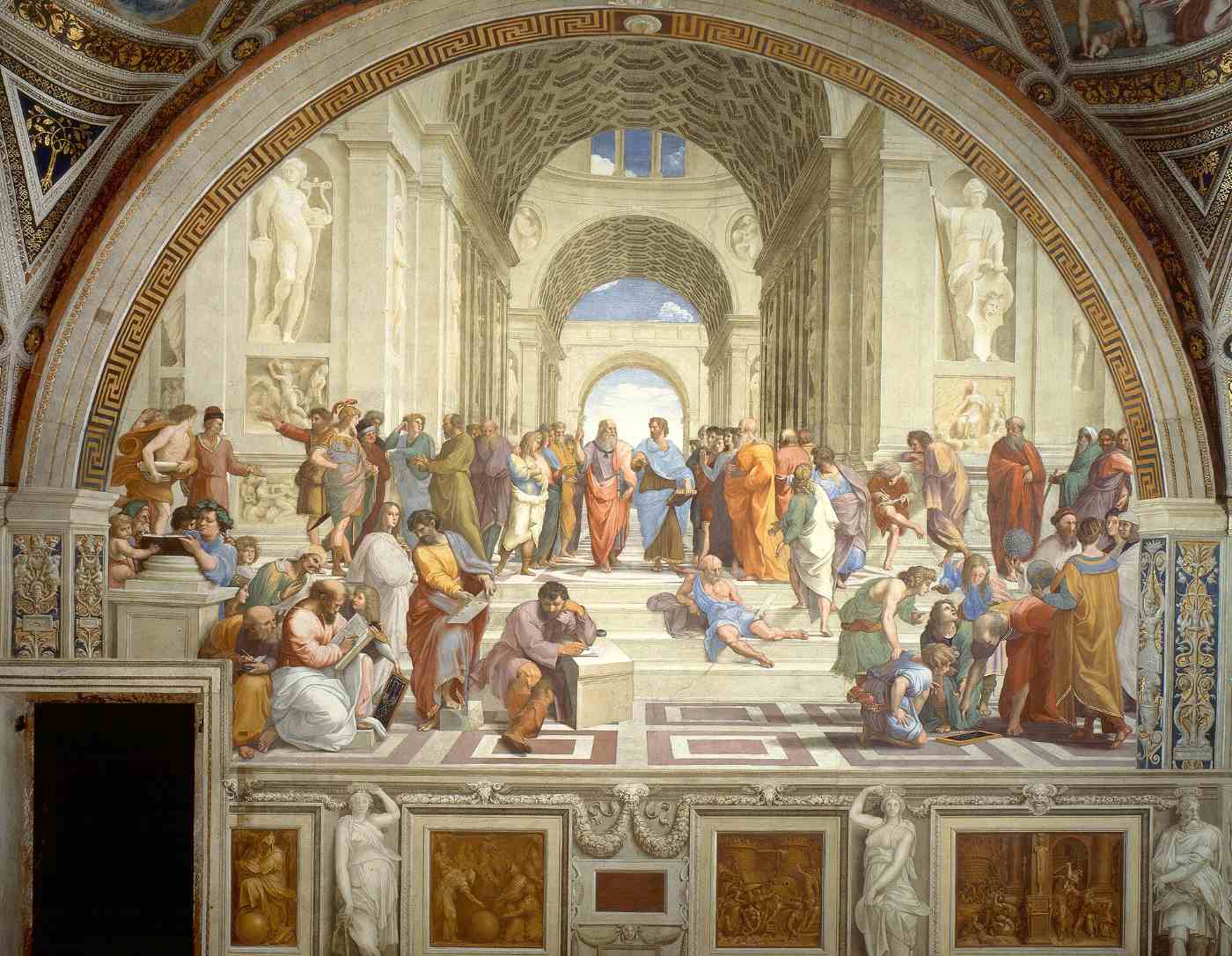
I don’t know whether morality is ultimately grounded in God, reason, human nature, some objective structure of reality, our relationships with one another or something I don’t yet have language for. I suspect the answer may be larger than any one of those possibilities. What I do know is that I don’t want to stop asking.
“How do I know what is right?” This question has become, for me, less of an intellectual puzzle than it is a way of living.
It asks me to examine the beliefs I inherited, to notice when fear is masquerading as wisdom. It asks me to listen when another person’s experience unsettles me, and to remain capable of recognizing suffering, even when the suffering belongs to someone with whom I profoundly disagree. And it asks me to keep some room in my convictions for surprise.
That is what moral maturity looks like. Not becoming incapable of doubt or abandoning conviction. Not arriving at some final state in which every ethical question has been answered. It means becoming a person who can say, with sincerity: I believe this is right. And, in the same breath: But I’m still willing to learn. The two sentences belong together.
The moral life begins with the question, and it continues in the willingness to keep asking it.
«RELATED READ» THE ENDS NEVER JUSTIFY THE MEANS: Gandhi’s radical lesson for today»
image 1: public domain; image 2: public domain; image 3: public domain / Cropped from original; image 4: public domain