
A reflection on getting in touch with vipassana, samadhi and samatha—using nothing but a piano piece.
I was guiding a morning meditation session recently, and I had a piano piece playing in the background—one I’ve actually used for years, because I just find it calming. Nothing fancy about it. But this time, something different happened.
I found myself giving an instruction I hadn’t planned:
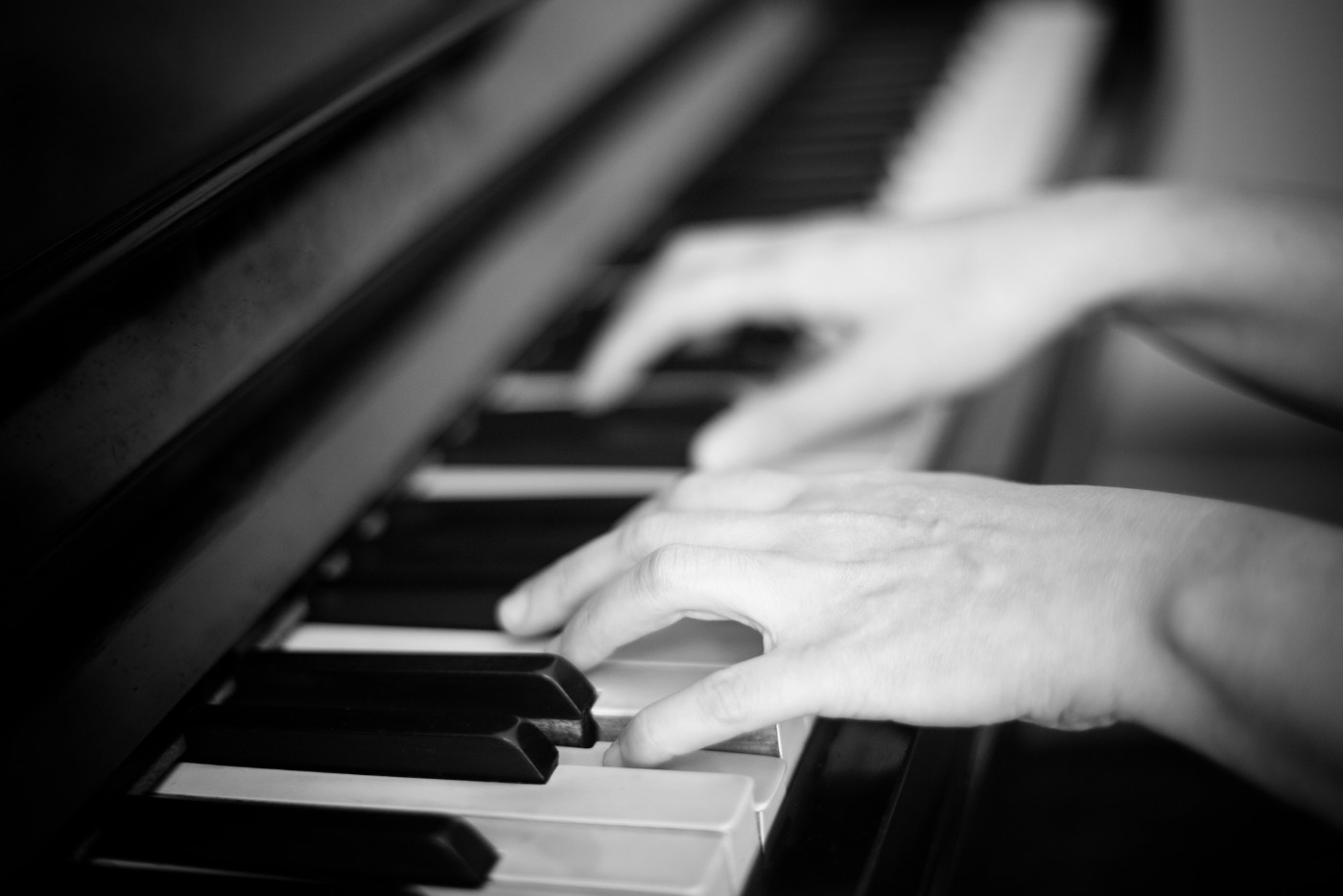
“Try to listen carefully. See if you can separate the left-hand notes from the right-hand notes.”
It’s not a complicated piece. After a while, you notice that the left hand is doing something repetitive, almost like a steady rhythm holding the ground. The right hand is more broken, more scattered—and every so often, a brighter note pops up out of nowhere. Once you’ve been listening for a bit, something interesting happens: You start to predict how the left hand will move next. You’re almost inside the piece, like you’re the one playing it.
With this comes a very specific feeling—clarity. Not just calm. Clarity first, and then calm arrives afterward, almost as a consequence of the clarity—which is really a small, lived example of how samadhi (concentration) and clarity relate to each other in practice.
That struck me as interesting, because I’ve played this piece in class for years, but purely for its soothing quality. I never noticed, until that session, that the real engine of the calm wasn’t the sound itself—it was the dissolving of the sound into its parts. Breaking the single “song” into two distinguishable lines gives the mind something clean to hold onto, and that clean holding is what settles it.
Afterward, one of my students—someone with many years of dedicated, traditional training—told me how effective and how good this simple practice felt for him. His comment stayed with me after we finished talking. It made me want to sit down and think through why this worked, doctrinally.
Why this kind of practice matters
I want to say something about the shape of this practice before I get into the doctrine, because it matters so much to me.
I believe any grounded, down-to-earth practice is more realistic for ordinary people than practices that assume monastic conditions. We aren’t living under monastic code,in monastic environments, with monastic schedules. Most of us are laypeople with jobs, families, noise and whatever scraps of quiet time we can carve out—not the wide-open, structured days a monastic schedule provides.
So a practice that can use something as ordinary as a piano piece, and still open a door into real samādhi (samadhi) and real paññā—that, to me, is what a secularized meditation method should look like. Not diluted, just fitted to the life people actually live. This is what I really mean when I talk about samatha meditation and vipassana meditation as lay practices, not monastic ones.
What’s actually happening—doctrinally
Vitakka and vicāra (vitakka-vicara): the mind applying and sustaining.
The instruction “listen for the left hand, then the right hand” is functionally vitakka—the initial directing of attention onto an object—followed by vicāra, the sustained turning over and examining of that object. This pairing is the foundation of the first jhana (jhāna), the absorption state so central to Buddhist meditation and samadhi practice.
When I told the students to keep tracking the left hand’s rhythm, I was asking them to sustain vicāra on it, over and over, until the mind stopped drifting off the object—a very ordinary, accessible entry point into what’s usually described as deep meditative concentration.
The bright notes that occasionally pop out of the right hand’s pattern function almost like little sparks of pīti—rapture, or interest arising within concentration. Small, pleasant jolts that keep attention engaged, rather than dull. And the settling that follows all of this—that’s sukha, ease. By the time you’re tracking the whole structure as one continuous, coherent thing, that’s ekaggatā—one-pointedness.
So without intending to, I gave the class a sequence that walked them straight through the classic jhāna factors—using sound as the object, instead of the breath.
The mind wasn’t calmed and then given clarity as a reward. It was given something to discern, and in discerning it, the mind naturally quieted down.
But here’s the more interesting part. The order was backwards.
In the more traditional model, samatha-yānika—the samatha or “calm abiding vehicle”—you build samādhi (samadhi) first, often up to jhāna (jhana), and only then apply vipassanā (vipassana, also known as insight meditation) by using the calmed mind as the instrument. Calm comes first and clarity comes after. This samatha-vipassana sequence is the one most people think of when they picture meditation practice.
What happened in this session was the reverse. The clarity—the analytic discernment of separating one hand from the other—came first, and the calm arose out of that clarity, almost as its by-product. This is the structure of vipassanā-yānika (the vipassana vehicle), sometimes called the “dry insight” or “bare insight” vehicle: insight leads and concentration follows.
The samadhi this style of vipassana practice produces is usually called khanika-samādhi—momentary concentration—rather than the fixed, sustained absorption-concentration of full jhana. It’s samadhi born of clear seeing, rather than clear seeing born of samadhi.
I think this reordering is actually the heart of what happened in class. The mind wasn’t calmed and then given clarity as a reward. It was given something to discern, and in discerning it, the mind naturally quieted down—because a scattered mind is scattered partly because everything arrives to it as one undifferentiated blur.
Once you can see the structure of the piano piece—this note belongs here, that note belongs there—there’s simply less for the mind to grasp at confusedly. Clarity declutters. And what we feel as “calm” is often just the felt sense of that decluttering.
Resolving a whole into its parts
This is what I couldn’t quite articulate before, but I think I can name it now. When you first hear the piano piece, you hear “a song”—one thing. It arrives as a single block. What I asked the class to do was stop hearing it as one block, and instead hear it as two separate things happening at once, each with its own behaviour: a steady left hand and a scattered, occasionally bright right hand.
That act—taking one apparent whole and splitting it into its moving parts—is dissolution in the simplest sense.
This is structurally the same move that the Abhidhamma makes on a much bigger scale. The Abhidhamma’s whole analytic project is to take things we normally experience as single, solid units—a chair, a self, a feeling, a moment of anger—and show that each of these is actually a cluster of separate, conditioned factors arising together, none of which is “the thing” on its own.
In this way, the self gets resolved by being separated into the five aggregates—form, feeling, perception, mental formations and consciousness—with each arising and passing as a result of experienced conditions, and without a single, fixed “me” sitting underneath and holding them together.
So the piano piece is the same exercise in miniature: A “song” isn’t really one thing; it’s two interacting lines. Once you can see that, the illusion of a single, solid block dissolves—and that dissolving is exactly what produced the clarity I described earlier.
I’m not saying the class was secretly a lesson on anattā . But the skill being trained—the capacity to take something that presents itself as unified and dissolve it into parts, with that dissolution feeling clarifying instead of threatening or chaotic—is the same skill that underlies that deeper teaching. This piano exercise was, in miniature, a rehearsal of that capacity.
Yoniso manasikāra
This term comes straight from the Sabbāsava Sutta (MN 2, in the Majjhima Nikāya), which is one of the clearest early discourses to name it directly. There, the Buddha contrasts yoniso manasikāra—“wise” or “appropriate” attention—with its opposite, ayoniso manasikāra, which is unwise or careless attention.
It’s stated that unwise attention is what allows the āsavas (deep-seated mental defilements) to arise and grow, while wise attention is what starves them.
The term also runs through the Nidāna Samyutta, where it’s linked to actually seeing paṭicca-samuppāda (dependent origination) operate, rather than just experiencing its effects. So it’s not a minor or peripheral term—it’s used, canonically, as the hinge between practice that goes somewhere and practice that doesn’t.
Yoniso itself relates to the word for “womb” or “origin,” so the underlying meaning of the term is attending down to the root or origin of a thing, not just its surface impression. Later systematizers, including Buddhaghosa in the Visuddhimagga, actually treat yoniso manasikāra as less of a discrete technique and more as a quality that has to infuse other techniques for them to actually produce insight. Without this quality, you can be technically “meditating” but still be attending unwisely, by just skimming the surface of the object.
That’s exactly why I think it’s the right term for what happened in that session. When I said “try to distinguish the left hand from the right hand,” that instruction was, quite literally, a directive towards yoniso manasikāra as applied to sound—attention aimed at the root structure of the thing, not just its impression.
And per the Sabbāsava Sutta‘s own logic, that’s not a minor stylistic choice. Wise attention is the doctrinal hinge on which the whole rest of the practice—the clarity, the dissolution, the calm that follows—actually turns.
A realistic but doctrinally sound approach
So calm was derived from clarity, not the other way around. Clarity was derived from dissolution—breaking one whole into its constituent, interacting parts.
And the whole sequence, even though it started as an off-the-cuff instruction during a session I’ve run a hundred times before, ended up mapping cleanly onto real, well-established doctrinal ground: the jhana factors of vitakka and vicara, the insight-leads-samadhi structure of vipassana meditation, and the deeper analytic method that, elsewhere, gets applied to the self.
Samatha, samadhi, vipassana—three words we throw around a lot in meditation circles, and this one piano piece managed to touch all three.
None of this required a retreat, a monastery or years of preliminary training to access. It required a piano piece I already had in my playlist, and one instruction: Listen for the two hands.
That’s exactly the kind of practice I want to keep building—realistic, secular and still doctrinally honest.
«RELATED READ» FROM CONFUSION TO CLARITY: How our thoughts move from chaos to understanding»
images: Depositphotos