
On a personal level, I’ve felt many emotions and lived through many situations that align with how I was taught to handle horses and what I’ve witnessed others do to horses.
For my entire life, I’ve felt as if I was on a different wavelength than most everyone around me—like I’m a radio frequency others just can’t pick up. For years, I tried to connect and to be seen, only to realize that many people were fundamentally unable to see me for who I was or understand my struggles. This led me to suppress who I was, out of fear of judgment.
An alien in a human suit?
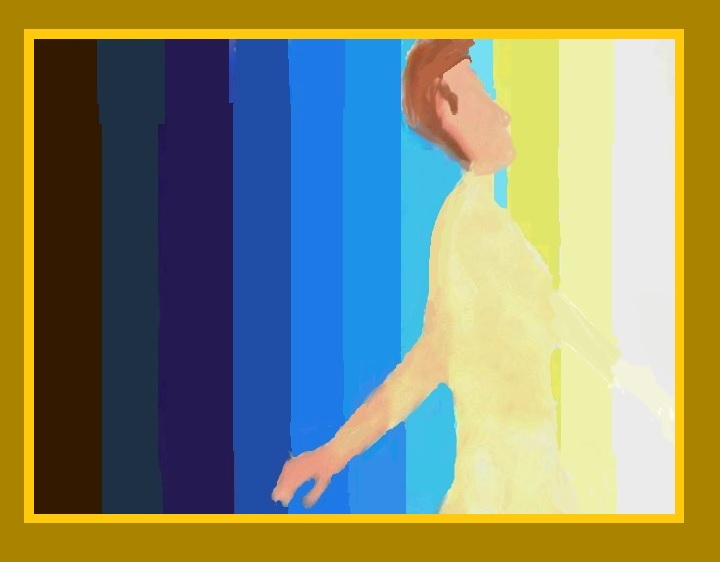
The vast majority of my existence has been racked with the feeling that something was inherently wrong with me, that I was just worse at being human than others. At times, I felt like an alien in a human suit, an entity within a fleshy body I couldn’t fully identify with and with a soul others couldn’t see, as if they were unable to view the spectrum of colours that I radiated.
I became an incredibly anxious person very early on in life, filled with shame and self-loathing, after one too many times of feeling humiliated by teachers for not listening well enough, not sitting in my chair the prescribed way, not doing the work in the “right” manner even if I got the correct answer.
Even other adults singled out my differences, leaving me vulnerable to judgment by my peers. This was a pretty effective means of teaching me that it was often safer to say nothing at all, that the best strategy for being accepted was watching and mirroring the behaviours of those around me.
It isn’t that I didn’t make friends, but it felt like the effort and energy I had to put into basic human interactions was astronomically higher than for those around me. The burden of constantly worrying about my next move or whether what I said or how I behaved would be received in the wrong way was exhausting.
Being constantly anxious left me so fatigued that it was a challenge just to get through a normal day. This also added to my belief that I was inherently less than the people who didn’t seem to struggle like I did.
A child among horses
I think this is at least in part why horses resonated for me so much. A horse will never judge you. They’re quiet and emotive, without needing to speak or expecting you to speak to them. I’ve also found that they have this natural gentleness towards children, and I definitely felt that from them as a child.
The barn was a place where I could truly feel at home, unchained from the weights of human judgment and no longer suffocated by the heaviness of feeling perpetually judged by peers and adults.
When I think about the experience of a horse being trained using traditional techniques, I can see a link between emotions I’ve felt over the years and how a horse might feel. That internal pain, like an open wound that is constantly being irritated, is something I’ve lived with for years, while no one seemed to notice because they benefited from the suppression of my true feelings.
This recognition and acceptance of my own trauma has led me to understand the damage I unknowingly inflicted on horses. It also helped me understand why the harsh training methods spoke to me as a frustrated and lost child who was desperate for some aspect of power as my life spiralled out of control.
And yet most people didn’t know what I was going through and how much I was hurting because I masked it—just as I was taught to, and just like horses naturally do as human demands force them to suppress their natural behaviour.
The “weird horse girl”
Being around horses was a meditative experience for me. It was really the only time my mind quieted. I felt a special connection with horses and other animals that I could never quite replicate with people. With them, I felt truly seen and heard, and I trusted that they didn’t devalue me for being different. I could look them in the eye and see them while feeling seen myself. (On the flip side, eye contact with humans felt jarring, scary and overly intimate.)
Riding was also something I actually felt good at. Something that I could be proud of. The barn offered a sanctuary where I felt worthy and like I had something to offer the world. This freedom and self-confidence wasn’t something that followed me outside of the barn.
I learned to feel ashamed about an absolute passion that had made my heart sing from the time I was a toddler and had become such a crucial aspect of who I was as a person.
Despite this inherent comfort and acceptance that interactions with horses brought me, outside of the stable, my affinity for the creatures also made me a target. The “weird horse girl” stereotype followed me like a shadow. I was mocked for displaying a love towards horses that other children might freely exhibit toward a dog or a cat—or virtually any other animal—without consequence.
I learned to feel ashamed about an absolute passion that had made my heart sing from the time I was a toddler and had become such a crucial aspect of who I was as a person.
My love of horses became an aspect of myself that didn’t feel safe to share with most people, one that had to be suppressed or at least watered down. Even teachers were guilty of contributing to the development of this internal shame.
At one point in elementary school, despite my reading several chapter books a week and absolutely loving doing so, teachers and the librarian tried to ban me from taking out books on horses. They felt it wasn’t healthy for me to be so fixated on a specific topic, that I needed to expand my horizons.
That was more effective at dampening my appetite for reading than it was anything else. Thankfully, I had a mother who consistently advocated for me and who also happened to be a teacher, so this ban didn’t last very long, but the effects of recognizing how many adults weren’t on my side persisted much longer.
Discovering my neurodivergence
Throughout my childhood and teen years, I had no idea that I was neurodivergent. I was diagnosed with AuDHD (autism and attention deficit hyperactivity disorder) in my twenties, after being exposed to a lot of discussion about neurodivergency online and resonating with much of it.
Prior to that, I had never even considered the possibility that I could have AuDHD. The media generally portrayed it as an attention disorder that was pretty much comprised of “Oh, look, a squirrel!” distraction moments, instead of conveying the full complexity of AuDHD and all other types of neurodivergences. This diagnosis freed me in a way I hadn’t known possible, unshackling me from a lifelong shame. I hadn’t even been aware of how trapped I’d felt in my own body and mind.
This new knowledge led me to a path of self-discovery. A path that was once covered in dense woods, seemingly impenetrable. Suddenly, the forest cleared, the possibilities were endless and I was free to journey to new horizons. As I came to know myself on a deeper level, I began to adventure into the unknown and welcome new aspects of my personhood.
With all of the challenges my neurodiversity has brought me, it has also brought me my creativity, my imagination, a remarkable amount of empathy and a desire to deeply understand the world around me and the beings within it. I would never want to change the fact that I am neurodivergent. Doing so would effectively erase me as a human, as the threads of my divergent thinking are woven into the entire fabric of who I am. Without my AuDHD, I am not me.
Prior to my diagnosis, I was chastised for behaviours and struggles that I now know to be related to my neurodiversity. For years, I was humiliated and punished by teachers for my disorganization and different ways of accomplishing tasks. I was punished for asking for clarity because people in leadership roles took it as an act of defiance, when all I was looking for was understanding. It made me feel ashamed of myself. I feared interacting in class because I might get punished for the wrong answer.
Treating horses with more empathy
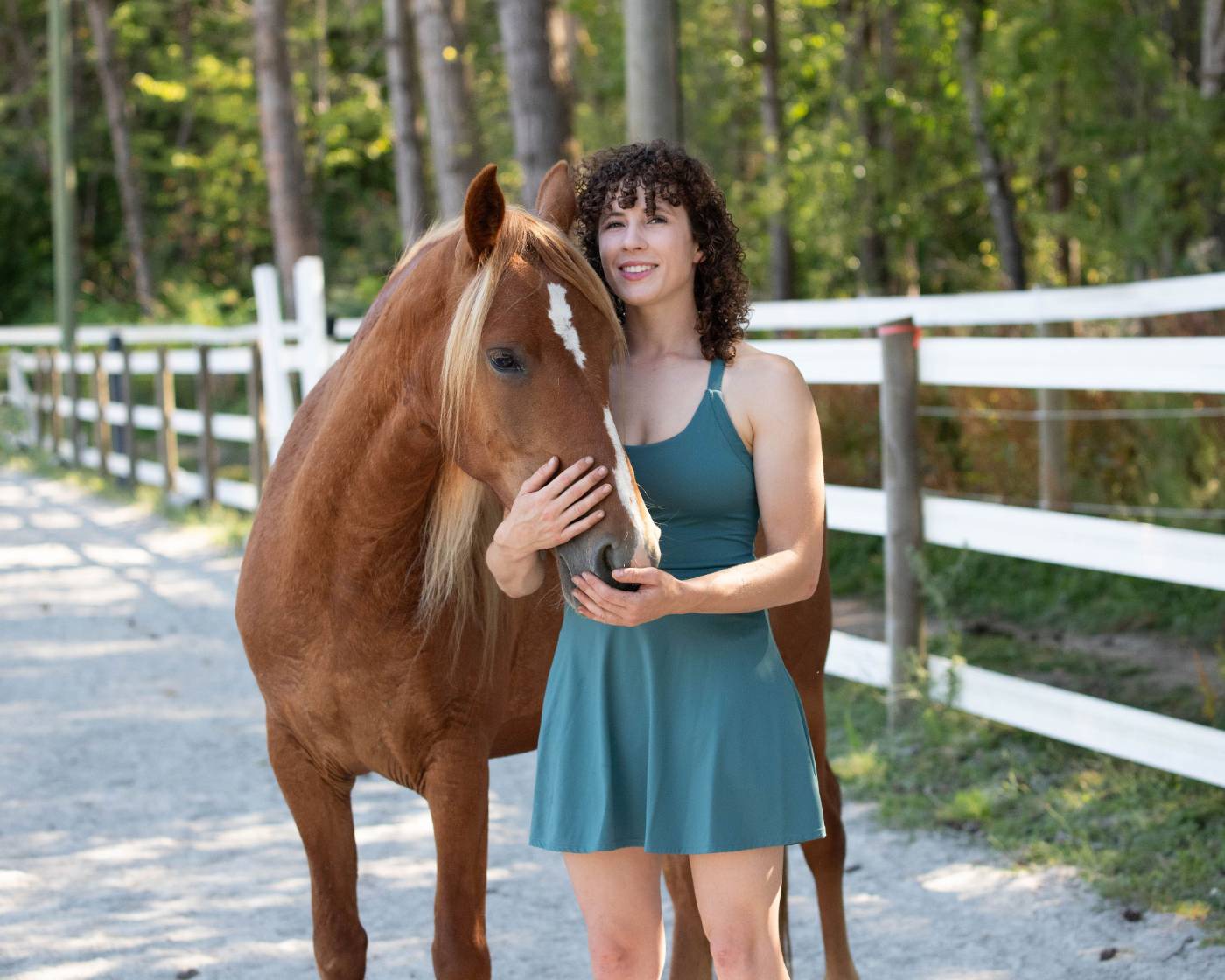
Whether you have neurodivergence, like I do, or simply have the experience of being a less-than-perfect human, many of us have been like the horse. Stuck in situations where we feel things spiralling out of our control. Where we try to find the right answer, only for our efforts to be punished. Where we’re at the mercy of someone else’s desires being prioritized over ours. Where we’re taught that any attempt to defy authority will be met with coercive force and some type of punishment.
We escape by going within and hiding, all the while responding to what we’re told and externally seeming to go through the motions without issue. However, the fact that we do as we’re told certainly doesn’t mean it’s what we want to do or that we’re enjoying it. It just means the discomfort of defying the command outweighs the discomfort of succumbing to it.
In identifying all of the times I felt coerced, pressured and forced by external powers, I was able to reckon with how I may have made horses feel when I used methods that exploited similar means of creating a response from them. Armed with a far greater understanding of myself that afforded me a new degree of empathy towards the horse, I embarked on the journey of completely redeveloping my perspective of horses and how I wanted to show up with them in training. I vowed to do things differently going forward.
Shelby Dennis is the author of The Secrets of the Horse: A New Approach to Training and Understanding Horses. She is an IAABC certified equine behaviour consultant, horse trainer and social media influencer who’s popular among equestrians worldwide. She lives in British Columbia, Canada. Learn more at www.milestoneequestrian.ca.
Excerpted from the book The Secrets of the Horse Copyright © 2026 by Shelby Dennis. Reprinted with permission from New World Library. www.newworldlibrary.com
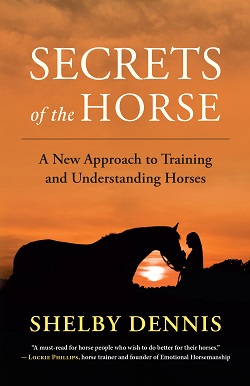
image: Shelby Dennis