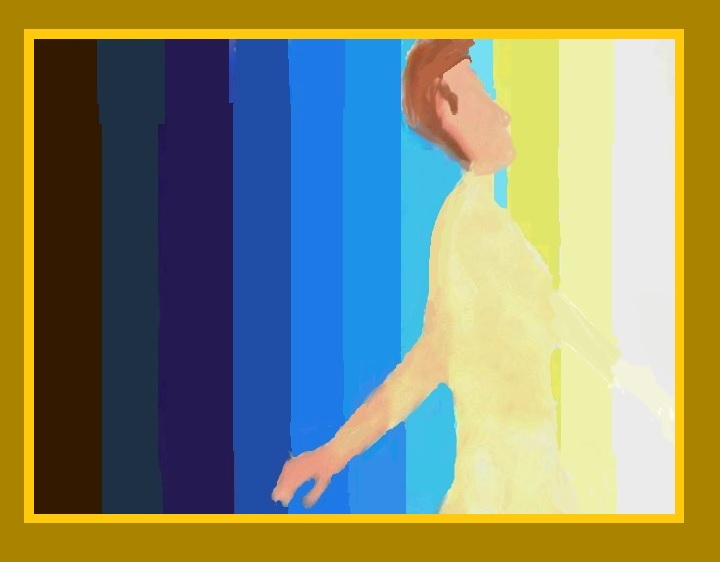


Clinicians often encounter experiences in which meaning seems to exceed explanation. A client describes a coincidence that feels charged with significance. A dream appears to anticipate a waking situation. A decision is accompanied by a sense of guidance that is difficult to locate within deliberate thought.
These moments don’t sit easily within strictly causal models of mind, yet they also don’t require metaphysical interpretation in order to matter clinically. They occupy an interpretive threshold where phenomenology and cultural symbol systems intersect.
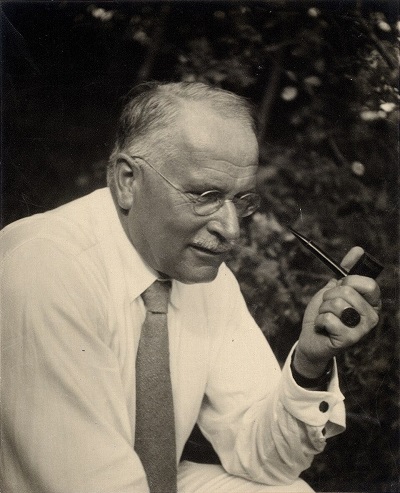
Dr. Carl Jung was unusually attentive to this threshold. His work can be read as an attempt to describe how meaning emerges when conscious control is limited, but psychic organization continues to operate.
Jung has written, “Synchronicity is an acausal connecting principle,” a formulation that resists reduction to causality while also avoiding supernatural explanation. In this sense, synchronicity names a mode of meaningful order that is experienced rather than proven.
From this perspective, what many traditions call angels can be understood as symbolic representations of an orienting function within the psyche, rather than as external entities or literal metaphysical agents.
Jung’s framework isn’t empirically settled in contemporary psychology. The notion of a collective unconscious remains contested, and archetypal theory is more persuasive as a phenomenological model than as a biologically verified structure.
Even so, Jung’s clinical sensitivity remains valuable because it offers a disciplined language for describing recurring patterns in symbolic experience without reducing them to superstition or pathology.
Archetypes can be understood as recurrent patterns of meaning-making that shape perception under conditions of uncertainty. They are not inherited images so much as they are structured tendencies when it comes to how experience becomes organized when habitual cognitive frameworks are insufficient.
One of the most clinically relevant of these patterns is the guiding function, which appears in dreams and spontaneous imagery when a person is navigating a transition or psychological fragmentation.
Similarities across different traditions
Across different spiritual traditions, what stands out isn’t a uniform belief in angels, but the recurrence of a shared function that takes different symbolic forms.
In Abrahamic religions, this function is explicitly personified as angelic beings who deliver messages or mediate between divine and human realms. Yet, when the lens is widened, structurally similar forms appear elsewhere without requiring the same metaphysical architecture.

In Zoroastrian thought, the Amesha Spentas operate as ordering principles through which divine intention is expressed in the world, sustaining coherence within moral and cosmic life.
In Hindu cosmology, devas and other intermediary beings participate in maintaining a balance between visible and invisible orders of reality, while bodhisattvas in Buddhist traditions function as enduring presences of compassionate orientation during times of suffering.
In ancient Greek thought, daimones and figures such as Hermes occupy the threshold between deliberation and unforeseen insight, often appearing at moments of transition or decision.
Even in Indigenous and East Asian cosmologies, where the boundaries between spirit, nature and ancestor are differently organized, one repeatedly finds relational forms of guidance that emerge through dreams, ritual encounters or situational meanings.
These aren’t equivalent systems, and they shouldn’t be collapsed into a single category. What they share is more precise and more psychologically revealing: they articulate moments in which experience seems to be addressed, not merely observed.
No single metaphysical order?
Read through a Jungian lens, these convergences don’t suggest a single metaphysical order behind cultures. They suggest something more restrained and more clinically relevant.
Human beings appear to repeatedly generate symbolic figures that carry the experience of orientation under uncertainty. Jung’s language of archetypes offers one way of describing this recurrence without reducing it to cultural borrowing or individual invention.
Religious and mythological languages often personify this function in distinct ways. Raphael is associated with repair and integration, particularly in moments when psychological fragmentation begins to reorganize into coherence. Metatron appears in mystical traditions as a figure of mediation, associated with the transmission of insight across levels of understanding that often resembles sudden cognition or insight formation. In esoteric sources, Hamniel is linked with the refinement of attention, where perception becomes more discriminating and less cognitively noisy.
These names are best understood not as distinct ontological beings but as culturally shaped differentiations of a shared psychological function: the emergence of orientation under conditions of uncertainty.
From a clinical standpoint, what matters isn’t the metaphysical status of these figures but their phenomenology and function. Patients rarely report archetypes. They report experiences of being guided, interrupted or unexpectedly clarified. These reports reflect shifts in attention and narrative coherence that occur when the ego’s usual interpretive structures are strained.
In contemporary psychological terms, such experiences can often be understood as emergent meaning-making processes under conditions of heightened affective load and reduced certainty, amplified by culturally available symbolic frameworks.
Jung’s concept of synchronicity

Jung’s concept of synchronicity offers a way of approaching these experiences without collapsing them into either causal explanation or supernatural attribution.
Synchronicity refers to moments in which an internal psychological state and an external event coincide in a way that feels meaningfully related, despite the absence of a clear causal connection. For instance, a person thinks of a question and encounters a conversation or text that appears to respond to it. A dream resonates with a later situation in ways that feel psychologically precise.
While such experiences don’t require a suspension of natural causality, they challenge reductionist accounts of meaning as something that’s generated only after perception.
Jung cautioned against the modern tendency to over-rationalize symbolic life. He has observed, “The rationalist, under the impression that he has made all metaphysical concepts obsolete, has in reality only replaced them with unconscious ones.” This warning is especially relevant in clinical contexts where the absence of symbolic language doesn’t eliminate its influence but often displaces it into less visible forms.
Jung also emphasized the depth of symbolic inheritance when he wrote, “The psyche is not of today; its ancestry goes back many millions of years.” Read clinically, this needn’t imply a metaphysical timeline, but it does underscore the persistence of pre-reflective symbolic patterns in shaping experience across development and culture.
From a clinical perspective, the key question isn’t whether such events are real in an objective metaphysical sense, but how they function in the organization of experience. In some cases, they support integration by restoring coherence during uncertainty. In others, especially when they’re rigidly interpreted, they can contribute to an over-attribution of pattern or externalization of agency.
This dual potential is clinically significant and requires careful interpretive flexibility.
Angelic imagery from a clinical standpoint
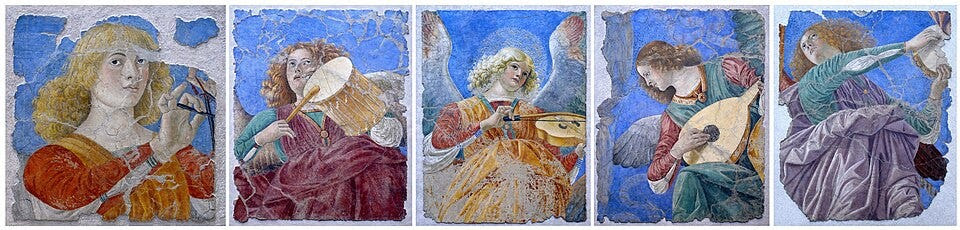
Within this frame, angelic imagery can be understood as one culturally available way of naming experiences in which meaning feels responsive rather than solely constructed.
The language of guidance emerges when individuals perceive a shift in orientation that can’t be fully accounted for by conscious deliberation alone. This doesn’t imply an external guiding intelligence, but it reflects a subjective reorganization in which attention, memory, expectation and affect converge to produce the felt sense of direction.
Clinically, this distinction matters. Experiences of symbolic guidance can be stabilizing when they help a person tolerate ambiguity or reorganize fragmented experience into coherence. At the same time, they require attention when they begin to override reflective judgment or become rigidly externalized as authority. In such cases, what begins as symbolic orientation can shift towards psychological inflexibility, or in vulnerable individuals, towards delusional elaboration.
The clinical task isn’t to validate or invalidate the symbol but to understand its role in the patient’s psychic economy.
Over time, individuals often revise their relationship to such experiences. What initially feels like external guidance is frequently reinterpreted as an emergent property of cognitive and affective processes. This doesn’t diminish the experience but integrates it into a more complex understanding of agency. The sense of being guided may shift towards recognition of how attention reorganizes under pressure and how unconscious processes contribute to perception and decision-making.
Angelic imagery persists not because it resolves uncertainty, but because it gives uncertainty a form that can be lived with.
The figure of the angel can be understood as a symbolic condensation of this reorganization. It marks moments in which experience becomes newly legible, not because an external agent has intervened but because the internal conditions for interpretation have shifted.
The symbol holds together affective intensity, cognitive reorientation and narrative coherence in a single image that preserves ambiguity without dissolving it.
What remains clinically significant is that such symbolic formations aren’t merely interpretive overlays imposed after the fact. They often participate in the process of change itself. They can stabilize transitional states and provide narrative scaffolding during uncertainty. At the same time, they must be approached with sufficient psychological flexibility to avoid literalization.
From this standpoint, Jung’s contribution is less about offering a metaphysical system than about preserving a way of listening. It’s a method for attending to meaning without prematurely collapsing it into either pathology or belief. Archetypal language, when used carefully, allows clinicians to stay close to the lived texture of experience while maintaining conceptual restraint.
Angelic imagery persists not because it resolves uncertainty, but because it gives uncertainty a form that can be lived with. It captures something about the way orientation emerges before explanation and how significance can precede articulated understanding.
Whether they’re described in psychological, symbolic or cultural terms, these orientation-based experiences point to a consistent feature of human cognition: meaning is not only interpreted after the fact, but is often sensed in advance of its articulation.
Not answers but indicators
The task isn’t to decide what angels are, but to understand what it means that they appear at all in human experience, especially at moments when orientation is most needed. In that sense, they are less answers than they are indicators of a mind attempting to find its footing in the presence of complexity.
And it’s often there, in that movement toward reorientation, that psychological change quietly begins.
«RELATED READ» CONSCIOUSNESS, UAPS AND THE LIMITS OF KNOWLEDGE: A conversation with Sinéad Whelehan»
image 1: Kritzolina; image 2: public domain; image 3: Ms Sarah Welch; image 4: Miguel Angel Omaña Rojas; image 5: Alvesgaspar