
There are interviews that feel like structured exchanges of ideas, and others that feel more like a live wire carried through language.
This conversation with Sinéad Whelehan belongs to the second category. It moves between neuroscience and mysticism, UAP sightings and philosophy of mind, while circling a single persistent question: What is consciousness, and how far does it reach into reality?
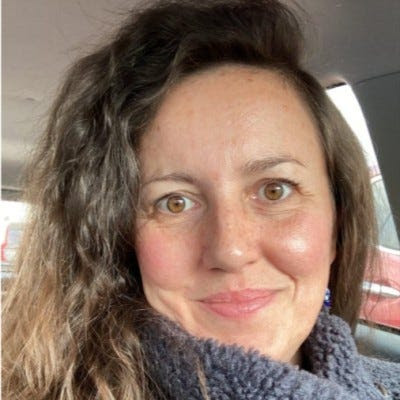
Whelehan serves as Director of Communications at The Center for the Unification of Science and Consciousness. Her work sits at the intersection of consciousness studies, anomalous experiences and philosophical inquiry into mind and perception. She is also shaped by an academic background that spans humanities and education.
She earned a Bachelor of Arts (Honours) from the University of Toronto in History, Literature and Culture (2001 to 2004), followed by a Master’s Degree in Deaf Education from York University (2004 to 2005). That combination matters to her. It trains attention towards how meaning is formed and often missed, not just in language but in perception itself.
Whelehan’s perspective resists disciplinary confinement. She doesn’t treat consciousness as something that belongs exclusively to neuroscience or spirituality. Instead, she argues for a wider epistemology that can hold uncertainty without collapsing it into dismissal or overconfidence.
“I am much less interested in where things are coming from,” she says, “than I am in learning about what the messenger is.”
That framing becomes the thread running through everything that follows.
Consciousness and the scientific frame
Whelehan begins with a critique of the dominant scientific worldview, though not in a dismissive sense. For her, modern science remains deeply shaped by materialist assumptions that emerged from Cartesian and Darwinian frameworks. These models, she suggests, have been extraordinarily powerful in explaining physical systems, but far more limited when applied to consciousness itself.
At the same time, she’s careful not to reject science. Instead, she points to the ways it’s already beginning to strain against its own boundaries. Within neuroscience, there are ongoing attempts to model consciousness in increasingly granular ways. She references theories that locate awareness in microstructures of the brain, including microtubule-based models.
Yet she remains unconvinced that any of these models fully account for lived experience.
“My experience in conversation with multiple professionals,” she says, “is that it does not explain how consciousness operates.”
What interests her more is what the models leave out. Across clinical research, contemplative practice and psychedelic studies, she sees repeated reports of experiences that seem to exceed standard neurochemical explanations. “There is a plethora of unusual experiences that people have,” she says, “and these experiences are now being given credence in a way that is more flexible, but still glacial.”
That word, glacial, recurs in her framing. For Whelehan, institutional change around consciousness is happening, but slowly, unevenly and often without full acknowledgment of what is being reported.
She also draws attention to structural imbalance. “You have billions going into AI,” she says, “and very little going into consciousness itself.” For her, this isn’t simply a funding issue. It reflects a cultural tendency to prioritize external intelligence over internal experience, even though the latter is what makes any form of knowledge possible in the first place.
UFOs, UAPs and interpretation
The conversation shifts into more contested territory with UAPs (Unidentified Anomalous Phenomena) and non-human intelligence. Whelehan approaches this subject without sensationalism, but also without reductionism. For her, the key isn’t whether such phenomena can be neatly categorized, but how consistently they appear across time and culture.
“UAP are appearing all over the world,” she says. “Regardless of status, religion or race.”
She describes how historical accounts of anomalous aerial phenomena shift in form, depending on cultural context. In earlier periods, they’re often described as wooden vessels in the sky or structured craft. In contemporary reports, they appear more frequently as luminous orbs or fluid-like forms that seem to move with an intelligence that is difficult to define.
“Some are disprovable,” she acknowledges, “but a lot are intriguing and cannot be explained.”
Her emphasis isn’t on asserting external origin, but on recognizing a pattern of human reporting that persists even when stripped of cultural interpretation. What matters to her is not only the phenomenon itself, but the effect it has on people.
“People are coming forward,” she says, “and when they do, their colleagues often respond in unexpected ways. Their eyes light up. They start to share their own experiences.”
For Whelehan, this suggests that the topic is less marginal than it appears. It may be socially suppressed rather than experientially absent.
She is also careful to distinguish interpretation from certainty. Psychological explanations may account for some experiences, she says, but not all. The deeper question isn’t simply what is being seen, but how meaning is generated in the encounter itself.
When asked what she would ask a non-human intelligence, her response is direct and personal.
“What is it like to be you?” she says. “What is your experience of experience?”
She expands on this: “Do you have a family? Do you travel? Do you interact with other beings? Did you participate in making us?”
For her, the emphasis isn’t on control or verification, but relational understanding. “I would want to know what your life is like,” she says.
Science, spirituality and certainty
A central tension in Whelehan’s thinking is the relationship between scientific authority and experiential knowledge. She doesn’t reject science, but she is deeply skeptical of certainty in any form.
“If a neuroscientist and a mystic were both wrong about something fundamental,” she says, “it would likely be the assumption that they know something for sure.”
For her, certainty isn’t a marker of strength but of limitation. It closes inquiry prematurely.
“We do not understand ourselves,” she says. “We do not know the laws of nature. We are constantly trying to create security.”
This impulse towards security shapes not only science but also philosophy, religion and politics. Whelehan suggests that many of the narratives humans rely on are structured around managing uncertainty, rather than engaging with it directly.
She extends this critique into ideas about human nature itself. Classical philosophical traditions that emphasize self-interest or inherent moral fragility are, in her view, incomplete.
“When you look at disaster footage,” she says, “people run towards it to help. They do not run away.”
For her, this challenges dominant assumptions about human behaviour. “We are being told a distorted story if we reduce humanity to fear or selfishness,” she says.
Instead, she argues for a more complex, layered understanding of human motivation, one that includes compassion, courage and unpredictability as foundational traits rather than exceptions.
Inner practice and perception
Whelehan’s worldview is grounded in contemplative practice, particularly experiences in Buddhist monastic environments. These settings, she says, shifted her understanding of reality in ways that intellectual study alone didn’t.
“I remember learning about emptiness,” she says, “and realizing it can pivot you towards a higher level of consciousness.”
Rather than viewing reality as linear, she describes it as cyclical and recursive. “We go around the circle and come back to the beginning,” she says. “It is not linear at all.”
This reframing extends into how she understands perception itself. Experience isn’t a straight line from input to interpretation; instead, it’s layered, recursive and shaped by attention.
“This dimension is made of duality,” she says. “You cannot have one without the other.”
Up and down, light and dark, self and other. These aren’t opposites to be resolved but conditions of perception.
She also emphasizes embodiment as central to awareness. “We spend a lot of time in our heads,” she says, “but we need to be in our bodies.”
For her, consciousness isn’t purely cognitive. It’s distributed through sensation, attention and intuition. “The gut is a second brain,” she notes. “Creativity is not only in thought. It is in the body.”
Ethics, power and the refusal of shortcuts
Whelehan is firm in her skepticism towards externally delivered wisdom or accelerated enlightenment. When asked whether she would accept a shortcut to human understanding, she rejects it.
“I would reject it,” she says. “When things come too easily, we lose the journey.”
For her, process is not incidental but essential. Meaning emerges through engagement, not delivery.
She extends this idea to how humanity relates to anomalous intelligence or unknown phenomena. “We are being invited to wake up and own our own power,” she says, pushing back against narratives that frame humanity as passive recipients of higher guidance.
Even if non-human intelligence exists, she argues, it doesn’t remove human responsibility. “Why would they show up to save us,” she asks, “if we are not engaging with what is already here?”
The unknown, in her framing, doesn’t absolve action. It intensifies it.
Listening, attention and epistemology
One of the most grounded aspects of Whelehan’s philosophy is her emphasis on listening. Not as passive hearing, but as disciplined attention.
“We are very good at talking,” she says, “but listening is a deep practice.”
She connects this directly to her lived experience. “I am deaf in this life,” she says, “and that has helped me become a better listener.”
Listening, for her, isn’t limited to sound. It includes perception of tone, energy and presence. It requires slowing down interpretation long enough for something else to emerge.
She also emphasizes nature as a corrective to cognitive overload. “Be barefoot,” she says. “Be connected. We spend too much time in our heads.”
This isn’t metaphorical for her. It’s epistemological. Knowledge is not only produced through thinking, but through embodied presence.
Consciousness as a foundational field
At the centre of Whelehan’s worldview is a metaphysical claim: consciousness isn’t produced by reality, but is fundamental to it.
“Consciousness is the creative force,” she says. “It is the fabric. It is the seed. It underlies everything.”
From this perspective, matter and mind aren’t separate categories but expressions of a single underlying process.
Even ego is reframed. “The ego is a tool,” she says. “It is a security system. We have to understand it, not destroy it.”
Dreaming and subconscious experience are part of this same structure. Whelehan references Indigenous concepts of dream time as an example of non-linear models of reality where waking and dreaming are interwoven rather than being separate states.
“We are not taught how to navigate these layers,” she says, “but they are always operating.”
A crisis of cultural meaning
Underlying the entire conversation is a broader cultural diagnosis. Whelehan describes a widening crisis of meaning in which traditional structures of coherence no longer function as they once did.
“Systems are not working,” she says. “Governments are not working. People are searching for meaning.”
In this context, interest in consciousness, psychedelics, intuition and anomalous experience isn’t marginal. It’s adaptive. It reflects a search for frameworks that can hold complexity without collapsing it into oversimplification.
“We are being invited to think about reality differently,” she says. “To open rather than close.”
What emerges from this conversation is not a fixed theory but a sustained orientation towards uncertainty. Whelehan doesn’t resolve the tension between science and mysticism; she keeps it active, even generative.
“If consciousness is fundamental,” she says, “then we are still learning how to relate to it.”
The final movement isn’t towards conclusion but towards attention itself, a slower form of knowing that resists closure long enough for reality to remain perceptible in its complexity.
«RELATED READ» A CRISIS OF CONSCIOUSNESS: As the world speeds on, life invites you to wake up»
images: George Cassidy Payne