
Life isn’t waiting for us out there. It’s happening right here, right now. When the soundtrack of our minds is a running monologue of what’s happened, what’s next and what we’re worried about, it’s easy to lose sight of the present moment and become restless for something better or different.
When we’re constantly looking ahead with longing or behind us with nostalgia, we miss out on the moment unfolding in front of us, but that doesn’t have to be the case. We can avoid missing out on the present moment by consciously taking certain actions, and to get you started, here are five ways to show up more fully for the life you’re already living.
Savour the moment
Most of life is made up of mundane tasks—work, paying bills, child-rearing, meal prep—and it’s easy for us to move through those responsibilities on autopilot, out of habit and with the intention of being productive. Yet, even during less exciting times, we can choose to engage with greater presence instead.
We’ve all savoured a delicious bit of food by moving it around in our mouth, tasting the different flavours and noticing the texture. As a form of mindfulness, savouring is an exercise that helps us attend to the positive elements of our internal and external experiences.
Our survival instincts make our minds naturally inclined to notice threats in our immediate environment as we scan our surroundings for dangers and potential pitfalls. However, when we intentionally shift our attention and take note of positive things instead, we automatically increase the number of daily pleasures we experience.
One study has found that if we practice savouring for five minutes in the morning and for another five minutes in the evening, this can enhance our resilience and psychological well-being as we age.
To get started with savouring the moment, scan your environment for something that seems great or even just slightly positive. In your mind, describe what it is and how you feel about it. Focus on the quality of your experience—the sensations, the details, the miracle of it all. Express your gratitude for this chosen element of your environment, and if time permits, repeat this exercise by focusing on another positive thing that’s nearby.
Adopt a singular focus
We can’t truly savour anything when we spread our attention too thin. How often do you find yourself multitasking—watching kids, doing chores, making plans with a friend and shooting off work emails, all at once?
When we try to check off too many to-do list items at once, we end up scattered and rushed, while no task or person gets the attention they deserve. Research has shown that the vast majority of us aren’t very effective at splitting our attention between activities, and that doing so generally makes us more distractible.
Though it may not always be realistic, we can aim to take more opportunities to simplify our focus, especially when we’re spending time with others. This might look like leaving your phone in another room, blocking out time from your work obligations, or scheduling time with one family member or friend at a time.
Attune yourself to your body
So many of us live entirely in our minds, with very little awareness of our bodies. When we’re constantly in our heads, it’s easy to ruminate about the past, present stressors and the unknown future, which can end with us getting stuck in a loop of “shoulds” and “if-onlys.”
When we move our experience of life into the body instead, we naturally feel more grounded. We become more aware of the present moment and our felt experience within it. Research has found that attending to the internal state of one’s body plays a key role in emotional regulation.
We can become more attuned to our internal state through Yoga, dance, exercise or any other activity that engages the body, but it’s also helpful to intentionally shift our attention inward. When our thoughts are spiralling, we can purposefully recentre ourselves in our bodies by noticing physical sensations, breathing deeply or paying attention to our feet as they rest on the ground.
When an emotion arises, we can get curious about how it feels in the body and breathe into that space.
Appreciate the gifts of nature
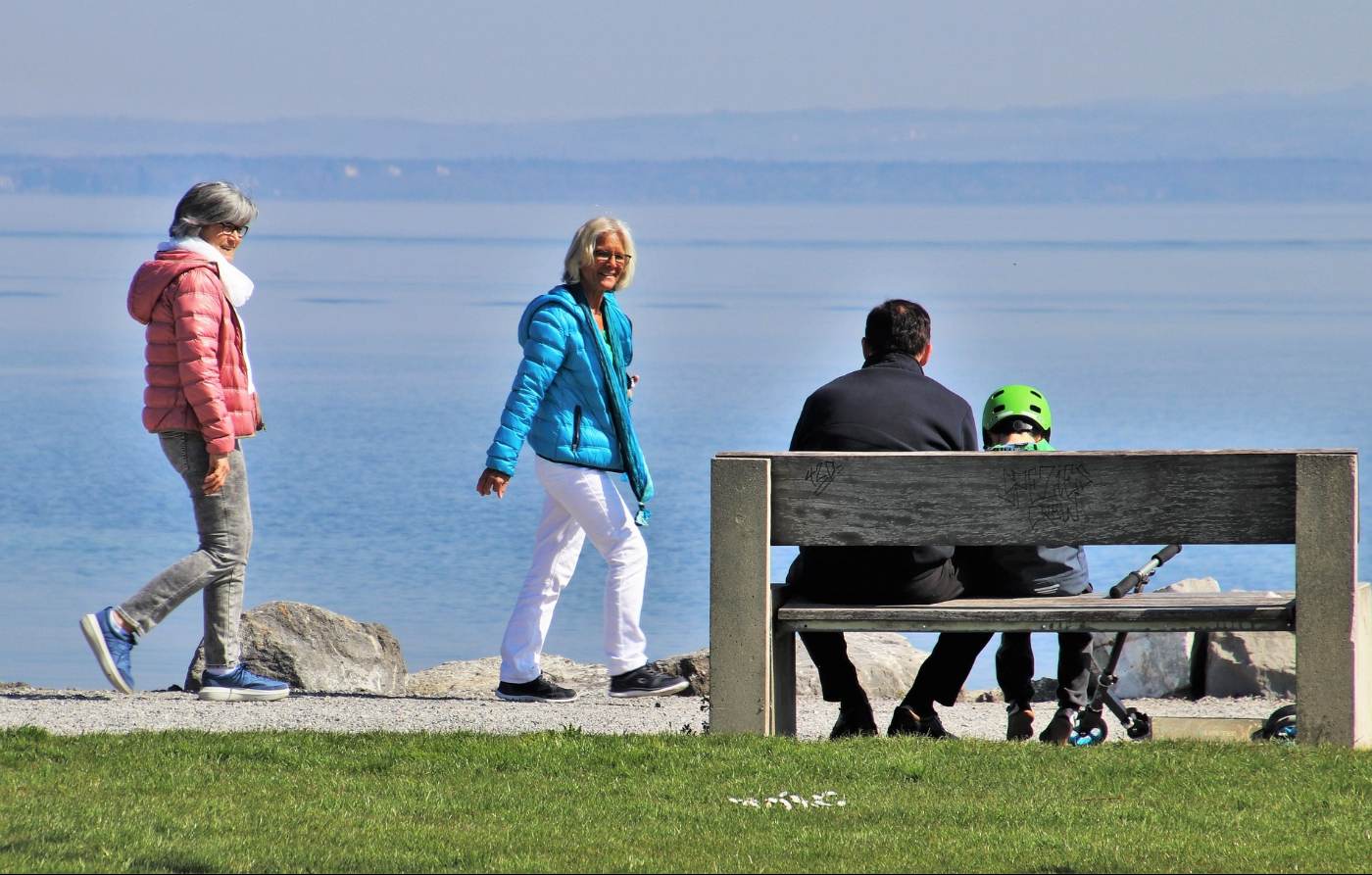
Nature isn’t just something outside the window. It’s part of our makeup as humans—we exist in relation to it, not outside of it. Our existence as a species in the larger ecosystem makes us part of the intricate web that comprises our natural world.
Nonetheless, as humans, this doesn’t stop us from moving further and further away from nature. We hide behind desks, looking at screens instead of trees; we seal our windows in favour of heat and air conditioning; we might even rebuke our kids for running barefoot outside because we’re worried that they’ll cut their feet or track dirt into the house.
When we immerse ourselves in the gifts of nature—the sounds of birds chirping, the wind swaying the branches of the trees, the smell of flowers—we aren’t busy imagining that we’re elsewhere. By immersing ourselves in nature, we can move from seeking and achieving to simply being. Nature draws our attention to the present moment and supports emotional regulation, which allows us to become more intentional about noticing and channelling any restlessness we feel.
A large body of research has reported on the positive impacts of being with nature, including lower blood pressure, less stress and an increase in positive feelings. One study of more than 20,000 people found that spending two hours a week in nature could significantly impact your health and psychological well-being for the better.
Get creative
Spending time on creative goals often leads to novel experiences, along with promoting our overall well-being. In a study that involved participants noting their activities and emotional states in diary entries, the participants reported increased enthusiasm and a greater sense of well-being on days when they were more creative than usual.
As children, we naturally create by drawing pictures, making mud pies and weaving make-believe scenes in play. Unfortunately, as we age, the pressure to be “good” at something creeps in and we begin to measure our creativity and skill against that of others. If you can’t draw a perfect picture, you might think, “I’m not any good! I’d better leave art to ‘creative types’ to pursue.”
We’re all creative types, though; it just looks different for everyone. Working that creativity muscle for its own sake brings joy and eases restlessness. You might try writing poetry, singing a tune or cooking a nice meal, regardless of how good you think you are at these things.
Similar to an exercise routine, practices that promote presence such as mindfulness, adopting a singular focus and being creative can be integrated into our daily lives. On some days, we won’t feel like paying attention—which is normal—but we can return to our intention and our practice by attending to the present moment over and over again.
As we quiet our restless thoughts, we’ll begin to see the world in new ways and learn to savour what’s right in front of us instead of being stuck in our minds.
Medical disclaimer: This page is for educational and informational purposes only and may not be construed as medical advice. The information is not intended to replace medical advice offered by physicians. Please refer to the full text of our medical disclaimer.
«RELATED READ» 3 LIFE LESSONS FROM BREAKFAST: What eating breakfast taught me about mindful living»
image: pasja1000