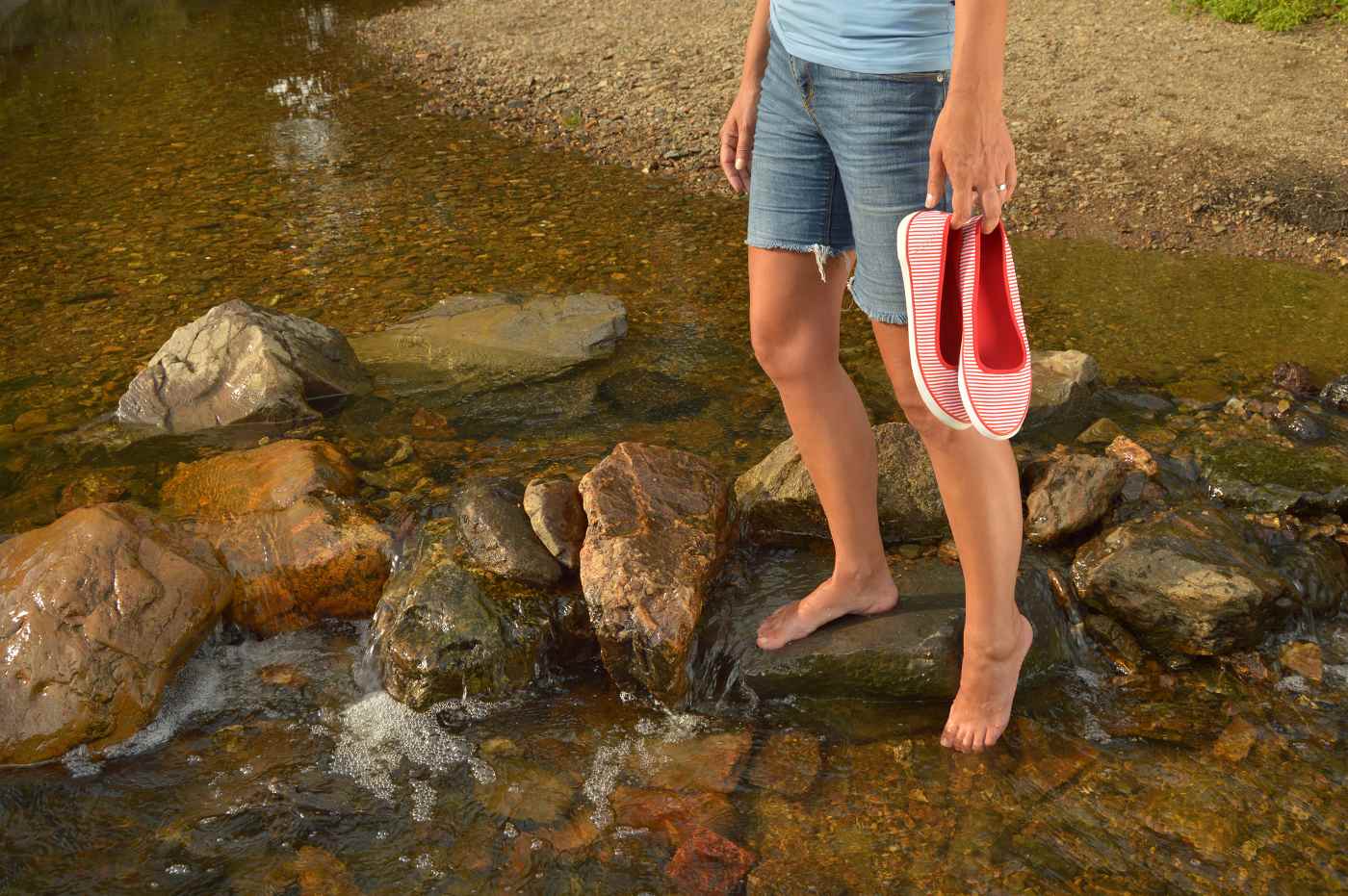

Wild all through the year, the American River rose and fell seasonally, just steps away from my family home. One day when was 12, I sat alone on a gravel bar surrounded by a clutter of random stones, and noticed no rock was exactly like another. Each had grainy grey or white speckles. Some stones were very big, some tiny, yet all were tumbled smooth and nearly round.
I lay across the sun-warmed rocks under the high blue sky. Watching a hazy cloud drift above, I imagined the journey that brought the rocks there, swept downstream by the high water in winter. One day they might be worn all the way down to fine sand. Everything on the Earth, including me, was bound to change. But sometimes change was so slow, it was imperceptible.
While drowsing on the rocks, my eye was drawn to a strange brownish lump, some kind of nest bending low a branch of yellow Scotch broom. Almost immediately, a brilliant red-orange blast of colour sprayed out and up, a firework of ladybugs hatching! In less than a minute the hundreds, maybe thousands, of shiny, tiny bugs were gone. Only the slight swaying of the branch, which now stood taller, gave proof they were ever there.
On another day, a giant swarm of monarch butterflies descended, a delirium of delicate black and orange-gold. Landing beside me on the beach, their wings closed and opened slowly, in chorus, as they silently sipped moisture from the damp sand. Like the ladybugs, they left as suddenly as they appeared.
I could count on the natural world to bestow a sense of belonging. People, however, were unreliable, confounding and sometimes dangerous. Yet here I was. A person. I could never be a lizard or a ladybug or a butterfly. Was there a way to combine lessons from nature with the inevitability of being human?
Everything has an essence
On the walk home after school each day, I passed a lone pine standing arrow-straight, bristling with sharp needles. After a rain, the tree looked fresh and bright, but even when the needles were dusty and dry, the tree stood proud, fully present. No shame. I called this “treeing.” Stars starred; rivers rivered. This was nature.
At a bend in the road, a single oak clutched the hillside beside a seasonal waterfall. On one side of the oak’s muscular trunk grew a tremendous fungus, layers of golden, fuzzy folds.
As I passed this giant fungus each day, I politely averted my eyes. The fungus was unseemly, right? Then, one day, I realized that if the waterfall is sparkling and the tree is treeing, surely the fungus is simply fungus-ing. All around me, life was unfolding, as the essence of each element was demonstrated. Look at the moon, the stars, rocks, baby ferns, sparkling water. Everything shared its essence without undue fret, without shame. I wondered—could people do this? Could I?
I left the road to sit on the beach, and glided my hand in a slow swirl through the warm, fine sand beside me. What makes people unique? We move freely around. We invent things. We communicate with words. Could these qualities be the key to peopling?
The sand cooled, the shadow of the canyon wall crept closer, the sun dropped below the rim. I thought about all I learned from nature: suchness, acceptance, belonging. Gratitude. What if we were here, as people, to share the joy of being alive? Could it be that simple?
Caring, sensing, sharing: These would be the foundation of my philosophy. I’d go out into the world and “display fascination with the life process.” This was my way to be human.
Sensitivity … I knew this word as a criticism—that is, “too sensitive.” But a different kind of sensitivity, the positive kind, would be the cornerstone of my theory on how to be human. My heart pounded double-time as I hurried home. There was a new clarity to the air around me, a tenderness in the fading sunlight.
An essay for Dr. Williams

In my room I assembled fresh paper, a good pen and essays from the back page of two Time magazines. I revised and rewrote my theory until I was ready to commit to every word and every phrase. Then, in my best penmanship, I made one clean two-page copy. Across the top of my essay, the title: Sensitivity. The first person I wanted to share this with? Dr. Williams, my mother’s therapist. Then I’d submit the essay to Time.
My mother started seeing Dr. Williams right after we moved to the river. Dad’s version of riverfront life dictated our nights and weekends: lots of drinks, lots of jokes and lots of people. He invited friends and customers for swimming and barbecue every weekend, and sometimes after work, too. My parents loved to dance, but trips to Lake Tahoe, Sacramento and San Francisco were rare now. Dad was much too busy in his paradise. Soon my mother started classes toward a master’s degree in psychology, and education became her escape.
Mom’s studying was a private affair, managed when we were at school or late at night. She kept the house running as usual and served dinner on time, while commuting two hours each day.
She began seeing the therapist, Dr. Williams, at his office near the college. Before long, Mom decided we three kids would go to Dr. Williams, “for IQ testing.” I suspect there was more to it than that. At my first session, Williams asked me to describe my family. After thinking a bit, I said, “Imagine each of us lives on a separate island in the sea. On each island, there is a rowboat, with oars. But so far, no one has ever rowed to anyone else’s island.”
In the waiting room, I held my essay by the edges; my hands were sweating. I’d never shared anything so personal, and so profound, with another person.
From time to time, my mother would “haul us off to that quack,” as my father put it. We were surprised when she got my father to go on his own. According to Dad, only 15 minutes into the session, Dr. Williams said, “Well, Joe, I’m not sure how I can help you.”
“See, what did I tell you? Williams says I don’t need therapy,” Dad said at dinner that night, lifting his bourbon in a toast to himself.
I told Dr. Williams I planned to be a writer, and he mentioned a school in Iowa that was famous for teaching writing. The day I brought my essay to him, I chose my outfit with care—a cranberry wool skirt, cranberry sweater and deep red Capezio shoes.
Before leaving the house, I checked the mirror, searching for a sign of wisdom. My brown eyes looked not just brown but like tiger-eye agate, as though lit from within. In the waiting room, I held my essay by the edges; my hands were sweating. I’d never shared anything so personal, and so profound, with another person.
When I entered the office, Dr. Williams was at his desk. A prissy middle-aged man, he always wore high-waist grey slacks, a navy blazer, a white shirt and a striped or patterned yellow tie. I handed my work across the desk and took a seat opposite. He looked up, put on his glasses and read. When he put the pages down, he looked at me from above his glasses, then took them off.
Crushed
I waited.
“Well, Elisa, this is very well-written. Where did you copy it from?” he asked, as he pushed my essay back across the desk.
Appalled, I couldn’t speak at first. I stammered a few lines, trying to explain my scientific method, but he cut me off.
“You evidently read these concepts somewhere and put them together in your own words, but this is certainly not your work.”
In an instant, my pride and hope were transmuted to anger, then armour. I was done with him. Dr. Williams was dust.
Offended, I could hardly speak.
I blinked a few times, took a breath, and though I was crushed, I refused to let on.
I never submitted the essay to a magazine, never shared it with teachers or adults. My theory of how to be human was a private treasure, a gift from the canyon, mined one nugget at a time.
Only the river knew the real me.
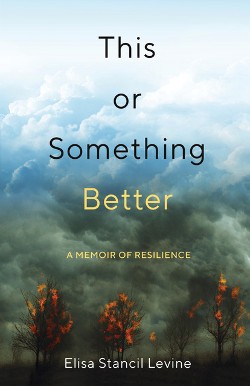
Elisa Stancil Levine is the author of the book This or Something Better: A Memoir (June 2022). She’s also a world renowned decorative artist. Her colour and pattern design have been featured in every American design magazine, on the cover of Architectural Digest numerous times, and featured in Elle Décor, House Beautiful, Veranda, Town and Country, Vogue, California Home and Luxe. For more information visit www.elisastancillevine.com.
This is an excerpt taken with permission from This or Something Better: A Memoir (She Writes Press, June 7, 2022) written by Elisa Stancil Levine.
images: Depositphotos