


The ongoing months-long walk for peace by Buddhist monks from Fort Worth, Texas to Washington, D.C. is one of the most inspiring events to occur in the United States in years.
With all the hate, division and violence seemingly on full display in this nation, the monks’ journey is a profound reminder that the values of peace, love and kindness can heal not only America but the entire world. So it really shouldn’t come as a surprise to see the unbelievable scenes of thousands of awestruck people lining the streets to greet the holy monks as they walk barefoot through their cities.
The truth is, deep down, we all yearn for a more peaceful world. And intuitively, we know that the way we’re living has set us down a path of chaos and destruction. As I tuned in online to hear the Venerable Bhikkhu Pannakara (the lead monk of the 20-monk walking procession) speak to a large crowd in Columbia, South Carolina, I was moved to tears by two central points that he made:
- World peace first begins through finding peace within ourselves
- Through living mindfully, we’ll naturally become living embodiments of peace and loving-kindness.
Can finding inner peace lead to outer peace?
In regard to Pannakara’s first point, I can recall many years ago teaching a college course I created called the “politics of peace.” During one of our weekly seminars, I vividly remember one student’s frustrated response to a reading I’d assigned them by the legendary Lakota chief Black Elk. Like Pannakara, Black Elk believed that world peace can only come about if we first find that peace within ourselves.
The student, who was a social justice activist and protester, couldn’t fathom how inner-peace-inducing practices like prayer, meditation and chanting could possibly translate to world peace. Her dominant paradigm centred around external confrontation with unpeaceful actors in power, such as the government and corporate elites, through direct action.
I encouraged this student to critically assess the assumptions of her own paradigm by asking her this one question: Fundamentally, what was it about Mahatma Gandhi and Martin Luther King, Jr. (two of the greatest social activists in the past century) that made them such effective leaders for their respective causes of national independence and racial equality?
After a long silence, I finally answered the question. I pointed out that both of their movements were powered by the vast reservoirs of peace found within both men. By all accounts, Gandhi and King were profoundly peaceful men who drank from cups of the spiritual nectar of their own faiths (Gandhi deeply modelled his life on the Hindu teachings of Sri Krishna in the Bhagavad Gita, and King as a Christian reverend drew his inspiration from the teachings of Lord Jesus in the Bible).
I then emphasized a point made by my own guru, Baba Ram Dass. And that point was that one can passionately attend a pro-peace demonstration but unknowingly spread fear and division due to unpeaceful feelings inside.
Following that, I asked the student if that hypothetical demonstrator would wind up causing more harm than good through their actions. She never did reply. But the answer is obvious: the universe responds to our inner vibrations. If we feel chaotic inside, we’ll project chaos onto the world. But if we genuinely feel loving-kindness towards all beings within our hearts, we’ll shine the light of peace upon the world.
In Pannakara’s words: “If we are peaceful on the inside, than we will be peaceful on the outside.” This universal spiritual law equally applies to our political and religious leaders, our captains of industry, and of course, ourselves!
Mindful living is a crucial gateway
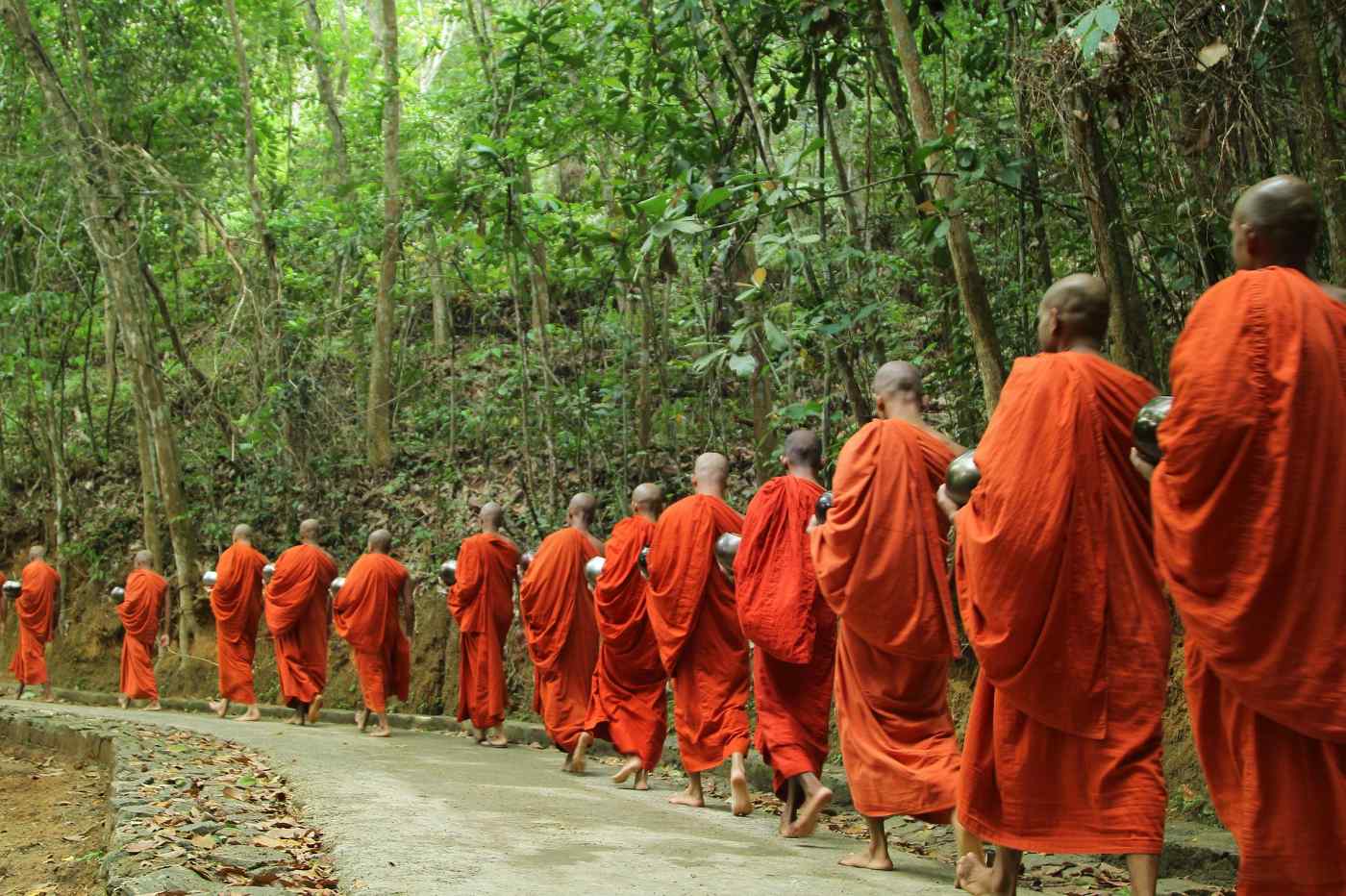
In that beautiful speech to the crowd gathered in Columbia, South Carolina, Pannakara also stressed the importance of living mindfully. He taught the listeners how learning to be present in the moment will naturally help us become living embodiments of peace and loving-kindness.
In a nutshell, Pannakara’s second central point boils down to this: mindful living is a crucial gateway to finding inner peace. But how can we live more mindfully when it seems like everything in our culture conspires to keep us distracted and inwardly fragmented?
We must, as Pannakara stressed, dramatically slow down the frantic pace of our lives so we can open our minds and hearts to the many mini-miracles that happen every day. For instance, the sun rising and setting. The ecstatic feeling of love we experience through authentic connection with others. The presence of the Divine walking in lockstep with us when we’re immersed in the glory of Mother Nature. The endless synchronicities that occur in our lives as mysterious manifestations of God’s eternal grace.
Once we become conscious witnesses to the regular occurrence of these mini-miracles in our lives, then and only then can we become aware of the biggest miracle of all: the underlying unity that ties all of us together. And once we become intimately attuned to this transcendent reality of oneness, we can’t help but feel compassion in our hearts for everyone and everything.
This state of unified awareness blossoms from the flower of mindfulness, and it also happens to be the foundational root of radical love—the very kind of radical love that these brave monks are spreading on their inspiring journey to awaken the world, one soul at a time.
«RELATED READ» “MY RELIGION IS KINDNESS”: 10 mindful living tips inspired by the Dalai Lama»
image: MahamevnawaMahaviharaya

