
With all beings throughout time
I will honour loss and grief
By giving myself to the moment
Making a ceremony of this passage
Recent studies have provided proof of what humans have always known, that rituals, simple or complex, are extremely useful in processing grief. This chapter offers guidance for creating your own rituals to mark loss and death.
Throughout history, humans have metabolized loss through the enactment of ritual and ceremony. The internal process of coping with major life changes has always found its way to outward expression and release through action that links what is personal to the sacred or universal.
Engaging in ritual, we tap into a field of energy beyond what is contained in the body and mind. Ritual offers a reminder that we’re part of something boundless and timeless, a sacred container that holds our narrow experience of loss. Connecting to the universal provides a new and necessary lens through which we can see our loss as both essentially human and as an expression of the divine.
A growing body of psychological research shows that the use of ritual promotes healthy grief processing. Perhaps most importantly, the research finds that rituals return a sense of control to a situation that feels beyond our influence. Rituals also allow those who grieve an opportunity to acknowledge the reality of a death or loss while providing a tangible outlet for the thoughts and feelings associated with the loss.
Whatever your spiritual or religious background, you likely have engaged in rituals that are prescribed to mark significant life events, including loss. Rituals performed in the context of religious tradition connect the mourner to the larger body of adherents, past and present. Every religion and culture has established rituals to honour the grief experience as well as some type of funeral or memorial ceremony.
Meanwhile, it’s also possible for mourners to create their own rituals. I invite you to embrace the concept of “self-generated ceremony” to mark and honour your experience of loss. Self-generated ceremony provides a spacious container for mourners to create their own rituals based on what has personal meaning for the life event being marked.
Honouring my mother
Following the death of my mother, I decided to go off to the desert and fast for four days and nights. I chose a cave I’d previously used for shelter during a ritual fast. It was situated on the slope of a mountain ridge overlooking a wide-open valley.
My intention for the fast dedicated to my mother was to work on shifting my relationship to her by letting go of the living, embodied mother and calling in the spirit mother I could still feel connected to, but in a new and different way.
A daily ritual I engaged in during my solo time was to eat a small amount of food in the morning, even though I was technically fasting. My mother often expressed concern that I was too thin and didn’t eat enough. Ritualizing the simple act of eating a small portion of dried fruit, nuts and hot broth seemed a fitting way to honour my mother and the love and support she extended to me.
I received each precious bite of food as a gift, thanking her and assuring her that I’d take care of myself, just as she’d want.
It was impossible for me not to also acknowledge the generosity of the great Earth mother, the source of the food I was taking into my hungry body. In the process of extending gratitude for the life-sustaining nourishment, my birth mother became entwined with the earth mother. There was no separation between my birth mother and the Earth mother; they were one.
This was exactly in line with my intention. I view my mother now as inseparable from the maternal energy that gives birth to everything and holds each of us as we journey through life. That is where my mother has gone, and that is the spirit energy to which I can connect daily.
My solo time entailed other rituals to mark my passage into a new phase of life. My days were filled with conversations with my mother, reflection, screaming, crying, laughing, meditating and intention-setting.
When I completed my time in ceremony, I descended the rocky ridge, returning to camp to share my story and then a few days later returning home to resume my life there. I arrived home feeling much lighter and as though I no longer carried the heavy burden of my grief. It was as if I’d left it in the desert, in a place that will forever be associated with that experience of deep ceremony.
If the story of my grief ritual strikes you as peculiar, that is a reflection of the beauty of self-generated ceremony. What feels meaningful and useful to me may not be meaningful and useful to others. What works for you may not work for me. I appreciate the permission that self-generated ceremony bestows on each of us to carefully consider what we need from ritual and to craft it for ourselves.
I was very fortunate to have been able to break away for several days to enact my grief ritual. However, it’s also possible to create rituals that take very little time. Don’t underestimate the impact of less elaborate and shorter rituals. You might find a simple gesture or ritual that you enact daily for a period of time.
I encourage you to work with whatever resources and with however much time you have. A ritual devoted to processing loss can be as simple as a daily prayer, a walk, or dedicating a meal to the deceased or to whatever is no longer in your life.
Creating your own grief ritual
In my experience of creating meaningful grief rituals for myself and others, I’ve identified three key elements that can be used as a template when creating your own. I label these elements story, surrender and succession. Although I explain the template in terms of the ultimate loss, that of a death, it can be used when processing the grief that arises following any type of loss.
Story
Story, the first phase of a grief ritual, is a celebration of who or what has been lost. It’s the full acknowledgment of your relationship with the source of your grief, a chance to look back on how things were before the death of a loved one.
The possible activities associated with this element of the grief ritual are storytelling, dispersing the possessions of the deceased, displaying or reviewing the creations of the deceased, or even releasing anger or regret regarding the deceased. It’s an opportunity to review the role of the deceased in your life up until now.
Surrender
Surrender is the in-between transition phase of the ritual. In this phase you let yourself acknowledge whatever emotions arise for you as you steep yourself in the fullness of your loss. This is a moment to be with the unrestrained expression of your grief.
In this phase, you’ll be best served by staying in contact with your present-moment experience. This phase might take the form of a meditation, a silent reflection, final words of goodbye to the deceased, a prayer, tears or even wailing. In this phase, you’re releasing your grief emotions.
Succession
Finally, in the succession phase you’re planting seeds for what comes next in your life. Recognizing that so much is different now, this phase is future-oriented, helping you to reimagine a new way of being.
Succession supports you in finding purpose in the loss. It invites you to consider the legacy left by the loved one who has died and how you might support and spread that legacy. You might contemplate whether you’ll do anything differently in the future to honour that life that has passed. Other activities associated with this phase could be sharing out loud an intention or finding an object that represents what you learned from the deceased.
Integrating objects into ritual
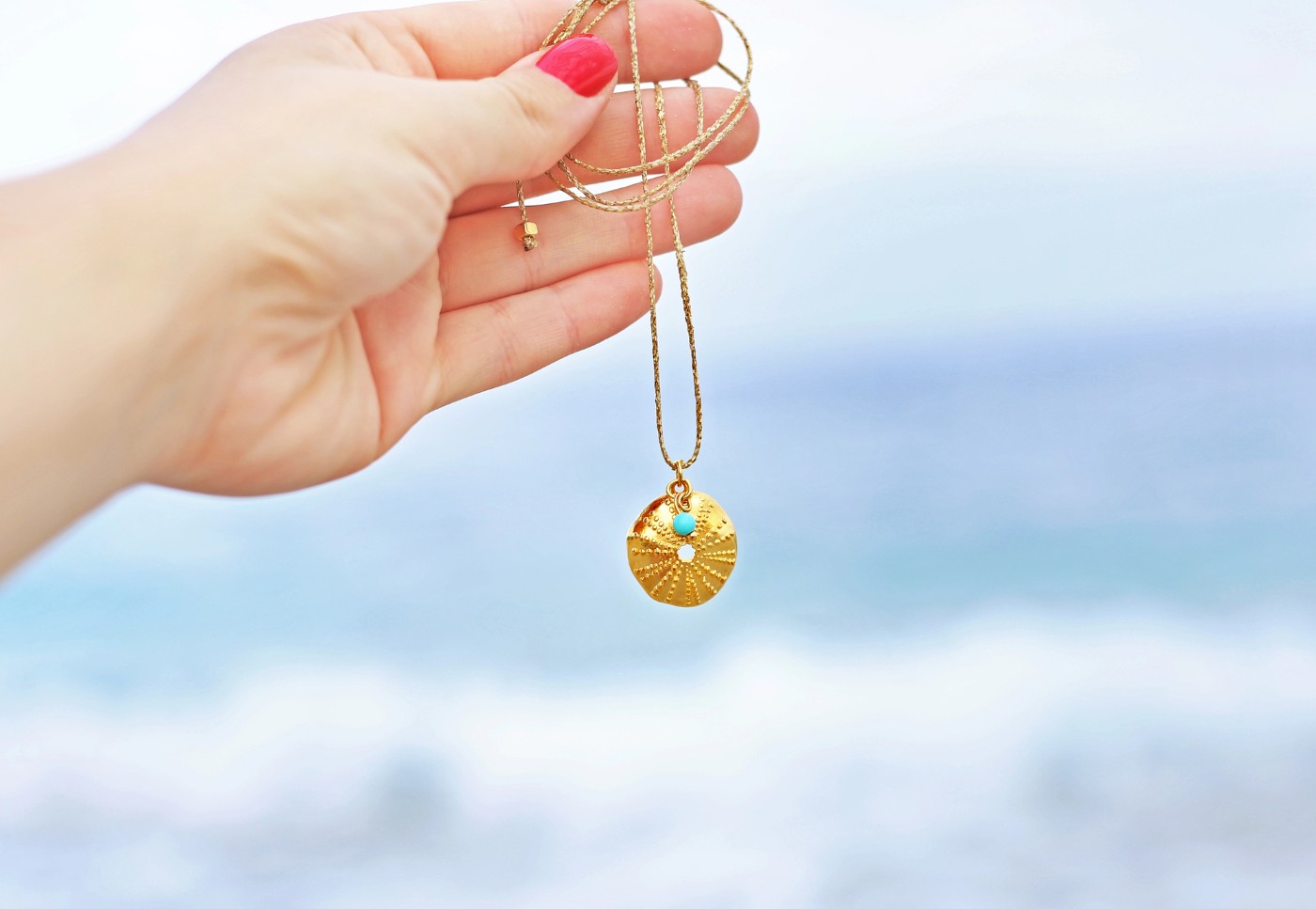
Whatever form your grief ritual takes, you might find integrating certain symbols or objects extremely supportive. For instance, holding an object during part of your ritual and then releasing it can help you let go of painful memories, missed opportunities or difficult emotions. Objects can include photos, articles of clothing, favourite books, jewellery—whatever feels meaningful to you.
For my mother’s funeral, my father, siblings and I each wore a piece of her jewellery. The brooch I wore during the funeral went out to the desert with me, and I used it in the ritual I described earlier. It currently sits on an altar in my home, reminding me of my mother.
Holding an object during part of your ritual and then releasing it can help you let go of painful memories, missed opportunities or difficult emotions.
Salt was commonly used in rituals we offered to family members mourning the death of a loved one who died at our guest house hospice facility. Family members would hold a pinch or two of salt in their hand while recalling their loved one out loud. Then they would disperse the salt into a tall vessel of water and watch as it dissolved. The salt was still present in the water but no longer visible.
I’m also fond of using rocks in grief rituals as a talking piece to hold while sharing a story. They can be held during rituals and then returned to an outdoor space to symbolize something or someone you’re letting go of. Or they can be placed in a pocket or purse or set on a shelf and kept as a reminder of some new intention or commitment to yourself.
As part of your ritual, objects can be buried, submerged in water, burned or placed in a special location in your home.
Embodying ritual: 3 suggestions
Some types of movement can be extremely powerful in releasing stuck energy in the body.
Dancing as self-care
I’ve found dance to be an effective way of processing grief when I can’t otherwise release it. Many people are self-conscious about dancing while in groups, and if this is the case for you, try to find a place where you’ll have privacy. You might dedicate a period of movement to celebrating the body that is still sustaining you. Free-form movement and dance are wonderful self-care practices for releasing tension or processing emotions.
Making use of music and sound
Music or sound can be extremely evocative in grief rituals. You might incorporate a song that was a favourite of your deceased loved one, which may help release stuck emotions. Or you might go to a place where you know you’ll hear the sounds of birds, flowing water, the wind, rustling leaves. These sounds can be calming and can help you feel connected to the natural, enduring world that holds your experience of loss.
Walking to honour your loved one
If the weight of your grief prevents you from crafting something elaborate, you might enact something very simple like a walk dedicated to the person you’re grieving, as discussed above.
On the way out, let yourself think of the person, recalling your relationship and what you learned from them. When you’re ready to return, you might pause for a few moments to let go of any thoughts and check in with any emotions that are present. On your return walk, think about ways you can honour the person by carrying forward their legacy or sharing what you’ve learned from them with others.
Trust the power of the ceremony

Whatever you plan for your grief ritual, it can be helpful to let go of any attachment to it going according to your plan. If you aren’t familiar with enacting rituals, it may feel awkward or forced. This is natural. Try to push through any resistance, and trust in the power of the ceremony, regardless of how it unfolds.
Though the impacts of a grief ritual may be subtle, you may still experience a sense of release or lightness. Trust that your body and psyche will remember the enactment of ritual.
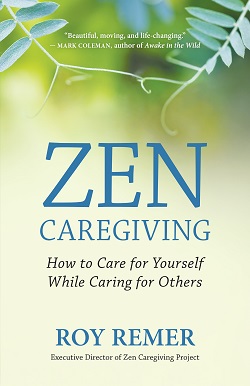
Roy Remer is the author of Zen Caregiving: How to Care for Yourself While Caring for Others. An educator and end-of-life caregiver since 1997, he’s the executive director of Zen Caregiving Project in San Francisco and lead creator of its Mindful Caregiving Education curriculum. A dedicated practitioner in the Soto Zen tradition, Remer is a student at San Francisco Zen Center. Visit him online at www.ZenCaregiving.org.
Excerpted from the book Zen Caregiving: How to Care for Yourself While Caring for Others. Copyright © 2026 by Roy Remer. Reprinted with permission from New World Library. www.newworldlibrary.com
images: Depositphotos