

My husband had just finished his first full Ironman-distance race since we had children. He came eighth overall and first in his age group. But when he reached the finish line, the feeling that swept over me wasn’t really about where he finished. It was about the 10 years that had brought us back to this distance, and everything that had to happen to make that moment—including my place in it—possible.
A race is never just one day. It begins months and sometimes years earlier. For my husband, that meant early mornings, long rides, hard training blocks, fatigue and discipline.
For me, it meant organizing everything around it. It meant adjusting meals to his training: more carbohydrates before long or hard days, more protein afterward. Junk food and sweets still had their place, but usually after the work had been done.
It also meant more laundry, though not just more of it. Tri-suits couldn’t be treated like towels. Compression socks couldn’t go in with the general wash. Gear had to be sorted, cleaned, dried and returned to use.
These were small things, but they happened often enough to become part of the structure of our life.
We started this 10 years ago. At first, triathlon sat somewhere between a hobby and an obsession. Then, gradually, it became one of the things around which our days and weekends were organized.
The role of “watcher” isn’t passive
When my husband first got into the sport, I joined mostly because I would barely see him otherwise. He was always training, so I started racing, too. For a while, we did Olympic-distance races together. Then he moved into longer distances. I stopped racing. He kept going. Over time, I became the person who watched.
That role sounds passive from the outside, but it wasn’t. I was there with him from the start of the day to the end. I remember standing in the dark before sunrise, watching him and the other competitors enter the water. Then came the long hours of waiting and tracking, figuring out where to stand, when to move and how to catch him for a few seconds before he disappeared again on the bike or run.
Most of the time, we weren’t staying near the race venue, so I walked everywhere. Sometimes I covered miles between points, trying to see him on the bike, catch him again on the run and still make it to the finish in time. Over the course of a race day, I often walked close to a half-marathon distance myself. Eventually, I learned how to read a course, how to move ahead of him and how not to miss the one moment I’d get.
Making it to the finish line with the kids
Then we had children, Tim and Ivy, and the whole thing became harder. As a family, we couldn’t always make it to the swim start anymore, but we always made it to the finish line. That now meant pushing a stroller over uneven ground, across grass, up slopes and over bridges while carrying milk bottles, diapers, snacks, extra clothes and whatever else we might need for the day.
By then, supporting my husband was no longer just a matter of showing up. It required planning, timing and constant adjustment. The terrain, the weather, the children, the food and the pacing of the day all had to be considered. Everything had to be managed so we could meet him at the finish line without the day unravelling before that moment arrived.
Returning to the full distance after 10 years
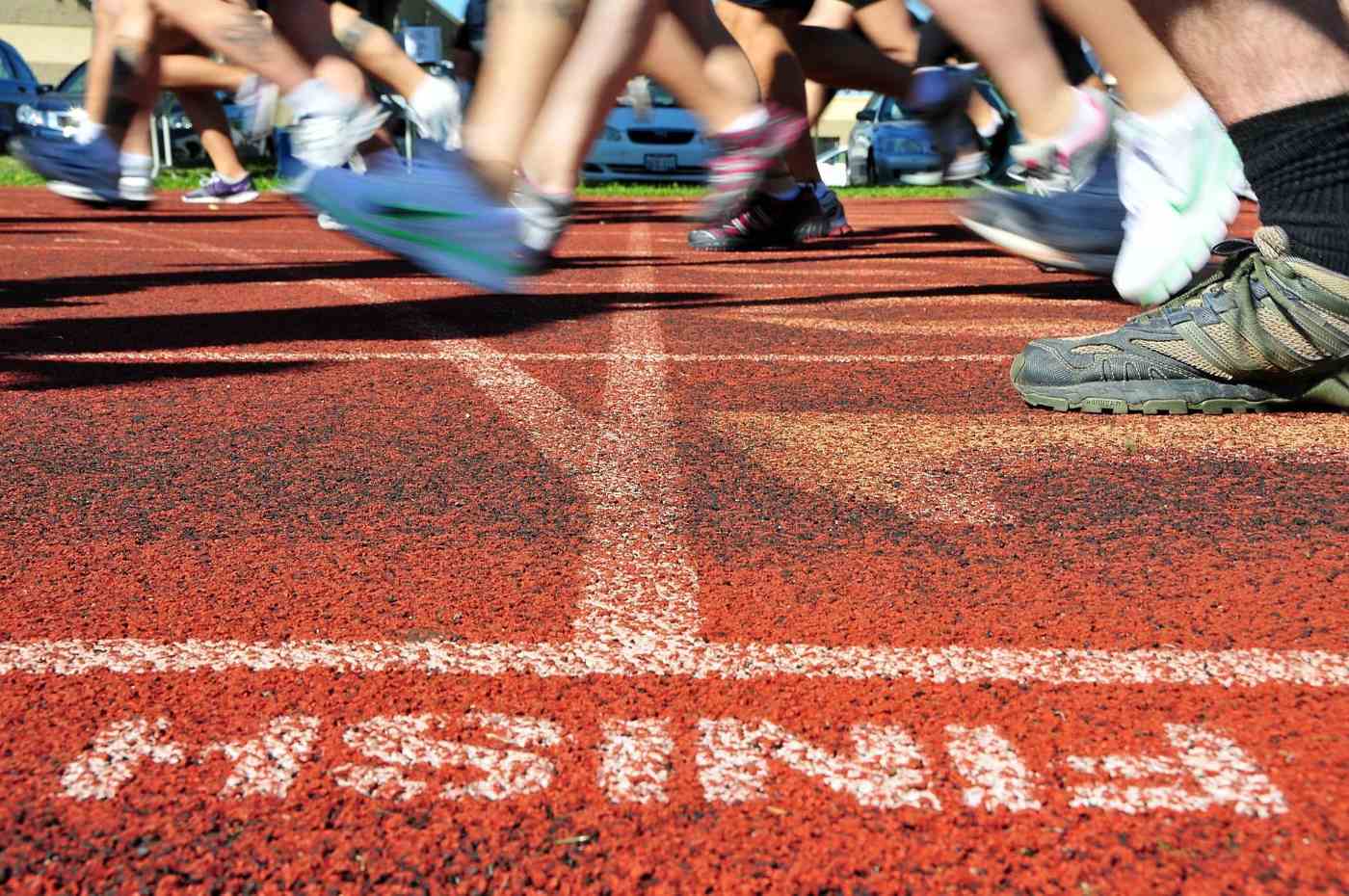
This year marked 10 years since my husband first started triathlon. It also marked a return to the full distance, this time with two children in the picture. It was his return to this race, but it was also mine. I was returning to the distance, too, not as the person racing but as the person who had once organized herself around it and was now wondering whether our family could do that again.
I wasn’t sure. I thought about the schedule, the training, the weekends and the sheer weight of another long race day. But the children were older now, and something about the timing felt possible. So we said yes.
It felt less like a family operation held together by logistics and more like a family day at a sporting event. Something that was actually fun.
This time, our hotel was at the race venue. There were no long walks pushing a stroller across town, no bags packed for an entire day away from shelter. We could have breakfast downstairs. When the children got tired, I could bring them back to the room to rest. Then we could go back out and catch my husband on the run.
We were still out there for more than 10 hours with two children, but it felt lighter. Not easy, but lighter. For the first time, it felt less like a family operation held together by logistics and more like a family day at a sporting event. Something that was actually fun.
The children got into it, too. They watched competitors go by and commented on their bright tri-suits, bikes, helmets and shoes. They read bib numbers and counted people. We were no longer only waiting for the day to be over. We were part of it.
Something in me had changed
So much of life builds slowly and then compresses into a single day: months of training, years of routine, all funnelled into a finish line, a few seconds of recognition and a short video clip sent to family and friends. What stayed with me this time wasn’t relief, but recognition.
Ten years in, something in me had changed. There was nothing I needed to prove in order to feel that I belonged there. I didn’t need to explain my place in it. I could simply be there and know that I was part of the story, too.
That was the real shift. Not only his return to the distance, but my return to it without strain, without proving, without standing at the edge of it all. After 10 years, I was still at the finish line. But this time, I was there differently.
«RELATED READ» MINDFULNESS WHILE RUNNING: Make a mind-body connection and get in the zone»
image: mandarinblues