
There are no rigid rules about spiritual awakening—only patterns that occur in most cases. While most people go through a long period of adjustment after transformation, others seem to sail through the process without any turbulence. The story we’re going to read now is a good example of this.
At the same time, Eve’s story is the most striking example of sudden release from addiction that I have come across—and one of the most amazing stories of “transformation through turmoil” in general that I’ve investigated.
Eve is a 48-year-old woman from Edinburgh, Scotland, who is bright, cheerful and glowing with health and vitality. She runs a company that organizes conferences and other events for businesses. If you met her, you’d find it difficult to imagine that, until nine years ago, she lived a life of incredible chaos and suffering.
At the same time, it’s not necessary to compare her present life to her previous one, because in a very real sense, she isn’t the same person who led that previous life.
Another way in which Eve’s story breaks the normal pattern is that, unlike many addicts, she didn’t have an abusive childhood. She came from a stable background, with parents who were attentive and caring and had high moral standards. Her parents didn’t smoke or drink and had a harmonious marriage. Her other siblings did well at school and college and entered middle-class professions, and had stable and successful lives.
Eve can’t pinpoint any reason why her life turned out so differently from theirs, or why she became an alcoholic. As she says, “It just seemed to be inside me.”
Rebellious beginnings
When Eve was five or six, her behavior started to become wayward. She’d steal cigarettes from her grandmother and smoke them, and also steal money from her mother’s or grandmother’s purse. She became disruptive at school and was forced to sit separately from the other kids. At the age of 10, she was suspended from primary school for a week, for sitting in the staff room and smoking one of the teacher’s cigarettes:
I don’t know why I was doing these things. But somehow it was all fear-based. I had a feeling of being really separate from everyone in my family and from the other kids at school. I always felt on the outside looking in, totally disconnected and isolated. I didn’t feel like I fitted in or that I knew what I was doing. Everybody else seemed to know what they were doing.
Eve started to drink when she was nine or 10 years old. Although they didn’t drink, her parents had a drinks cabinet for guests, and Eve would mix different spirits together in a flask, which she hid in her bedroom. She drank from the flask before going to school in the morning, because it took her fear away.
At the age of 13, she’d drink in the park with her friends in the evenings, but whereas they had a cut-off point, she didn’t seem to get as drunk as they did and always wanted more.
Eve left school at 15 and took a job as a trainee chef. There was a culture of heavy drinking among the other chefs, and she drank all the time when she wasn’t working, drinking during the afternoon breaks between her shifts and at the end of her evening shift. She was already a full-fledged alcoholic. She started to have blackouts and became involved in dangerous situations.
As Eve says, “I was waking up in shady places with shady people who were older than me, and I couldn’t remember what had happened. I became promiscuous by proxy, going home with people because they had booze and I could carry on drinking. It wrecked my self-esteem even more, and it all led to another drink, because drinking would stop me feeling so bad about myself.”
A move abroad
At the age of 18, Eve inherited some money when her grandmother died. Her parents decided she should go abroad, to separate her from the heavy drinkers she was hanging around with. But the plan had the opposite effect.
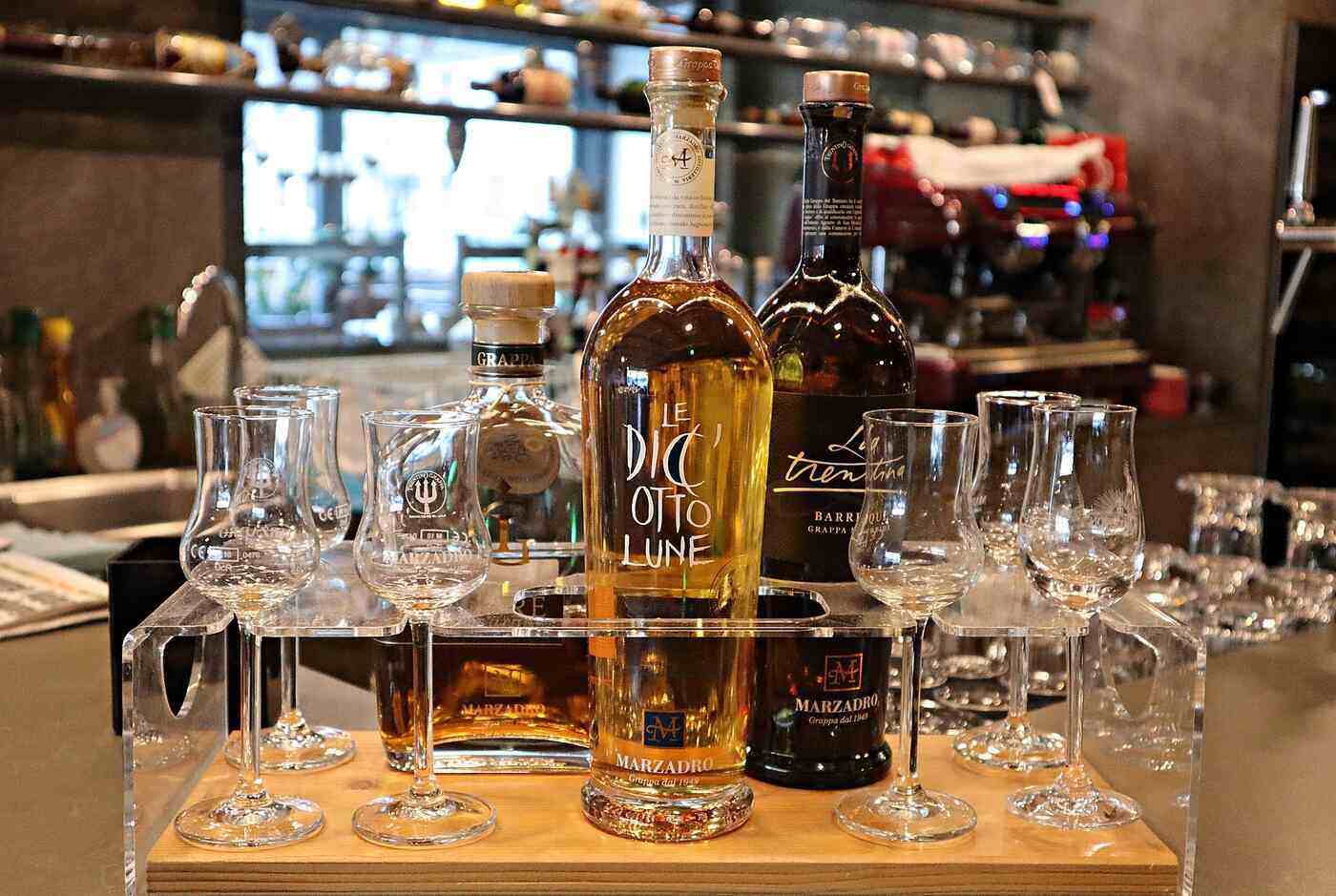
She flew to Italy and quickly found work in a bar. Drinks were free for bar workers, and as Eve says, “I was absolutely legless for a couple of years. My behaviour was awful. I thought that people who had families and went to the cinema were losers. I thought I was just open-minded and liberal and everyone else was boring.”
Eve had an American boyfriend who managed the bar where she was working. When he decided to return to the States, she went along with him. But the relationship didn’t work out, and she ended up living in a trailer park:
Most of the people at the trailer park had higher moral standards than me. I was morally bankrupt, and my behaviour became even more bizarre. I was never sober. I took drugs, too. I’d take whatever was going—I wouldn’t even ask what it was until two minutes afterward. But drugs were always secondary to alcohol. Once I sniffed some heroin, and hours later when I came to, I saw an unopened bottle of lager on the coffee table. And I thought, “This is no good. Drugs are getting in the way of alcohol.”
I was addicted to drama as well as alcohol. You get yourself in so much trouble in a blackout or on a bender. I wasn’t capable of making sensible conscious decisions. All my decisions were awful and dangerous, and they all revolved around alcohol. My survival instinct was secondary to my obsession with alcohol. I ended up in so many dangerous situations. I was raped so many times over the years and had a lot of other violent encounters. I never reported them because I thought I was worthless and so it didn’t matter.
Drifting around the U.K.
Eventually, Eve was deported from the U.S., and over the next few years, she drifted around the U.K., from city to city and job to job. As she told me, “I would move somewhere and I could put on a good front. People would think I was good fun. It didn’t take them long to suss me out. I would lie to them and steal from them.”
Eve was arrested for drunk driving and banned from driving for 15 years but carried on driving anyway. She did community service, had counselling, and attended drug and alcohol awareness courses, but had no intention of stopping drinking. Even when her physical health started to deteriorate, it didn’t change her behaviour. She went to the hospital with a kidney infection and was told that her liver was three times the normal size. On leaving the hospital, she went straight to the pub.
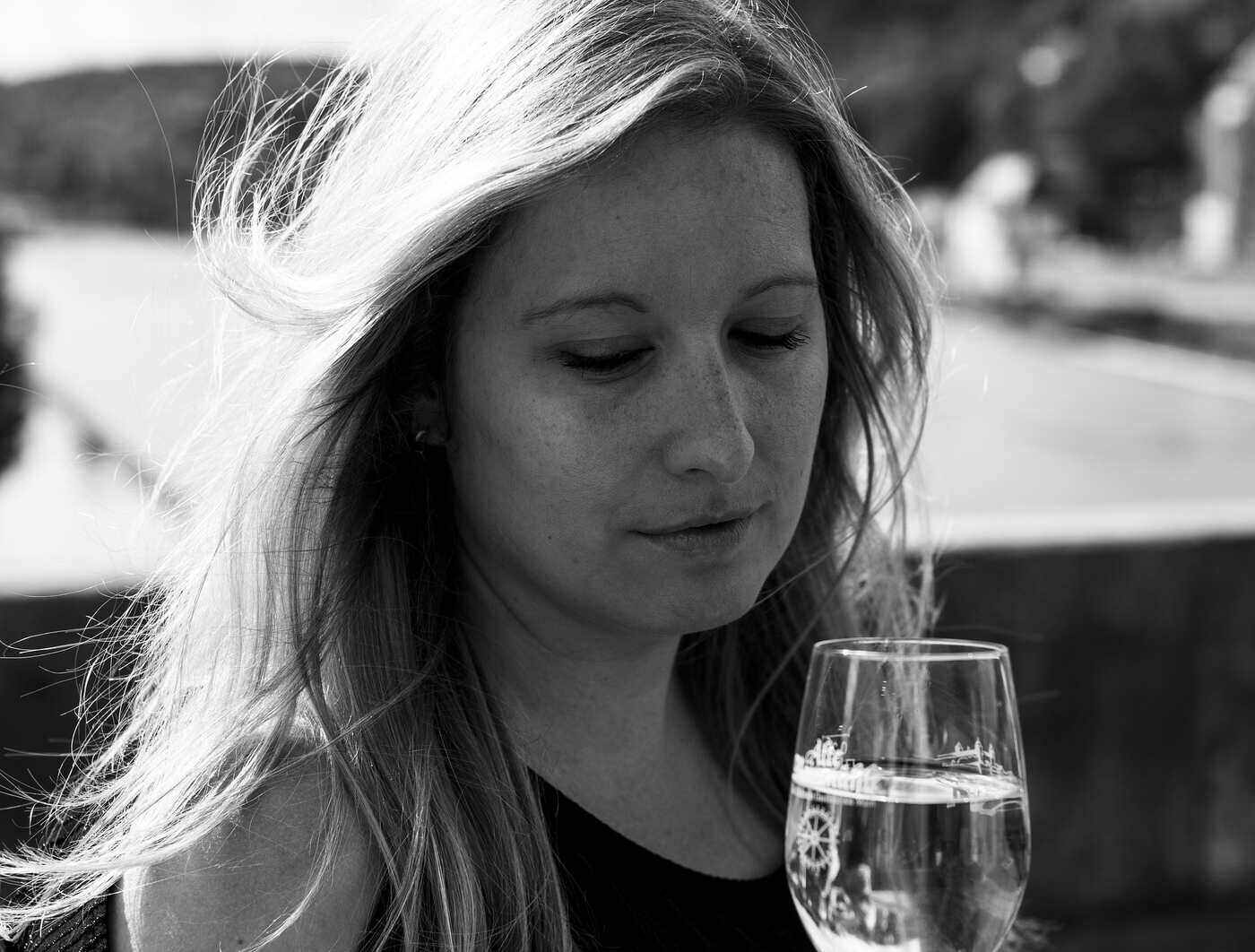
Eventually Eve was drinking 10 to 12 bottles of wine a day—she drank wine because she thought it looked more socially acceptable. She’d drink on an empty stomach as soon as she woke up in the morning. But by this point, the alcohol wasn’t working anymore. She was drinking just to stop herself from shaking and having alcoholic fits. If she went more than 45 minutes without a drink, feelings of terror and paranoia would overwhelm her. She was having hallucinations and sensing evil presences around her.
Total breakdown and transformation
Below, Eve tells the story of the final stages of her breakdown and of the incredible transformation that occurred afterward:
I ended up homeless because I’d burned all my bridges. My family tried everything. I was institutionalized, but I ran away, jumped over the fence. Nothing worked. I just wanted to drink. I used to phone the Samaritans and cry my eyes out for hours and hours. By that point, the party was over.
All my relationships were ruined. I was just wandering the streets. In a strange way, it was the easiest time because I’d completely given up on myself. It was just carefree drinking. I didn’t have to try and hide it, so I could drink openly on the streets.
It came to an end when I tried to commit suicide. It wasn’t a cry for help. The alcohol had stopped working, and I was completely broken down, physically and emotionally and spiritually. Whenever I woke up from my drunken stupor, I was disappointed that I was still alive. There was a feeling of dread—“Oh God, I’m still alive. How am I going to get through today?” I was a wreck, an empty shell. I’d walk a few steps and then have to stop and sit down or lie down on the pavement.
I had nothing to live for, nothing to give, and I thought, “I can’t do this anymore. I don’t have the strength. Even when I do have a drink it doesn’t last more than an hour before the paranoia and hallucinations start.”
I walked in front of a bus that was travelling at 40 miles (about 64 kilometres) an hour. I genuinely wanted the bus to hit me, but it swerved. The police were called, and I thought they were going to arrest me, but the policeman wanted to help. He asked me, “What are you doing to yourself? What are you doing to your life? Is there nobody we can get in touch with? Is there nowhere you can go?”
I hadn’t spoken to my parents in quite a while. It was too much for them—I was breaking their hearts. But I told the policeman to phone them, and he took me back to my mum and dad’s.
This was when the miracle occurred. My mum said, “I suppose I’ll have to give you alcohol,” and I said yes. She gave me some red wine and I desperately needed it. I was rattling, in withdrawal. I picked up the glass, lifted it, then put it down. I kept picking it up and putting it down. It wasn’t me that was putting it down. It was such a strange phenomenon. I was like, “I need this drink,” then the hand would just put it down.
The doctor knocked me out for a few days, and when I came to, I didn’t want to drink. For as long as I can remember, I’d thought about drinking every single second of every day. It was all about the next drink, about where it was coming from. But now it had just gone.
When I came to, Mum sat me down in front of a mirror, and said, “Look at yourself, you’re an alcoholic.” I was 39 years old. I looked at myself, and it was one of the most surreal experiences I’ve ever had. I had no idea who I was. I didn’t connect with my reflection. It could have been a completely different person. It felt like a completely different person.
I said to my mum, “Who is that?”
And she said, “It’s you.”
And I said, “No, it’s not—I don’t recognize that person.”
It was such a strange phenomenon. I didn’t make any decisions. I didn’t do anything. But the need, the want, just disappeared. I’m involved with Alcoholics Anonymous (AA) now, and we always say that people have to change their behaviour. But I didn’t change anything. My behaviour just changed. I just changed, like magic. One day I was a person who would lie and steal and do anything. And now I’d changed into this person who was honest and kind.
My mum said it was as if I’d had a psychic change, as if my whole personality had changed. And that was how it felt.
The urge is gone
Nine years later, Eve has still not touched a drop of alcohol or felt the urge to drink. Working in AA, she’s fully aware that a lot of people struggle to stay sober, but she never has. As she says, “I feel really bad for people who are struggling, but I never have. Even when I went through hard times, like when I lost my mum, I never once thought about drinking again.”
Steve Taylor, Ph.D., is the author of Extraordinary Awakenings and many other bestselling books. He’s a senior lecturer in psychology at Leeds Beckett University and the chair of the Transpersonal Psychology Section of the British Psychological Society. Steve’s articles and essays have been published in more than 100 academic journals, magazines, and newspapers and he blogs for Scientific American and Psychology Today. Visit him online at www.StevenMTaylor.com.
Excerpted from the book Extraordinary Awakenings: When Trauma Leads to Transformation. Copyright ©2021 by Steve Taylor. Printed with permission from New World Library—www.newworldlibrary.com.