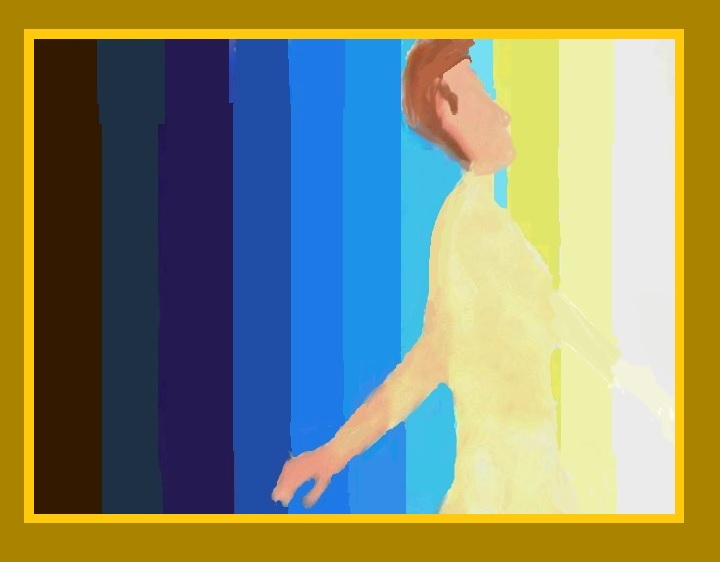

What we refer to as memory is a very slippery but significant characteristic of being human. It may be that the way human memory works and the forms that human memory takes—the images, the narratives, the sort of storyboard nature of what we recall—is a defining characteristic of being human.
We know from clinical data that as we begin to forget, for whatever reason, that all of our behavioural patterns can be affected: our opinions, our memory of family, our skills, our selves and even how to respond to our physical needs.
In any case, memory is a necessary, but often unreliable part of our adaptation to our experience. Why we remember and why particular memories come to mind is often a mystery, but how this affects our behaviour is critical.
So, we can say, as a way of appreciating the outcomes of the process of recollection, and their connection with who we think we are and how we behave, that we are more like a flexible or dynamic work of art than anything fixed, permanent or absolute. A work of art that is held in the somewhat fragile appliances we call the body and its brain.
It is artwork, since it is all interpretive, coloured with emotional implications, and based on the tools of perception and skills of observation we have (or had) in any given moment we may be able to recall.
Given that we can see the aptness of this analogy, we can see that our more common relationship to this artwork of memory is one of development, maintenance, protection and repair. The behavioural patterns that arise are based on our hopes for improvement and our fears of vulnerability.
The way we see our world, and respond to its vicissitudes, is the result of the filtering process provided by our memories of how our world should, could or ought to be. Thus, memory is a source of both intelligent and neurotic adaptations to our experience.
The true value, limitations and failures

Memory is the basis of the intelligent sorting out of how our world works, from the perspective of survival. It becomes neurotic when we fail to account for the dynamic and impermanent nature of our world, and the limitations of how we are able to assess our situation.
When we feel we are achieving a successful adaptation, we may feel there is little need for re-examination of the basis of our activities or our lack of them. In this case, we may allow our memories to take the place of intelligent examination.
But when difficulties arise, or we feel threatened by real or imagined possibilities that do not lend themselves to any (cooked by memory) solution, then we often allow a sort of insanity to arise, since our rudder of “knowing” provided by memory is no longer functional.
As we begin to see the true value of memory, as well as its limitations and failures, we also begin to “remember” the value of our own intelligence and its ability to make functional sense of the world as we experience it.
We would like to believe or even feel that we know, or can come to know, that we are much more than a collection of memories. I would agree, but I would add that it is our memories, our ability to remember those things that appear on the screen of our particularly human consciousness, that make such an intuition possible.
As we physically awaken from our various periods of unconsciousness (naps, sleep, etc.) it can be seen that if we pay close attention, there is a moment or short process of “remembering” our world, a moment of necessary recognition that we go through as we begin to put our world together again.
In the big picture, we seem to be able to find our way and lose it, to allow a clarity of perception and then to create interpretations that cloud the whole thing. The difference between our world as it is without us, and as it is with us, is not clear. We may have no potential to find out in any final way, but it can be an appreciable experience, if we can get beyond our hopes and fears of it.
«RELATED READ» THE INTUITIVE WORMHOLE: Tap into your radical intuition with this 4-part exercise»