
Perhaps especially when life seems, as the poet Robert Frost put it, “too much like a pathless wood,” it’s common enough to allow our overworked imaginations to wander back to simpler times. And perhaps not just by resting in a couple of nice memories, but also by seeing them quilted into a more wholistic sense of nostalgia—the past times were something, weren’t they?
The psychologist Clay Routledge, an expert on nostalgia, tells us that while we might see nostalgia as a sign of being wistfully “stuck in the past,” it’s better understood as a way we recognize meaning and value in our lives. Nostalgia is a phenomenon that can promote feelings of well-being and even social belonging.
The peak elevation of nostalgia
For me, and for many others, the territory’s peak elevation is somewhere in the realm of childhood. That’s natural enough: After all, our world was then more new, more wondrous. Most of us lived a life that was largely protected from the world’s perils and fissures.
As a child, you probably didn’t read the news and teach yourself a whole planet’s troubles every morning. You didn’t know the banal yet corrosive stress of interest rates rising or struggling to find work. Even if you did know about those things, you weren’t expected to do anything. It wasn’t your job to constantly monitor what might be around the corner and prepare appropriately, wondering if it would ever be enough.
It might not be childhood: Maybe a stretch of your teens or twenties is the time when people seemed to smile more when they looked at you; a time you remember like a kept promise; a time when it didn’t all seem like so much damn effort.
And isn’t it easy to slip into the sense that the world itself was different? As if its character was different. A different aura. Dogs chased cats but never caught them. The world was more neighbourly back then.
If you’re prone to such impressions, there’s probably still some drab spoilsport part of you that reminds you that the past isn’t all it’s cracked up to be. Different? Yes. Different technologically; maybe different politically. Certainly, it was worse for some in terms of rights or acceptance or opportunities. When it comes to medical advances, it was worse for everyone. Hindsight ain’t always 20/20.
Subjective feelings about different eras
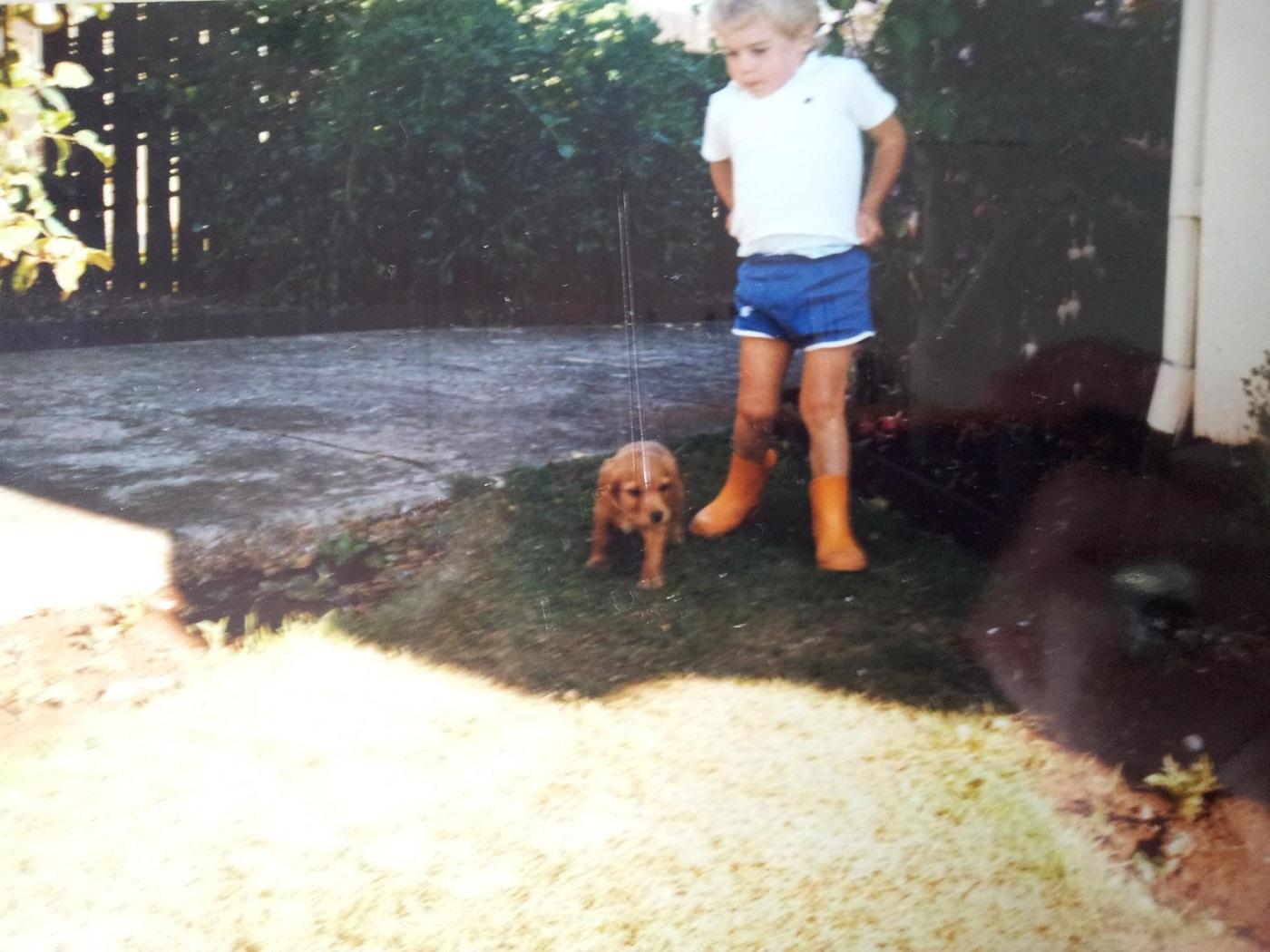
In my case, I remember that when I was around three or four years old, someone stole my dog, Daisy. She was a cocker spaniel puppy who’d accompany me on my backyard adventures. We had an empty garage at the back of the house where Daisy slept overnight, but we opened the door one morning and she wasn’t there.
I’m sure it affected me, but being that young was likely also a blessing. I remember a feeling of confusion, but I had no worst-case-scenario imagination for it. She was just gone. It’s probably harder to look back now and wonder what happened.
That was smack-bang in the rosiest part of my childhood, at an age when the world was at its most smiling—when there’s no one who doesn’t want the best for you. And some lowlife stole our little dog. Most likely it was someone from the same neighbourhood I look back on so fondly—that I still drive happily through if I’m in town.
I know it’s not exactly a revelation to you that there were such people in 1987. There had been thousands of war crimes—thousands of wars—before then; there had been serial killers, torturers, every kind of depravity. I know, I know: Human history began long before that. But I didn’t, and we’re talking about “subjective” eras here, experiential eras. The feel that particular times of your life have for you.
We’re not in the past, and we’re never going back, so one strategy for appreciating your current situation is indeed salami-slicing that dreamy nostalgia with revisionist scrutiny. Ah, yes, the halcyon days of wife-beaters and high unemployment and homophobia. Rub an old photograph and notice that what you thought was the tint of age comes off on your fingertips as a thin layer of grime.
Seeing the present “nostalgically”
Yes, you can fact-check the fantasy as a way of putting the blessings of the present in clearer view. Yet, how joylessly academic! Besides, I suspect that few of us gain more than a momentary flicker of gratitude from dry calculations that sum up how much better we have it now. They don’t really elevate the present, nor do they dull the mystique of the past. They’re just dull.
Nostalgia is an impulse, an emotion. It’s simply stickier than that.
Instead, what if we could do things the other way around? Let the imperfections of the nostalgic past, which we know are there, suggest that there’s no reason why we can’t look at the present just as charitably. As separated as the past may seem in the snow globe of memory, it’s the same world. And because it’s the same world, there’s always the option to confirm the continuity: to see the present “nostalgically.”
The past was far from perfect, yet what a talent we have for looking lovingly past its flaws. If nostalgia allows us to recognize meaning in our pasts, perhaps the same lens can help us better attend to it in the present.
How might we approach this, though?
Inviting in a spirit of non-reactivity
Thinking pleasantly of the past always seems like such a rest. Who among us isn’t sometimes—again, as Robert Frost put it—”weary of life’s considerations”? In the past, there’s nothing to anticipate. The future is by nature ambiguous and uncertain, and yet, that hardly stops us from striving to “certainize” it—barrelling mentally ahead by planning, expecting, worrying.
A helpful invitation comes from a brief mindfulness exercise by Loch Kelly. He asks us to stop and inquire, “What’s there when there’s no problem to solve?” When we think of the past, isn’t that part of the respite it offers? In the past, there’s no problem to solve.
While we’re alive and bumbling into the future, navigating problems is always going to be part of the gig. But it’s not the whole production: We can invite ourselves to let that instrumental impulse relax, and greet the present as if there isn’t always and already some problem to solve.
By allowing intentionality to subside now and again, we can invite a spirit of benevolent non-reactivity into the present aura, too.
Yes, soon enough, if there isn’t one already, there’s going to be a problem to solve. But as you know, there were problems in the past, too; that just isn’t the frame you select for those memories. By allowing intentionality to subside now and again, we can invite a spirit of benevolent non-reactivity into the present aura, too.
There’s also the opportunity to recognize the more “familiar” aspects of the present. Every day, people are still working to support their families; still coming home after a long day to a partner, to kids, to pets.
Someone’s nervous about telling a girl he likes her. Someone else is in bed enjoying a good book. Someone had a crappy day, but then a buddy cheered them up. Enduring friendliness, community, people doing their best as well as they know how—entering the world ready to see it, because it didn’t go away.
It’s also probably occurred to you that there are many things in the present that you’ll one day look back on nostalgically. One day, it’ll be the last time your dog greets you as you come home from work. At some point will come the last meal you’ll share with your mother or father. These events will be meaningful in the future because they’re meaningful now: The option of resting in that meaning is already available, no more than a quiet pause away.
It’s the same world—the same timeline
None of this means pretending bad things don’t happen; it just means not having your sensors wired for them in particular. If you aren’t using that frame when you’re thinking warmly of the past, you can try extending the same charity to the present. Recognize it as the same world, the same timeline.
Problems can come hard and fast, and we might sometimes yearn to escape awhile. Yet still, as Frost recognized, “Earth’s the right place for love.” It’s the right place, the same place and the only place. And if we can look to the past peacefully, with a restful heart, we can now and again try to look around us in the same way.
«RELATED READ» WHEN THE MIND WANDERS HOME: Meditation as narrative repair»
image 1: StockSnap