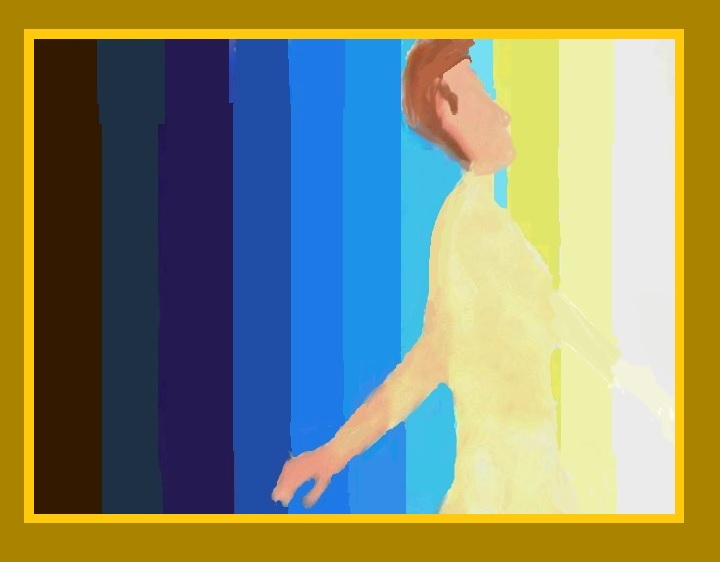

Nature is a humbling expression of pure inspiration, transcendent beauty, enduring peace, genuine freedom, mysterious wonder and eternal truth. As such, the natural world is an embodiment of divine love.
Nature’s inspiring qualities
It would be an understatement to say that the natural world humbles our very being. For example, how many people have climbed to the top of a mountain and experienced the sentiment of feeling inconsequential? It’s impossible not to.
Anyone who has made the pilgrimage up a summit reports feeling profoundly humbled. For on the majestic peaks, our souls are moved by the sheer majesty of views that await us: a gorgeous colossus of trees, the mesmerizing stature of nearby mountaintops, the noble presence of soaring eagles and those subtle but dazzling flashes of white light that sparkle against the backdrop of a midday Sun.
As we inhale a slow, deep breath of the crisp mountain air, we become instantly aware of our own insignificance in relationship to the Cosmos. In so doing, we come to embrace the notion that humanity is but one tiny wave in a vast sea of oneness.
It’s from Mother Nature’s power to humble that we uncover the source of pure inspiration. We tap into this coveted but sacred energy through the Earth’s reservoirs of natural beauty. When we decide to descend back down the same mountaintop, we carry this feeling of renewal back with us, injecting it into our day-to-day lives.
For some people, this newfound inspiration finds its light through their commitment to previously neglected aspects of their being, such as their family and friends, their life’s work and especially their own spiritual growth. Yet, for others, transcendental experiences in nature will produce sudden and profound personal epiphanies.
In these moments of heightened clarity, we feel as though we’re viewing life through a new pair of eyes. In these moments, the art of existing finally starts to make sense, as one begins to live their life with a greater sense of purpose and awareness. In these instances, it’s not uncommon to make major life changes, like leaving a longtime job or long-term relationship to devote oneself to a higher calling.
For others, nature so inspires them, that they’re moved to express these emotions of divine love through creative outlets like poetry, painting, photography and music. For example, well-known writers and poets like Ralph Waldo Emerson, Henry David Thoreau and Walt Whitman were all so moved by nature that each felt compelled to share the wonder of it with others.
Further, entire forms of written expression such as Haiku (a unique form of poetry that emerged long ago in Japan) also remain popular and finds their medium through the observation of nature. And much of the remarkable art crafted by Indigenous peoples from around the world depicts various divine aspects of the Earth.
In fact, in my own dwelling, I have a beloved piece of artwork that was made by a Native American artist from the Hopi tribe in Arizona. This work of art is a mosaic of sacred images drawn from nature and painted on a smooth, rectangular slab of clay. This remarkable piece of work reminds me that the natural world is the purest source of creative inspiration.
Finally, cultural anthropologists have long accepted the notion that music—that most profound mode of universal expression—had its genesis long before the development of formal language in the earliest tribes. Today, still, the Indigenous peoples of the world reflect their love for the Earth in song and dance. It’s telling that more traditional music pays homage to Mother Nature. Listen to roots reggae, folk or bluegrass songs for confirmation!
Nature as transcendent beauty
When we feel humbled and inspired by nature, we’re in open acknowledgment of her beauty. Our souls also recognize the presence of the divine within her being.
As beauty is in the eye of the beholder, it can emerge through countless forms in nature. Some notable examples include an awesome sunset over the ocean, an enchanting waterfall, red rock formations in the desert, and of course, a breathtaking view from atop a mountain!
The acknowledgment of nature’s beauty doesn’t need to be restricted to spectacular sights alone, though. Indeed, one may encounter it through each of their physical senses. We may find great beauty in the sweet calls of chirping songbirds or in the refreshing smells that follow an afternoon storm.
One also comes to intuitively know the transcendent qualities of this same beauty. In turn, these qualities find their expression as peace, freedom and wonder.
The experience of peace, freedom and wonder in nature
Through sustained and soulful interactions with the natural world, we come to acknowledge its beauty more and more fully. In so doing, we bring ourselves ever closer to the spark of creation. For what is nature but a reflection of this divine awareness?
Through one’s communion with the Earth, all dualities dissolve into a mountain mist. There is no sense of separation, only the eternal presence of the One. Within this experience, the imprints of divinity are seen as inexorably ingrained within the Earth’s evolutionary unfolding.
This feeling of eternal unity may be described as oneness. One learns that there is no such thing as the separate self, as we’re all expressions of the Earth herself.
Nature and inner peace
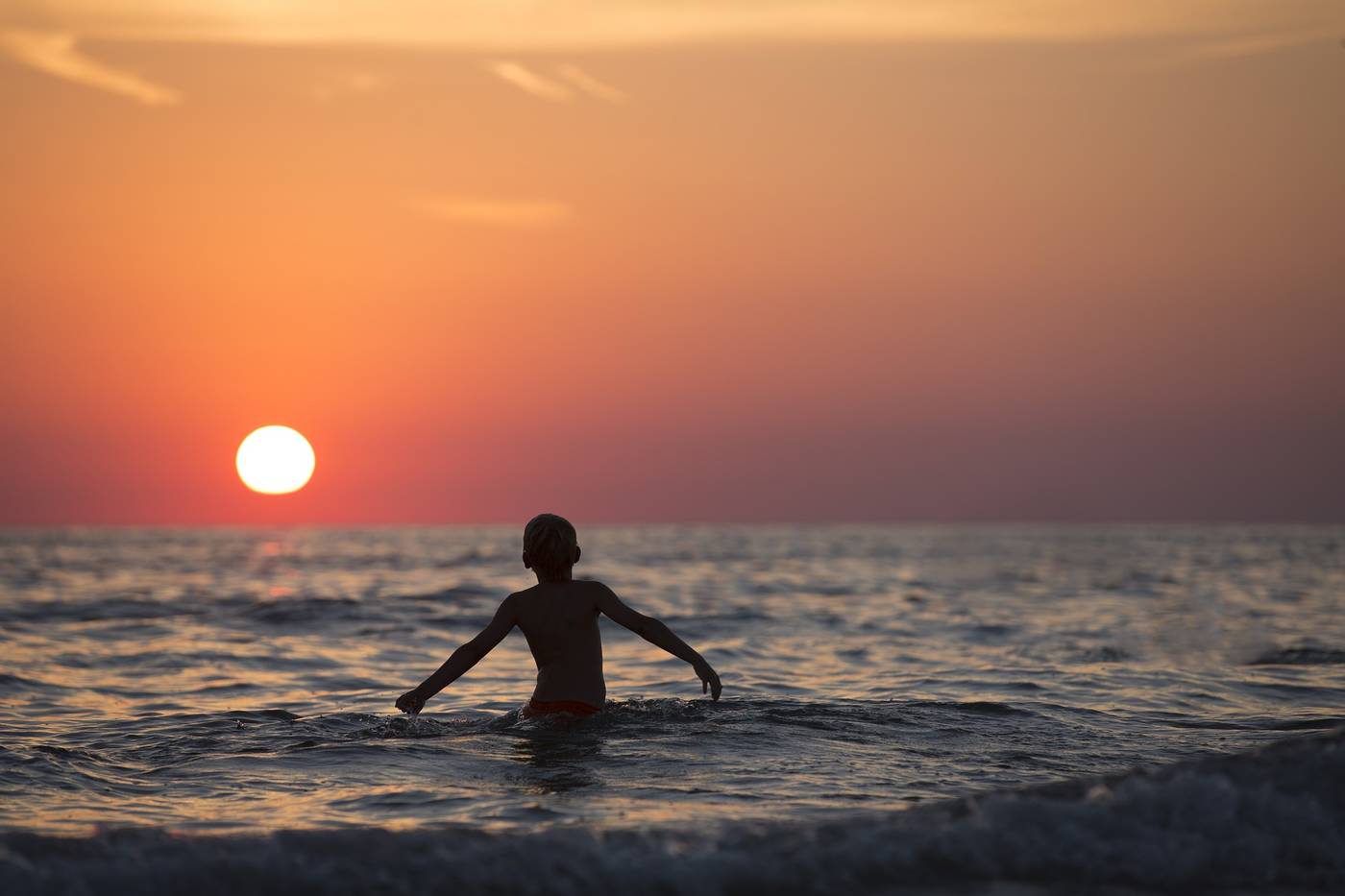
The feelings of peace that are encountered in nature should be familiar to anyone who has walked through the woods or swam in a lake, river or ocean.
These feelings first manifest as a great stillness. Freed from the endless static and noise of society (particularly in the cities), one is overcome by the air of serenity that reigns in the Green Oasis. Over time, we begin to enter this vast inner space beyond all conceptions of time. As we devote more of our energy to communing with the Earth, we find that this enveloping stillness produces positive transformations in our state of being.
Some of these changes manifest in the following ways:
- We become less prone to reacting angrily to tense situations. There is no doubt that this change occurs as a result of nature’s overwhelming healing properties. After bearing witness to the glory of a majestic sunset atop a mountain, conflict-filled interactions with friends or loved ones no longer seem worth the drama.
- We become less attached to our fears of physical death. Through observing that everything in nature is engaged in a perpetual dance of life and death (for example, even as a tree undergoes decomposition, it still gives and sustains life), we begin to re-examine our societal notions of this ultimate of existential cycles. Through greater time spent in the natural world, we learn that death isn’t really an end to anything. It’s merely a passage into the next phase of consciousness. As we’re all brought up in Western culture to look upon death’s approach with dread, a shift in this perspective will bring instant peace.
- We become more present. Whenever we stop to acknowledge Earth’s array of awesome wonders, we practice the art of mindful living. From this place of stillness, we become more planted in the present. Frogs hopping, roaring thunder and waterfalls cascading down worn rock faces are all examples of nature’s wonders. And all are examples of nature’s ability to make us BE HERE NOW!
Absolute freedom in nature
The floodgates of freedom are opened when we find our refuge in nature. However, this freedom is unlike the illusionary kind that we encounter in society. The liberty that we find in the wild can’t be granted or stripped away by any human-made authority, entity or institution. It’s akin to a type of natural freedom.
Unlike the conception of freedom posed by Western philosophers, this type of liberty extends well beyond humans to the sacredness of nature. There is no need for any government to safeguard or administer this freedom, because the laws of nature supersede any and all decrees put forth by humankind.
In this sense, freedom is expressed as a family of deer prancing effortlessly through the woods, or as water flowing down a nearby stream. The herds of buffalo who steadfastly roam the fertile grounds of their ancestors are another illustration of this sort of liberty.
As these images convey, freedom is the soul’s unbounded expression of its own being. Through the acts of prancing, flowing and roaming, each creature derives meaning from what it means to truly be. They are free. And because natural beings are the living embodiment of freedom in physical form, they instruct us as to what freedom’s true components are: independence, spontaneity, free will, purpose and courage.
Beings in the wild are independent in the sense that they provide for their own sustenance, determine (for the most part) when it’s time to hunt for prey, are unfettered by the absence of conditioned cultural roles, have relative control over where they choose to roam and settle, and are not beholden to future expectations put upon them.
Above all, natural beings don’t consciously impede upon the free will of others to act. They respect the natural state of independence that all beings in the wild have.
The coyote doesn’t place burdensome restrictions on the chipmunks. A coyote doesn’t require them to give up half of all their stored nuts for winter hibernation, in exchange for not being eaten. Nor does the strongest chimpanzee male conjure up malicious schemes to swindle the rest of the pack out of their share of the hunting booty. For if he did so, that alpha would be swiftly and violently upended! Similarly, the bear doesn’t proselytize to the deer. It stays clear from dictating matters of divinity. The bear lives IT instead.
Some people may cast doubt on the notion of nature’s independence. For example, are flowers not dependent upon bees for pollination? But are they really dependent on one another? Or have they simply entered into a co-operative relationship? One can participate in a mutually beneficial partnership without relinquishing control over their own destiny. Besides, it isn’t as if the bee could enslave the flower, for the flower has the precious nectar the bee needs to survive.
Unlike in our culture, in which we try and control each other through the farce of money, natural beings don’t interfere with each other’s journeys by devising forms of enslavement.
Nature mirrors a second facet of freedom: spontaneity. This poorly understood term refers to the natural flow of life events that are unplanned and unforeseen. In other words, most happenings in existence!
The natural world is the very epitome of spontaneous action and response, as can be seen with thunderous storms, heatwaves and the early onset of winter, as well as tornadoes and hurricanes. Unlike humans, natural beings don’t condemn these events as acts of “evil.” They regard them in the same way as they do the sun’s warm rays or the wind’s gentle gusts. As they don’t try to predict or control nature’s course, they’re better prepared than we are to adapt and evolve.
Beings that can easily adapt are free. They’re not consumed by the self-inflicted suffering of worry and despair that haunts most humans.
Through nature, we also come to experience another quality of freedom: free will. Free will refers to the innate power all beings have to follow their own path or dharma. The sum total of one’s actions contributes to the accumulation of karma and the fulfillment of what we’d call fate or destiny.
This is true for humans and animals alike. The only difference is that the latter never fail to exercise free will, for there are no cultural or institutional fetters (like the kind humankind devises) to obstruct them from being who they truly are.
Through sustained interaction with the Earth, one learns how all beings are blessed with the liberty to act. This power is an astounding feature of creation. However, to fully exercise free will, all beings must act with intention of purpose.
Though they can’t speak in the traditional human sense (that might be a positive thing), beings of the wild far eclipse our command of communication through their deeper intuitive senses. Their extreme sensitivity to the world of intuition allows them to act with a sincerity of purpose.
Everything in the wild unfolds with astonishing intent, from the squirrels’ collection of nuts for the winter, to the birds’ frantic warning calls of a predator’s approach, to a salmon’s ancestral journey back to its breeding grounds. It could be said, then, that such demonstrations of purpose are evidence of the wild’s full exercise of freedom.
Nature as ecstatic wonder
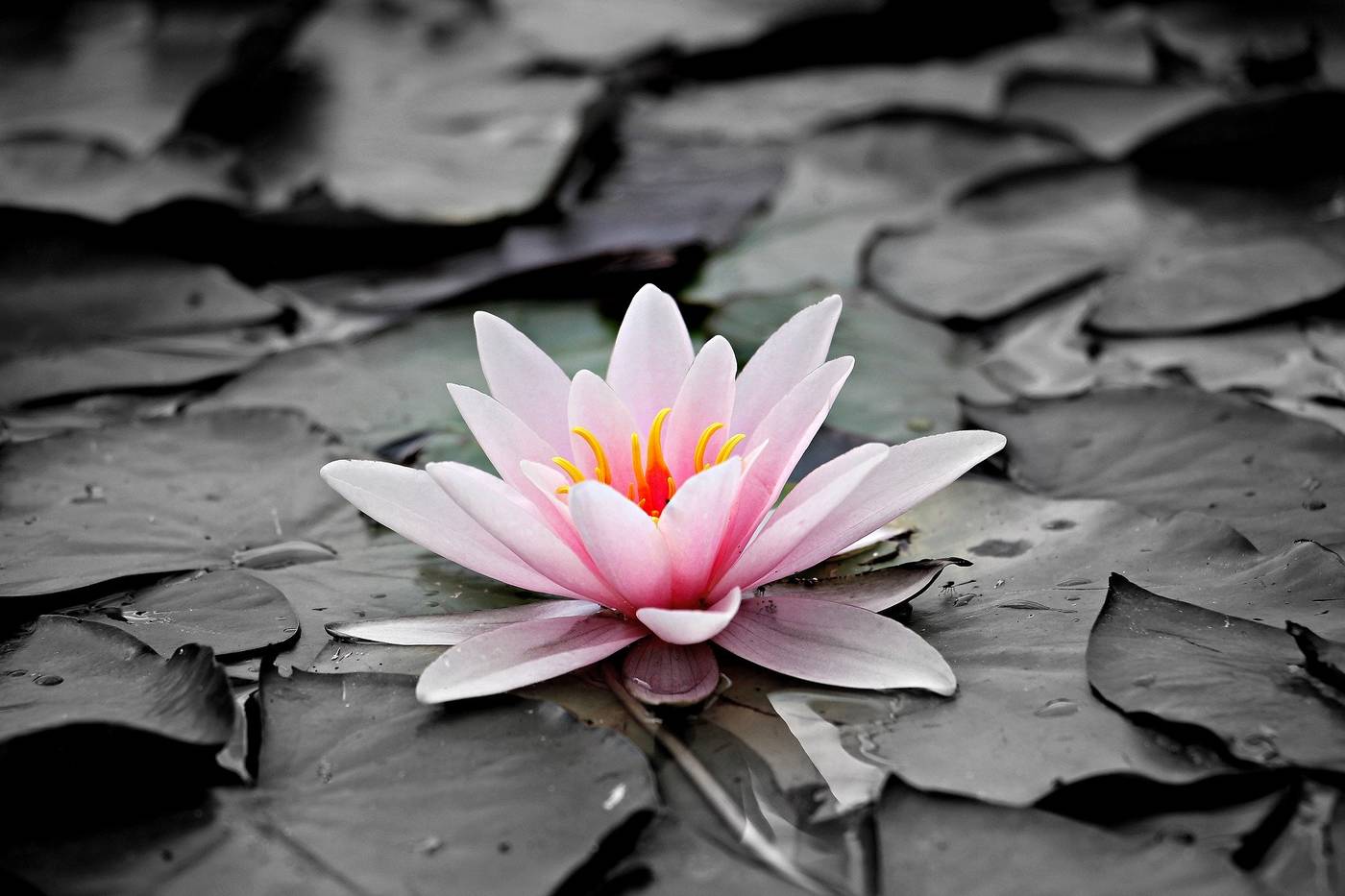
Here are some questions to ponder:
- What power inspires flowers and plants to blossom and grow?
- What power wills the sun to rise in the east and set in the west?
- How did water come to be the planet’s universal lifeblood?
- Why do the intricate patterns and arrangements found in nature mirror those found throughout the rest of the Universe?
Inspired by nature’s wonder, these questions represent an infinitely small sample of those I’ve asked. Who can even say that there are definitive answers to these questions?
There is no doubt that botanists can explain how plants blossom and grow. They can even instruct us as to what conditions are conducive to growth. However, they can’t say, with any degree of certainty, why plants were intended to grow in certain ways. Why can’t they? For the simple fact that they would’ve uncovered the mystery of divine consciousness that directs each flower and plant to blossom and to grow.
Similarly, astronomers can tell us, through the laws of physics, why the sun rises in the east and sets in the west. However, they can’t inform us why this arrangement came to be. There is a plane of Earth-drawn wonder that transcends the mind’s ability to reason.
The more moved we are by nature’s miraculous cycles, the greater our list of questions becomes. Left in the wake of not knowing, we can take solace in the truth that all of Earth’s wonders are direct expressions of the “Great Tao” governing from beyond and within. After all, it’s the unexplainable unity of all that is that makes nature’s happenings both awesome and mysterious at the same time
Nature as eternal truth
Nature is eternal truth, for there are no facades, deceptions or falsehoods in the purity of the wild. The trees don’t dress up in business suits to convince the river to purchase their fallen leaves, nor does the mountain flash a plastic smile to coax the valley into submitting to its rule. The snakes don’t go around preaching an exclusive version of God to the lizards, mice and frogs. Silently, they acknowledge God within all their forest brethren.
Finally, the rabbits don’t preach to their youth that war is peace, slavery is freedom and greed is virtue. Rather, they instruct their kin in the authentic ways of peace, freedom and virtue through their daily jaunts in the woods.
Deep within, each of us knows that nature is the real truth. Despite all the distractions we create for ourselves through technology, our greatest joys are experienced through communing with the Earth. In fact, this feeling of contentment is so intrinsic that many people dream of one day acquiring enough money to retire away to a body of water or to the mountains.
This intuitive drive to connect with the wild never wavers, not even for those of us living in the Western world, where alienation from nature is sadly all too common. That feeling of wanting to connect to the Earth is truth. That feeling is eternal.
Nature as an expression of divine love

When we come to honour our innate drive to commune with nature, we begin to notice the divine and creative qualities within the Earth. For example, trees embody divine wisdom, an enduring presence and faith in the natural cycles of rain and sun. Likewise, the mountains capture the infinite heights of the Great Mystery through their power to convey perspective.
Perhaps there is no clearer representation of Divine Love in nature than the Sun, which is the essence of Creation. Besides caring for the Earth’s sustenance, it’s also our spiritual guide and mentor, for the Sun’s rays permeate the depths of our souls with their all-pervading wisdom.
Yet, even as the sun gives life to this planet and beyond, it derives something just as meaningful in return: the fulfillment of its own divine purpose. So, even as the Sun nourishes life, its own spirit is uplifted through the gift of sharing its power of creation.
All the world’s wise men, wise women and sages would have to agree that nature embodies the highest attainment of Love. All who spend considerable time in the wild intuitively know that the Earth is the heartbeat of our souls!
«RELATED READ» RECLAIMING HUMAN NATURE: Humanity can be discovered in nature»