

Did you know the world was supposed to end in 1260? Read about the prophet Joachim of Fiore, who predicted the collapse of the medieval establishment and anticipated the coming of a utopia based on peace and Love.
Eschatology is defined as “a belief concerning death, the end of the world, or the ultimate destiny of humankind.” It comes from the Greek word eskhatos, meaning “last,” and the suffix –logia, “the study of.” Considering our mortality, it is perhaps in our nature to speculate about eschatology. As the year 2020 comes to a close, let us reflect for a moment on this theme.
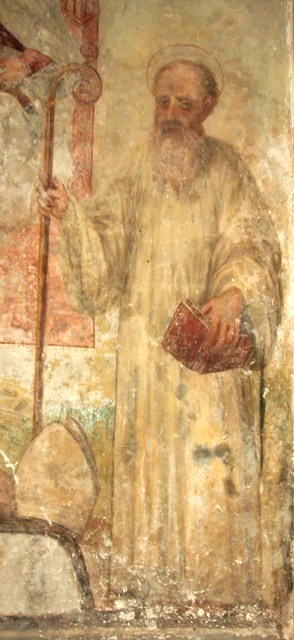
It’s difficult to appreciate the extent that people throughout history have claimed the apocalypse was at hand. As long as there was a world to end, it seems people have speculated as to the precise way (and time) that it would, coming up with all kinds of theories—some more outlandish than others.
In Christianity, eschatology is of course tied to the Book of Revelation, a highly controversial account of a man named John’s visions of the end times. I say controversial because, unknown to many, early Christians were extremely divided over its canonicity. And who could blame them?
Anyone who has read Revelation is familiar with its eccentricities, not least of which features a beast “like a leopard,” “rising out of the sea, having ten horns and seven heads,” its feet “like a bear’s,” and its mouth “like a lion’s.” (Revelation 13:1-2) What exactly is one to make of that?
Nonetheless, for most Christians, Revelation has served as the go-to text for all things eschatological. This was especially true of Western Europe in the Middle Ages, when theologians made painstaking attempts at understanding its cryptic verses. One such theologian devoted a good portion of his life to the endeavour, subsequently becoming a leading authority on the matter. That man was Joachim of Fiore (1135-1202), the notary, monk, abbot, hermit, theologian and prophet from Calabria, in Southern Italy.
Largely forgotten outside of a small group of scholars, and perhaps some pious antiquarians, Joachim was a big deal in his day. Maybe even a household name. This was not primarily due to his fame as a monk, as a gifted notary or even as a hermit. Rather, it was for one thing only—his alleged prophetic powers.
Joachim is undoubtedly the most important apocalypticist of the entire Middle Ages. His famous tripartite division of history into the Ages (status) of the Father, Son and Holy Spirit were particularly influential from a cultural standpoint.
Indeed, Joachim preached that the fruition of the Age of the Holy Spirit was at hand. In fact, it was to occur in the year 1260. This would mark the beginning of a fundamentally new era for humanity—one where peace and love would prevail, and God’s secrets would finally be revealed to the world.
Early career and conversion
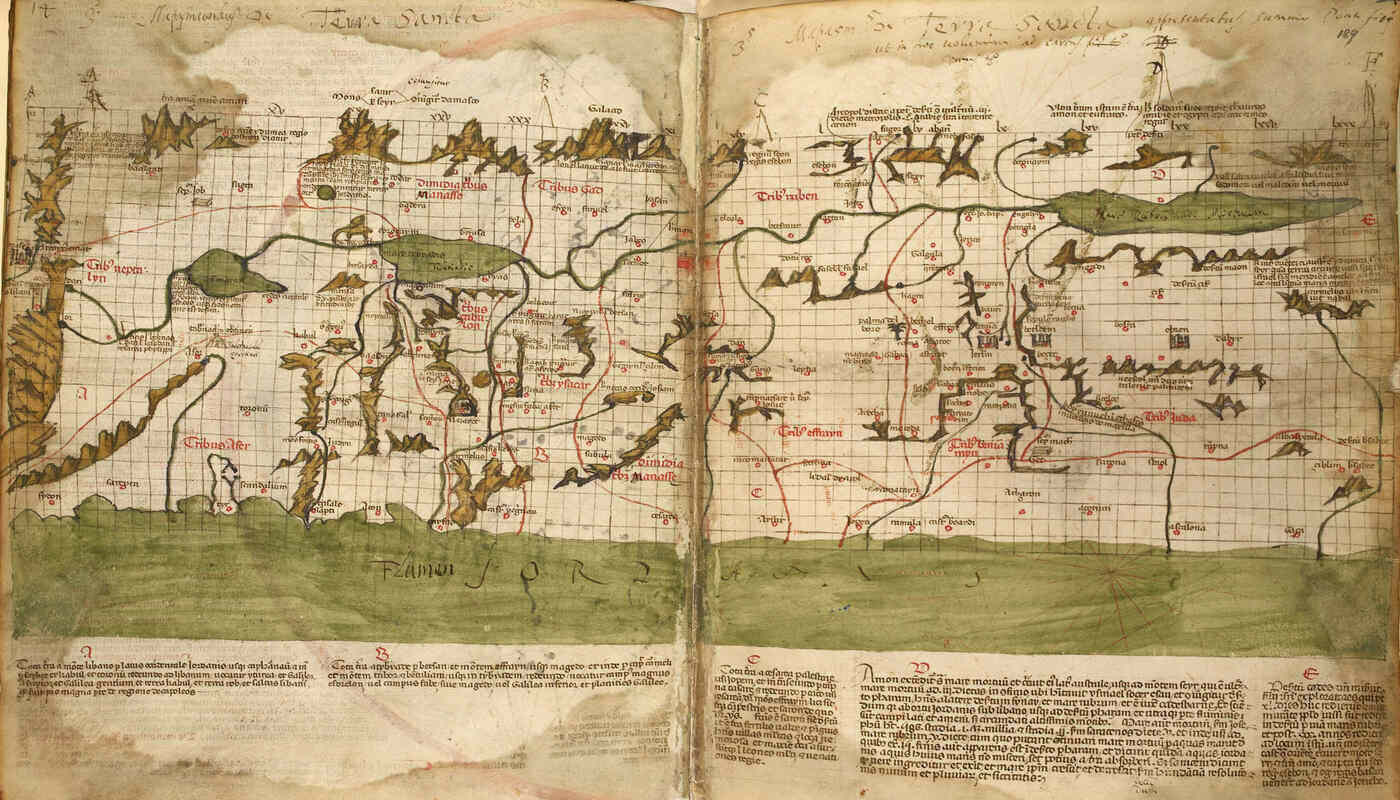
Joachim of Fiore was born in 1135 in Celico, Calabria. His father was a notary of the royal court, then ruled by the Normans, who were in the process of unifying Southern Italy into a new Kingdom of Naples.
It seems the plan was for Joachim to follow in his father’s footsteps. He was sent to receive an education in Cosenza, before becoming a notary for the king. There, he was charged with producing legal documents for the administration.
At some point, Joachim decided to leave his position and travel to the Holy Land. At the time, this was not an unusual trip to make. Since the Crusades, Western Christians had become fascinated with the life and times of Jesus. It was as if, after centuries of focusing on Christ as God the Father, people suddenly remembered that he was also a real man that lived over a millennium before them. As such, it became very popular to go on pilgrimage to Jerusalem and the other places mentioned in the Gospels.
While there, it was not uncommon for people to react very emotionally. The English mystic Margery Kempe, for example, almost fell off her donkey when she caught a glimpse of Jerusalem for the first time. Joachim’s experience was similarly evocative, as his trip to the Holy Land provoked a spiritual conversion that would last a lifetime.
A great spiritual revival
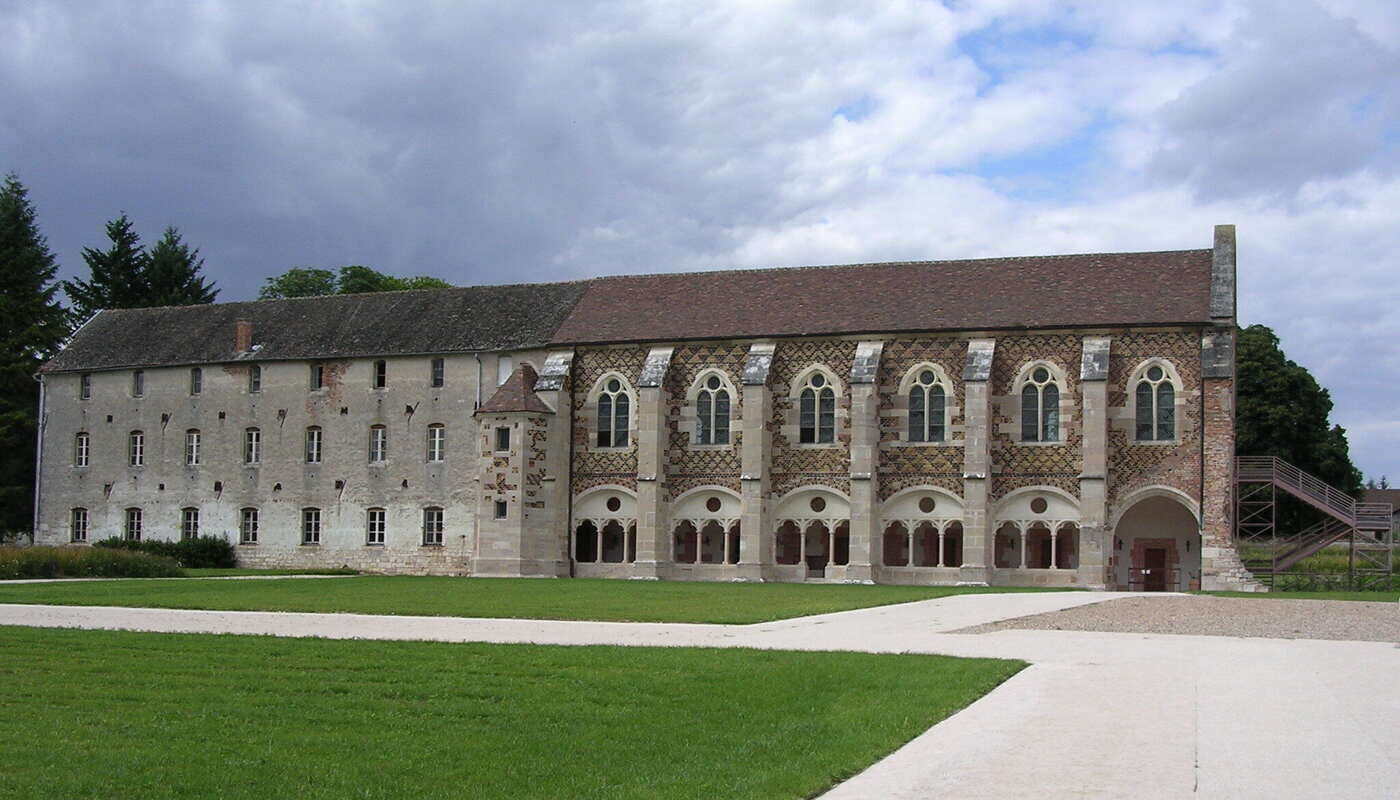
After returning to Italy, he decided to live in a cave, located near Mount Etna in Sicily. Here, he lived as a hermit for some time, before transferring to a Cistercian monastery.
The Cistercian Order was born out of a reform movement within the Benedictine observance. In 1098, a group of disillusioned Benedictine monks from Molesme, a monastery less than 100 miles (about 161 kilometres) from Paris, founded an abbey at Cîteaux, near Dijon. The goal was to revert to what they considered the original spirit of St Benedict’s Rule.
In the 600 years since Benedict of Nursia had walked the Earth, it appeared that the monks of Western Europe had deviated considerably from his original vision. Monasteries had become some of society’s greatest landowners, and as such, were extraordinarily wealthy. Under these circumstances, it was very easy for Benedictine monks to take advantage of the Rule’s loose language (even add to it) and adopt an easy lifestyle. And they did.
The Cistercians sought to remedy this in three main ways; first, through a return to self-sufficiency. Cistercian monks were barred from making money off of things like altar offerings, rents or tithes. Accordingly, manual labour in the form of agricultural work or, in some cases, brewing ales, became an important part of life.
They also valued simplicity. This was reflected in the Cistercian architectural style. Monastery walls were to remain “pure.” This meant no decoration or fancy images. The juxtaposition with the ostentatious, silver and gold-covered monasteries of Europe couldn’t have been greater.
Lastly, these monks were devoted to the eremitic (hermit) ideal. In their opinion, abbeys had become too involved in feudal society over the years. And so, monks needed to retreat to the solitude of the “desert.” This meant setting up their monasteries in the uninhabited, wilderness regions of Europe. Here, they could pray and work in peace and quiet, without the distractions (and temptations) of the secular world.
That Joachim chose to join the Cistercians is important for two reasons. On the one hand, it speaks to his belief in the primacy of contemplative religion. As will be seen, Joachim believed strongly in the monastic vocation, particularly as a means of experiencing God directly. It also shows his enthusiasm for the spiritual revival that was taking place in Europe at the time.
This was the widespread preoccupation with the vita apostolica (life of the apostles). As a result of a newfound interest in the New Testament, men and women across Western Europe began, from the year 1000, to reject what they saw as the degeneration of Christian life that had occurred in the centuries before them.
For exponents of the vita apostolica, people needed to return to the example set by Christ and the apostles. That is, they needed to live in poverty (in Mark 6: 8-10, Jesus instructs his disciples to take “nothing for their journey except a staff”), engage in the communal sharing of goods (Acts 2:44 says that “all who believed were together and had all things in common”) and practice itinerant preaching.
Many people in this period took these commands seriously, some of whom would become saints. Here, the best example is Saint Francis of Assisi (1182-1226), who famously renounced his wealth and possessions and became a preacher.
Joachim of Fiore’s devotion to the vita apostolica would affect the nature of his prophecies, which envisioned a radical reorganization of society in accordance with divine knowledge.
Father, Son and Holy Spirit
After spending time as a Cistercian monk, Fiore took up the life of a wandering preacher. In 1171, he was elected as the abbot of another Cistercian monastery, that of Corazzo. He was now in his late thirties.
It was during this time, while abbot of Corazzo, that Joachim began to write. And write. He was incredibly prolific (with at least 17 works extant), and would continue producing texts up until the last years of his life.
What did he write about? Unsurprisingly: religion. But from a certain perspective. Joachim was particularly interested in discovering the hidden meanings behind scripture. For Fiore and his contemporaries, the Bible was not merely a collection of works, to be read in light of their respective historical contexts. Rather, it was one coherent and unified Word of God. Accordingly, it was believed to be encoded with theological truths, some of which could be discovered through careful study. For Joachim, this was often complemented with a healthy dose of ecstatic divine encounter.
And so, through a combination of visionary and exegetical effort, Joachim of Fiore, the spiritual man from Southern Italy, began setting to ink his musings on the hidden messages of the Bible.
Central to his findings was the idea of the correspondence between the two testaments. Simply put, Fiore believed that the events recorded in the Old Testament prefigured those of the New, which in turn, predicted the future.
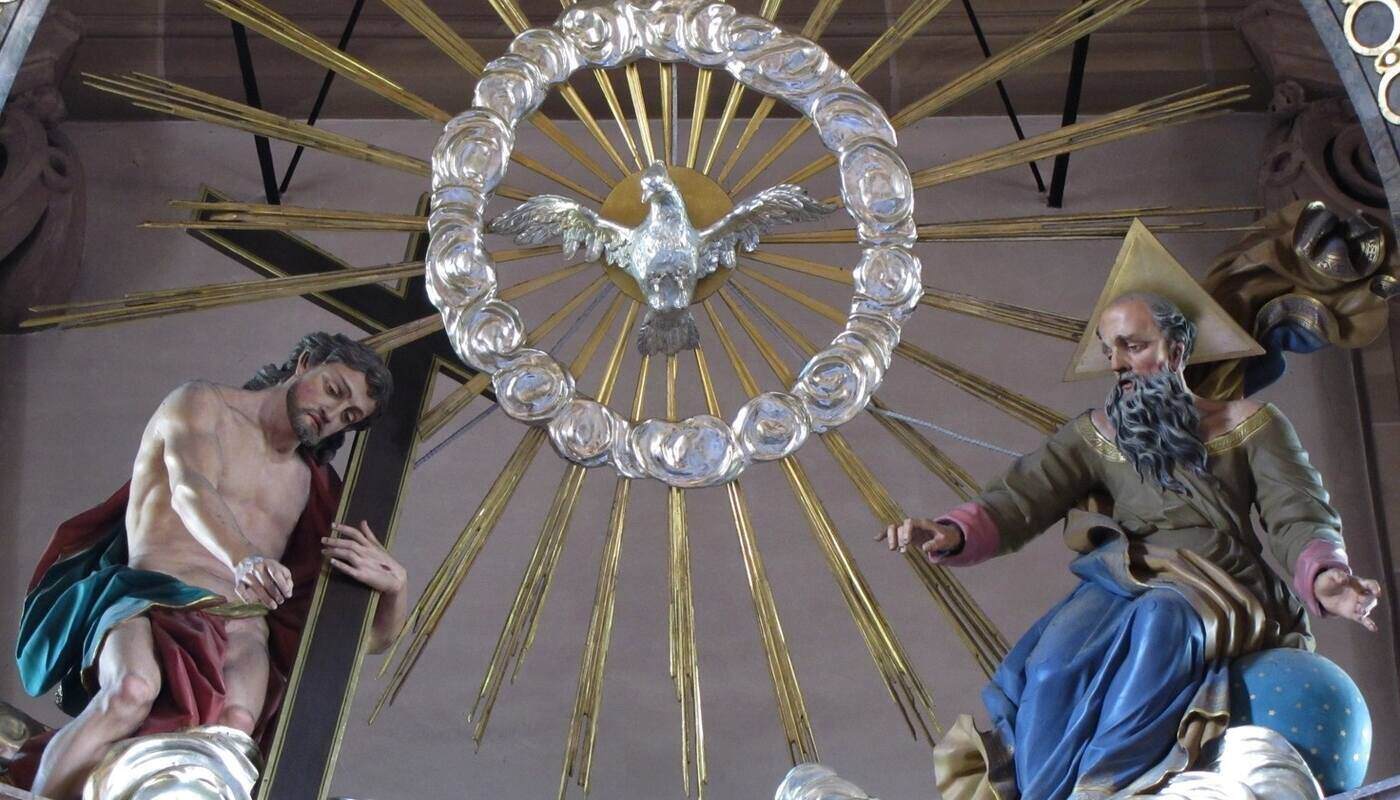
This was linked to Joachim’s famous tripartite division of history, with each epoch corresponding to a person of the Trinity. Thus, the Age (status) of the Father began with Adam, came to fruition with Abraham and ended with Christ, while the status of the Son began with King Uzziah of Judah, came to fruition with Zechariah—John the Baptist’s father—and was about to end in Joachim’s own time.
This last point accounts for the popularity of Fiore’s prophetic message. According to Joachim, the Age of the Holy Spirit, believed to have begun with Saint Benedict of Nursia, was soon to be fulfilled. In fact, this would occur in the year 1260. And people needed to prepare.
Why 1260? Well, Revelation 12:1-6 reads: “A great portent appeared in heaven: a woman clothed with the sun … and (she) fled into the wilderness … so that there she can be nourished for one thousand two hundred sixty days.” Yes, it was that simple.
A society ruled by love

The fruition of the new Age would see the radical transformation of society. The particularities of this change must be understood in reference to the other two Ages. According to Joachim, the status of the Father was characterized by (often harsh) divine justice, from a God who was fundamentally a bellicose, mysterious and vindictive master of man. The “spirit” of this era, so to speak, was obedience to God’s law.
Things changed with the Age of the Son. This was a period ruled by the Gospel, in which God became Man, sacrificing Himself for the salvation of all. In such, God revealed his benevolence, through love—though it was not yet revealed in its fullness.
Love. That was the key. In 1260, the Age of the Holy Spirit would fully unfold, ushering in a new world ruled by a perfect, divine Love. There would be no more need for laws. Freedom, tolerance and peace would prevail. Life would be “without scandal, without worry or terror, since God shall bless it and He shall sanctify it.”
At this time, the Gospel would become subordinate to a greater, “eternal gospel” (Revelation 14:6). Indeed, for Joachim, Jesus’s crucifixion was no longer the most important event in history. It was awesomely meaningful, sure. But something else was coming. Something greater than even Christ himself. And that was the Holy Spirit, who would bestow on mankind a perfect and direct knowledge of the divine.
Hence, from the year 1260, the truths of scripture would finally be revealed and understood in their entirety. There would be no more need for endless theological debate. No more guesses as to the “true” meaning of this or that verse. The truth of the eternal Gospel would become known to all. And this would be the most important thing to ever happen.
To contemporaries, the thought must have been thrilling. And I suspect that those unsatisfied with conventional religion must have anticipated it with tremendous hope, as I think certain Christians would today.
What would this world based on love, peace and freedom look like? For one thing, it wouldn’t have a conventional Church hierarchy. The whole system composed of priests, bishops and a pope to rule over Christendom would become obsolete—abolished. And rightly so, according to this thinking, for the Church of Joachim’s day was far too “carnal.” Too focused on material things.
In the Age of the Holy Spirit, the most important religious work would be done by monks and nuns, who engaged in divine contemplation. Meditation, as a means of experiencing God and receiving his knowledge directly, was to be the “spirit” of the epoch. No priest, bishop or pope was needed for such things.
One cannot overemphasize the brazenness of such teachings. Joachim was predicting the total collapse of the Catholic Church, as people knew it. In a time of Inquisition, this was especially hazardous. And Joachim certainly wasn’t oblivious. Truthfully, I don’t think it mattered much to him. He was beloved by Europe’s religious and secular leaders, who viewed him as particularly holy, blessed with the gift of prophecy. That the authorities might betray him must have seemed unlikely.
Fiore’s vision for secular society was equally radical. Thus, the year 1260 would see a reorganization, whereby people’s status depended not on their power, nobility or wealth, but on their character and vocation (say, as a contemplative or lay person). This was a world of relative egalitarianism, one without traditional hierarchies of authority. One where all people lived in peace and harmony.
Even those of different faiths, as Joachim predicted that Jews and Gentiles (non-Jews) would join together “as one flock.” Such messaging contrasted sharply with the brutal anti-Jewish attitudes and violence that permeated the later Middle Ages.
All these changes were to be the result of increased divine knowledge—the more people understood God, the more their society could begin to accurately reflect his will. It was a remarkable thing.
End of life
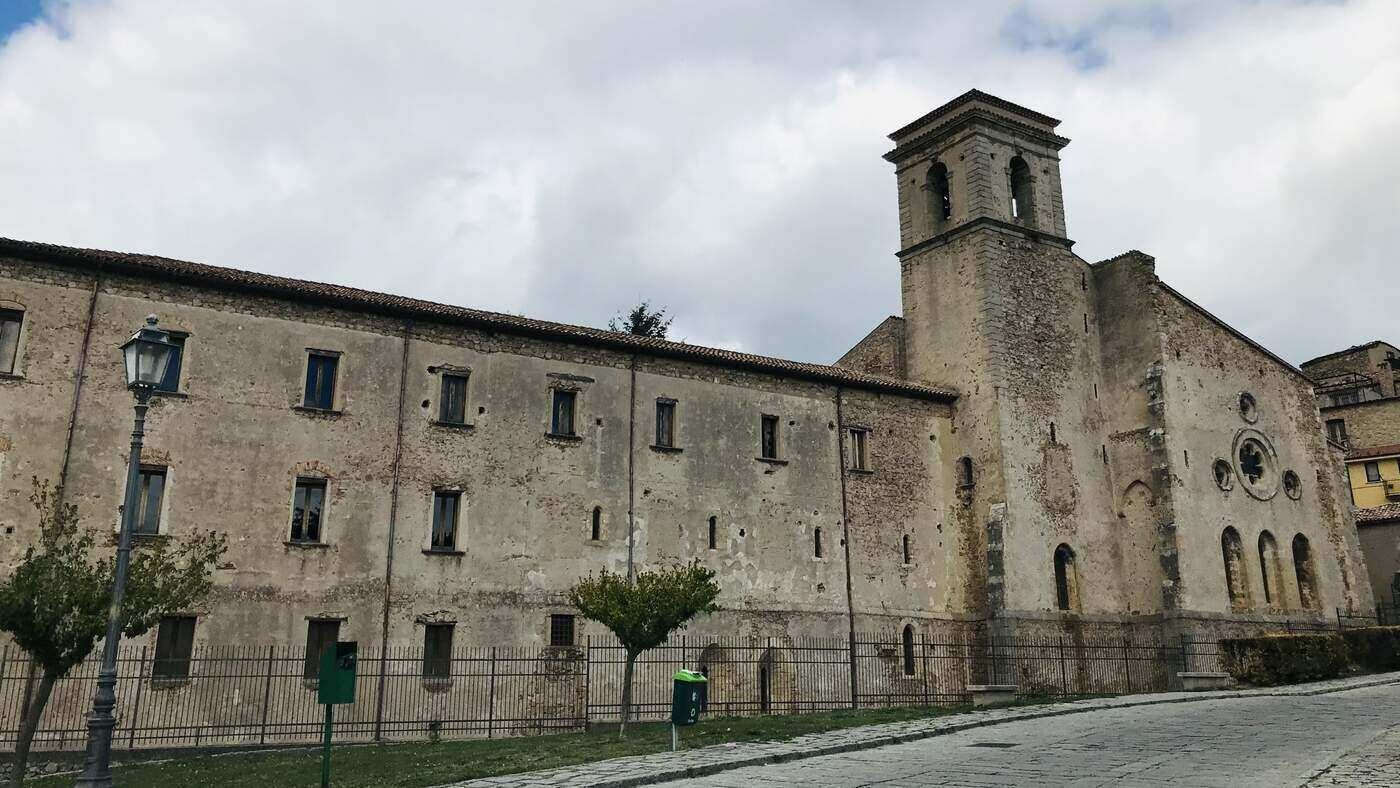
At some point, Joachim became dissatisfied with his position as abbot, and received permission from the pope to once again become a hermit. In 1189, he built a hermitage (today, known as San Giovanni in Fiore Abbey) in the Sila mountains of Calabria. Since he had a number of disciples, it turned into an entire community of hermits.
Joachim required his followers to engage in a more austere form of living, compared with contemporary Benedictine trends. The regime that he set up was approved by Pope Celestine III in 1196, thereby creating the Florensian Order. What an endorsement!
A few years later, he fell ill and died, on 30 March 1202. His remains were moved to San Giovanni in Fiore in 1226, and can be viewed there to this day.
So Joachim died well before his Age of the Holy Spirit was supposed to unfold (58 years). This only meant that those who lived after him were fated to anticipate its arrival. And they did, in significant numbers. Those who believed in his prophecies are termed “Joachimites.”
Legacy
Many Joachimites belonged to the new Franciscan Order, instituted by Francis of Assisi in 1209. Francis’s disciples, the “friars,” were committed to living according to the vita apostolica. As such, they were known for their poverty—Franciscans “owned nothing.”
This juxtaposed quite visibly with the opulence and perceived corruption of the Church. Accordingly, some friars came to believe in their special role as those chosen to usher in the Age of the Holy Spirit, which, as we know, was supposed to bring an end to the Church in its entirety.
It’s no surprise that the ecclesiastical establishment found these ideas quite threatening. As time went on, Joachim’s prophecies came under greater scrutiny by the authorities. In 1255, the Church ordered the destruction of an influential Joachimite text, written by the friar Gerardo of Borgo San Donnino. Things must have been getting out of hand in the lead-up to the 1260 date.
It goes without saying that no Age of the Holy Spirit came that year. Nonetheless, as with many failed end-time predictions, the date merely got pushed back, and despite continued ecclesiastical resistance, the underlying concepts lived on.
In 1263, Joachim’s writings (not the man himself) were officially declared heretical. Now, anyone caught preaching his ideas could be prosecuted. That didn’t stop an Italian friar named Angelo Clareno, whose Joachimite criticism of the Church led to a sentence of life in prison in 1280. Luckily, he got out of it with the help of a powerful friend, and in the 1290s, appealed successfully to Christendom’s new pope, Celestine V (Peter of Morrone), for a pardon.
Interestingly, Peter of Morrone showed a great deal of support for Clareno and his followers: he allowed them to form their own group, separating from the mainstream Franciscan Order. A contemplative through and through, it is unsurprising that the hermit from Sulmona might be sympathetic to Joachim’s vision for a utopian society based on mysticism (it should be noted that during his life, Morrone was especially devoted to the Holy Spirit).
Clareno’s movement turned into the “Spiritual” arm of the Franciscan Order, whose members were later known as Fraticelli. These were strict followers of Francis’s original vision of absolute poverty, and were known for their harsh criticism of the Church, which they believed would undergo a total reorganization, in accordance with Joachim’s coming Age of the Holy Spirit. In 1318, they were declared heretical. Those that persisted were swiftly led to their death by burning at the stake.
Joachimite ideas nonetheless echoed through the centuries. Similar concepts are found in Marxism and current New Age movements.
“The old me is dead and gone, dead and gone”

Millenarianism, the “belief in a future golden age of peace, justice, and prosperity,” can be dangerous. It can also be inspiring.
Joachim’s compartmentalization of time into distinct periods encourages us to do the same—with our own personal lives. For instance, this or that time may have been difficult for you. Maybe you had relationship or work issues. Maybe you suffered from poor physical or mental health.
Joachim of Fiore reminds us that it’s always possible to start a new chapter, one of healing, forgiveness and love. One where we work to reach our full potential, and finally accomplish our goals. For some, this opportunity comes annually, with the tradition of New Year’s resolutions.
But it can also be done at any time. As often as we wish. That is the beauty of it. Every time we wake up in the morning, we get to choose how to conduct ourselves that day. It doesn’t matter if, for the past 3,300 or 3,000 days, you spent your time in ways you aren’t proud of. It’s never too late to make fundamental changes for the better. Today could be that day. And if you fail, there will always be tomorrow.
The same goes for us as a global community. Collectively, we can choose to abandon the path of ignorance and hatred. We can choose to focus on that which unites, rather than separates, us. The example of Joachim of Fiore’s Age of the Holy Spirit, with its emphasis on love, tolerance and peace, can act as a guide.
Happy New Year to all! Here’s to brighter days ahead.
«RELATED READ» MODERATION, OBEDIENCE, CHARITY: The timeless example of Saint Benedict of Nursia»
image 1 via Wikimedia public domain 2 via Wikimedia public domain 3 Marino Sanuto the Elder (c. 1260 – 1338); Pietro Vesconte, Public domain, via Wikimedia Commons 4 G CHP, CC BY-SA 2.5, via Wikimedia Commons 5 Photo by form PxHere 6 Image by Joseph Redfield Nino from Pixabay 7
Samuele Wikipediano 1348 at Italian Wikipedia, CC BY-SA 4.0, via Wikimedia Commons 8 Image by S. Hermann & F. Richter from Pixabay