

Rationality and the Enlightenment: A faculty and a historical event that have contributed to the progress of civilization so potently that we now deliberate different ways of transferring our consciousness (or at least what appears to be so) into artificial intelligence.
I won’t bore or belabour you by attempting to explain such processes with my feeble understanding, but I’d like to address a salient cultural concern—the relevance and territory of the divine in a secular world.
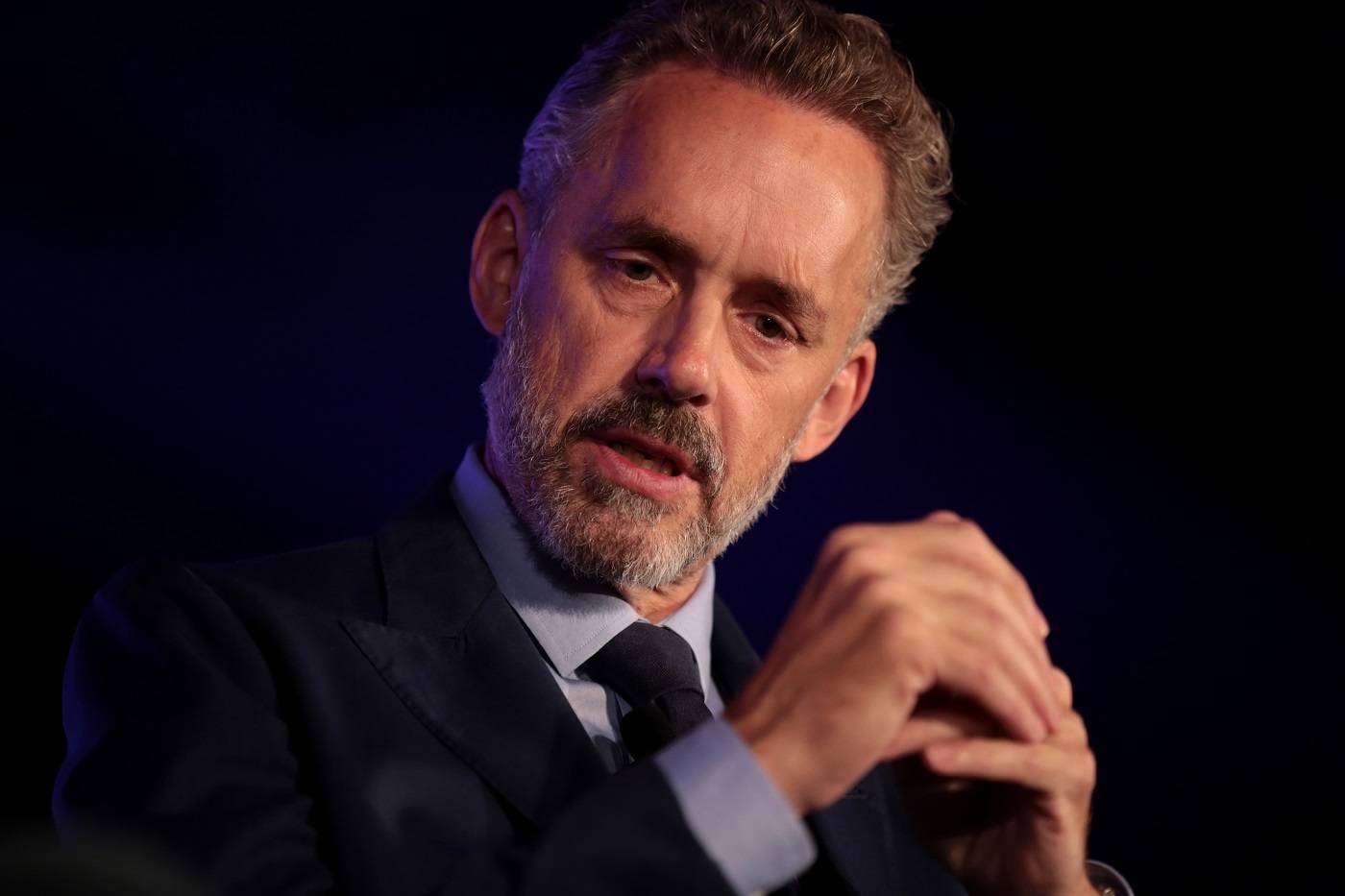
Celebrity intellectuals have expressed their views on the possibility and/or necessity of reconciling science with faith. Currently, the controversial thinker and quasi-philosopher known as Dr. Jordan Peterson has presented his case for the inextricability of science from the religious realm.
Although the sincerity of Peterson’s belief in God has been often (and, in my opinion, rightfully) scrutinized by other philosophers and psychologists, it would be irresponsible to dismiss his eccentric perspective without due consideration.
I’ll do my best to convey what’s in the very least an obscure position (expected, given the influence of Carl Gustav Jung on his work), derived from several of his interviews, lectures and books.
Obscurantism or elucidation?
Jordan has argued persistently that if one is to take a Darwinian view of religion, spending excessive time quibbling over minor details such as the literal and supernatural truth of religious claims is frivolous.
To put this into his Christian context, “rationalists” like Richard Dawkins and Sam Harris expend effort in vain when they assert the improbability of a person literally resurrecting after 72 hours of being presumed dead.
This was the first red flag that went up for me, seeing as millions of Christians (regardless of their denomination) throughout history have perceived this to be a central tenet of their faith. C.S. Lewis even expressed that without such an event, the whole system is demolished.
Minutiae, as far as the Canadian clinical psychologist is concerned, for religion as a universal human phenomenon developed as an attempt by our ancestors to approximate what was true enough. To Dr. Peterson, biblical persons were concerned with the nature of being, as opposed to making factual conclusions about objective reality. Therefore, he thinks it’s not only futile to view ancient tribes as poor scientists, but a foolish misunderstanding of their aims.
Most ritual practices by the ancients often leave us scratching our heads, when we reflect on their purpose and morality. As “moderners,” the notion of Abraham being willing to sacrifice his son (Isaac in the Judeo-Christian tradition, Ishmael in Islam) to prove his devotion to God is at minimum a questionable requirement for loyalty, and arguably barbaric.
Dr. Peterson’s interpretation purports to take you down a riverboat ride through the nature of your subconscious and attempt to rationally articulate its profundity.
Likening the idea of God to an abstract superordinate principle with which the ancient Israelites made a covenant, he goes on to explain that primitive Middle-Eastern societies would encounter a prophet who’d arise to remind them of their moral decay and corruption. Waxes and wanes in ethical behavior would occur for eons, with the erection and anointment of new messengers being essential for the maintenance and progress of human civilization.
In short, without having his feet adamantly and consistently held to the fire, Dr. Peterson never has to come out and say whether he believes these messenger-figures had supernatural powers of clairvoyance, contact with a metaphysical supreme being whose existence transcends our material reality, or anything that would exceed William James’ Pragmatist view of religion and metaphorical truth.
The incommunicability of Peterson’s views
Well, what happens when someone presses him on the subject? In the epitome of irony, Jordan says he doesn’t like being asked if he believes in God, because it’s an attempt to box him in and place him firmly on one end of a binary distribution. Followed up with vapid and evasive statements, he contends that discussions about this topic are strenuous because of his extremely esoteric and nuanced understandings of words like “belief,” “you,” and “God.”
Like many others, I’m baffled by what seems to be outright casuistry and hypocrisy. His response possesses the qualities he negatively attributes to Postmodernism, a philosophical 20th-century movement that includes the rejection and scorn of categorization, a general distrust of metanarratives, and an overall cynicism about life being a power struggle between factions with no potential for intergroup dialogue.
Since Jordan obviously refuses to be restricted by title, repeatedly spurns rational discourse as an arena for the resolution of religious phenomenology, and presumptuously condescends to secular thinkers like Matt Dillahunty and Daniel Dennett for ignorantly denying the Christian ethos while simultaneously acting it out, he’s not as receptive to genuine exchange as he could be.
Back at home in the comfort of the poles
However, there’s still something to be said for Dr. Peterson’s psychoanalytic analysis of religious belief systems. What’s the future of faith in an increasingly irreligious Western world? Does it still have relevance and utility in contemporary culture? Is there a way of keeping the proverbial baby without dispensing with the bathwater?
As far as Dr. Peterson is concerned, both religion and science have their respective domains over which they preside, and they’ll always retain supremacy there. In one final twist, Peterson recommits himself to a type of unmalleable Cartesian duality by opposing facts and values. Science governs over the former, and religion the latter. By ironically recycling empiricist David Hume’s “you cannot derive an ought from an is,” Jordan concludes that there’s no arbitrary set of concrete descriptions about nature that can lead to moral conclusions and the prioritizing of ethical behaviors.
Dillahunty actually challenged him on this assertion when discussing well-being in life. Jordan claimed that as a substitute for absolute knowledge, faith fills the epistemological vacuum. Ergo, there’s no rationale for preferring life to death in the face of unending suffering, because one could always elect to die and cease the torture. It’s merely the assumption we make about the value of life that leads us to persist.
When confronted with this proposition, Dillahunty simply pointed out its incoherence—if one dies, they’re no longer a being; hence, this can’t contribute to their well-being. Leaving Peterson somewhat perturbed, he deferred to his last-ditch argument.
If you prefer the literary route
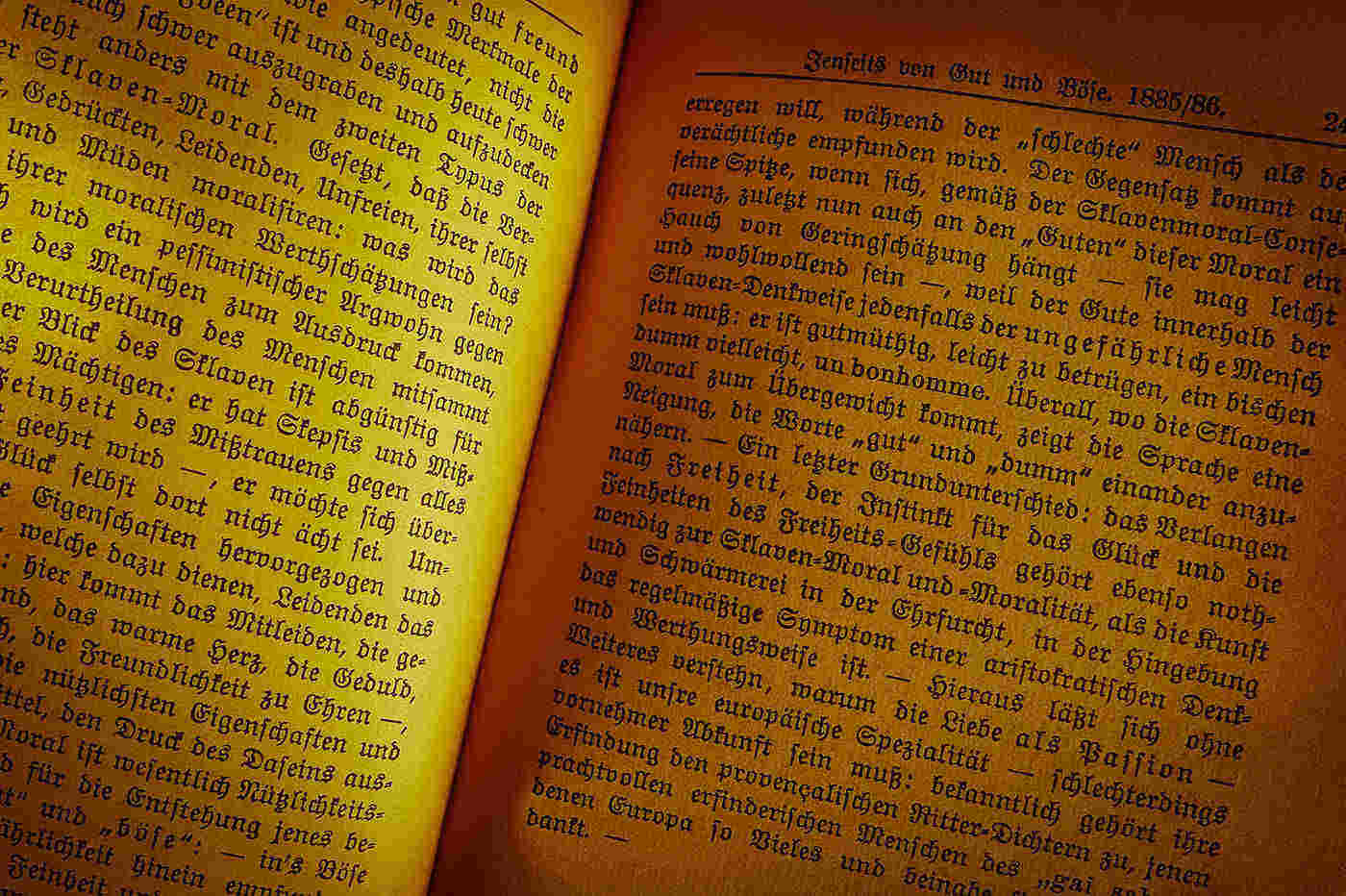
Dostoyevsky, Eliade, Jung, Nietzsche, Tolstoy; all banes of the celebrity atheists’ existence. Having read books like Sam Harris’ The Moral Landscape and Daniel C. Dennett’s Consciousness Explained, Dr. Peterson asserts that modern non-believers haven’t contended with any of the necessary hard-hitting religious thinkers of the last 150 years.
Presenting cases for archetypal stories that characterize and undergird our development as a species, he says it would be shallow to omit these figures’ ideas in any deep analysis. A fair claim, but it’s equally superficial to focus so locally on a select few individuals who happen to propagate ideas he finds attractive. Indirectly, Peterson is committing the No true Scotsman fallacy while simultaneously accusing others of being too provincial in their thought.
Whether he asserts that a true atheist is someone who behaves like Raskolnikov in Crime and Punishment, by committing a rationally fuelled murder in an attempt to rid the world of one miserable and sadistic woman, while transgressing an inviolable moral law; or likening Nietzsche’s prediction of the death of God to the rise of 20th-century alleged secularism (Stalinist communism) and its lethal outcome; Jordan is appealing to his own idealistic purity.
He redefines religiosity to his narrow satisfaction, alienating the believers he claims to support. So, in his words, “What good is it?”
Separating the wheat from the chaff
As previously stated, it would be senseless to dismiss Dr. Peterson’s ideas entirely. He’s attempting (like many of his heroes) to close the gap between two worldviews that appear starkly irresoluble, but aren’t necessarily mutually exclusive. This is a noble effort in my estimation; therefore, credit is due. It’s also possible that he’s still sorting out his opinion on the matter, so he comes across as inconsistent and paradoxical.
The more cynical and widespread interpretation suggests that Jordan is deliberately equivocating on the matter to secure the interest and subsidy of various audiences for financial benefit. Plausible, especially as someone who has garnered much notoriety over a short time, but irrelevant to the subject matter itself.
As hypocritical and opaque as Dr. Peterson may appear, his efforts remind us of an argument that’s been transpiring for millennia. To quote a debate motion he had with secular professor Dr. Ronald De Sousa: “Can we live without the sacred? Consider both sides’ contributions, and by their fruits ye shall know them.”
«RELATED READ» THE SCIENCE OF FREEDOM: An exploration of how our neurobiology influences our liberty»
image 1: Wikimedia Commons; image 2: Laura Bernhardt