


Tomas and I enter our new therapist’s office–the fourth, if you’re counting the family therapist at our daughter’s treatment centre a couple of years ago. This one, Tamara, has salmon-coloured nails and leans forward as she addresses me.
“Nicole, how have you been dealing with the stress of helping Cristin?”
“Drinking,” I say.
She giggles. “Well … do you have any other methods that have worked during these past two years? Eating disorders can challenge us in surprising ways.”
When I don’t produce an answer, she suggests we “go on daddy- and mommy-daughter dates,” and that we “try not talking about food with Cristin,” but let me tell you, two years of trying not to talk about eating with your starving child just kills the mood for a fun night out.
Tamara shifts the topic to Cristin’s early years. What was her childhood like? Tomas and I know from experience that this is our cue to mine our history for some kind of parenting schism, to dig into our relationships with each other and our children for one of those soft, vulnerable spots that therapists can use to probe further. The raw material that shapes these sessions.
Mining our history

You’re dancing. You improvise your routine to each song we play from our little speaker in the living room. You dance with the abandon of all eight-year-olds. The one thing you care about is the one thing you deliver: laughter. We laugh—all five of us—on the couch in a concert that rises and falls as you twirl and dip and step to our delight.
I think of retelling this memory to Tamara, but I can’t connect it to anything important. The treatment centre called the second of a four-child sibling group “the rebel,” which didn’t fit my notion of Cristin as a pleaser. So I say nothing. Tamara flips through her notes from our initial phone call.
I’m failing this therapy session.
“Take me through the first signs of her eating disorder as you understand them,” says Tamara. Tomas looks to me to provide the timeline. I recount my daughter’s journey towards death with the same tenderness of a Google calendar—her whooping cough in the sixth grade and the weight loss it caused, her onset of puberty, her start of middle school.
My voice is a vacant hollow.
You’re skating. You glide smoothly across the ice on one leg. The bleacher is cold under my jeans, but I want the night to last a little longer, long enough for another trip across the rink, another subtle adjustment you make until I feel like I’m watching a seagull gliding along the sea’s glassy surface.
Anorexia
Anorexia came for Cristin shortly after she learned the arabesque. I remember an early therapist telling her that if she eats enough, she can return to the ice. She never skated again. I think her skates are hanging in the garage, but I can’t be sure.
You’re hiding. You look up from your plate of spaghetti while your hand disappears under the table. I follow the line of your arm to Sammy, our lab, who’s happily accepting the piece of bread I just buttered for you.
I remember telling our first therapist about Sammy and the buttered bread—the threshold moment in a storyline I believed would follow a logical arc. But this space we inhabit—the therapists, the doctors, the dieticians—is more like a universe of constellations, points of light that scatter into shapes that none of us can identify.
A next appointment confirms there’s a plan in place to expel the demon out of our house.
Tamara asks about Cristin’s “treatment team,” and I give her the names of the people who are supposed to get my child to eat.
I’m glad to report Cristin’s next appointment date to Tamara. Next appointments mean I am helping. They are something real to hold onto. A day of the week. A new professional. I can do things like repaint the living room, or read a book to my son, or buy myself a bracelet in between appointments, because a next appointment confirms there’s a plan in place to expel the demon out of our house.
The treatment centre called eating disorders “ED” for short. But to me, “ED” is someone who loans you a snow shovel and maybe even shovels your walk, not someone who’s come to make your daughter disappear bit by bit.
The demon who lives in my house I call Grim, the Reaper, and he’s Cristin’s invisible friend. She protects him better than any toy we ever got her. Tamara doesn’t know Grim, and neither does the rest of the “the treatment team,” though they think they do. Their ideas push against the edges of Grim’s boundaries without ever staring him down.
Nothing’s working.
Sometimes I can’t tell who’s harder to reckon with, the professionals or Grim. I want to challenge Tamara and her suggestion to see a movie as a way to keep my daughter alive, but then I remember the peanut butter—
You’re trying. You agree to the yogurt but not the peanut butter. “I never liked peanut butter,” you lie, your eyes darkening until I know to just be grateful for the yogurt. I’m supposed to sit with you at the table, watch you eat, say things to make you laugh so you feel relaxed during your meal, but my insides come apart with your dinner of eight ounces of Yoplait and four pretzels.
If I can’t get her to eat while I’m sitting right in front of her, how can Tamara?
Take my hand and come with me

The clock approaches quitting time. Tomas identifies a movie he thinks Cristin would like to see with us. Tamara smiles and hopes we will have a good time. There will be no incantations, no new revelation, no one single truth that will save my girl tonight.
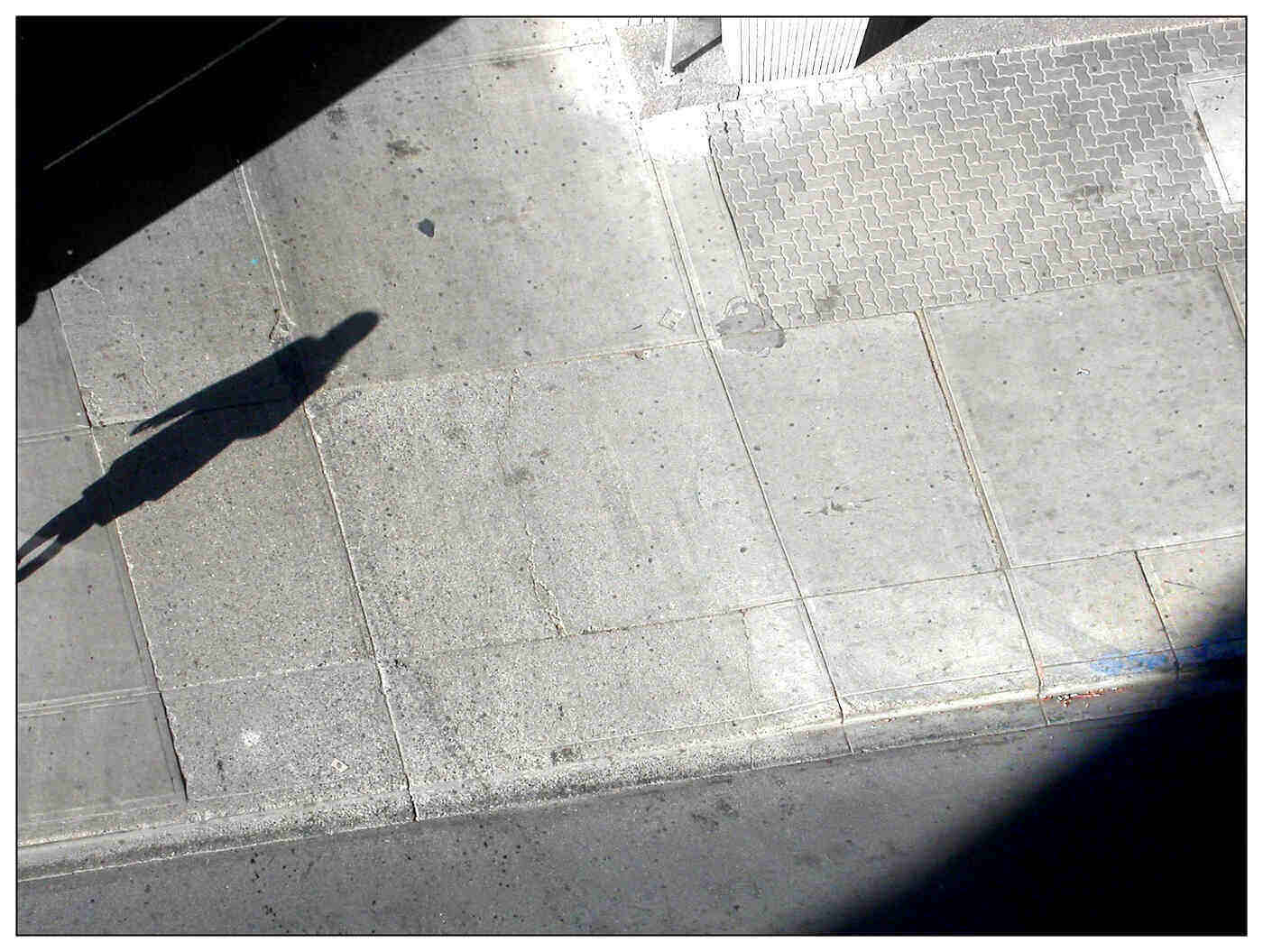
You’re fading! Look how he follows you in the shadows! Take my hand and come with me.
Despair bubbles up as I picture returning to Grim and Cristin and the impossible feat of rescuing her. I breathe in the lavender from Tamara’s diffuser.
I reach across the divide and shake Tamara’s salmon hand. We leave her to her notes and walk into the night. Tomas takes my hand under stars that scatter their light in all directions. I remember an angry parent at the treatment centre yelling at the dietician during the group therapy for families of patients. His daughter was in her third round as a residential patient. “None of this is working!” was along the lines of his wail.
Where is his daughter tonight? I find myself hoping that the family found a way to keep going. To hold each other’s hands as a force against the phantom that lurked in their daughter’s shadow.
And I realize what happened here tonight. Tamara gave us one more day to hold hands and pick out one ray of light to follow against the pressing darkness.
We swing by the house and grab Cristin on the way to the theatre.
«RELATED READ» BINGE-PURGE: It takes small, slow steps to walk away from an eating disorder»
image 1 Image 2005/10/26 – Calgary AB – Shadow Woman by Ra McGuire via Flickr (CC BY-NC-ND 2.0) 2 image by Mihai Paraschiv from Pixabay 3 image by Manuel Cortés Núñez from Pixabay

