

In my earliest memory, I’m skittering around the kitchen in our little thatch-roof farmhouse in County Mayo, Ireland. It’s the same house from which, in the early 1900s, most of my grandmother’s family had emigrated to the United States. Then, a generation later, my two uncles left that house to join the post-Second World War mass migration to 1950s England.
On this memorable day, I’m about three-and-a-half years old and my mother is cross with me. My two brothers are teasing me. The house is ready, and the table is set because any minute now, my great-aunt Minnie will arrive from New York.
Now, more than five decades later, I can still see Auntie sitting there in her flowery dress and Lucille Ball shoes. When she raises her arm to tell or retell an old New York story, I spot her gold charm bracelet where a miniature shamrock clinks against a gold Statue of Liberty.
Gold. Charms. America. By my fourth birthday, I had gotten the message.
Emigrant lore
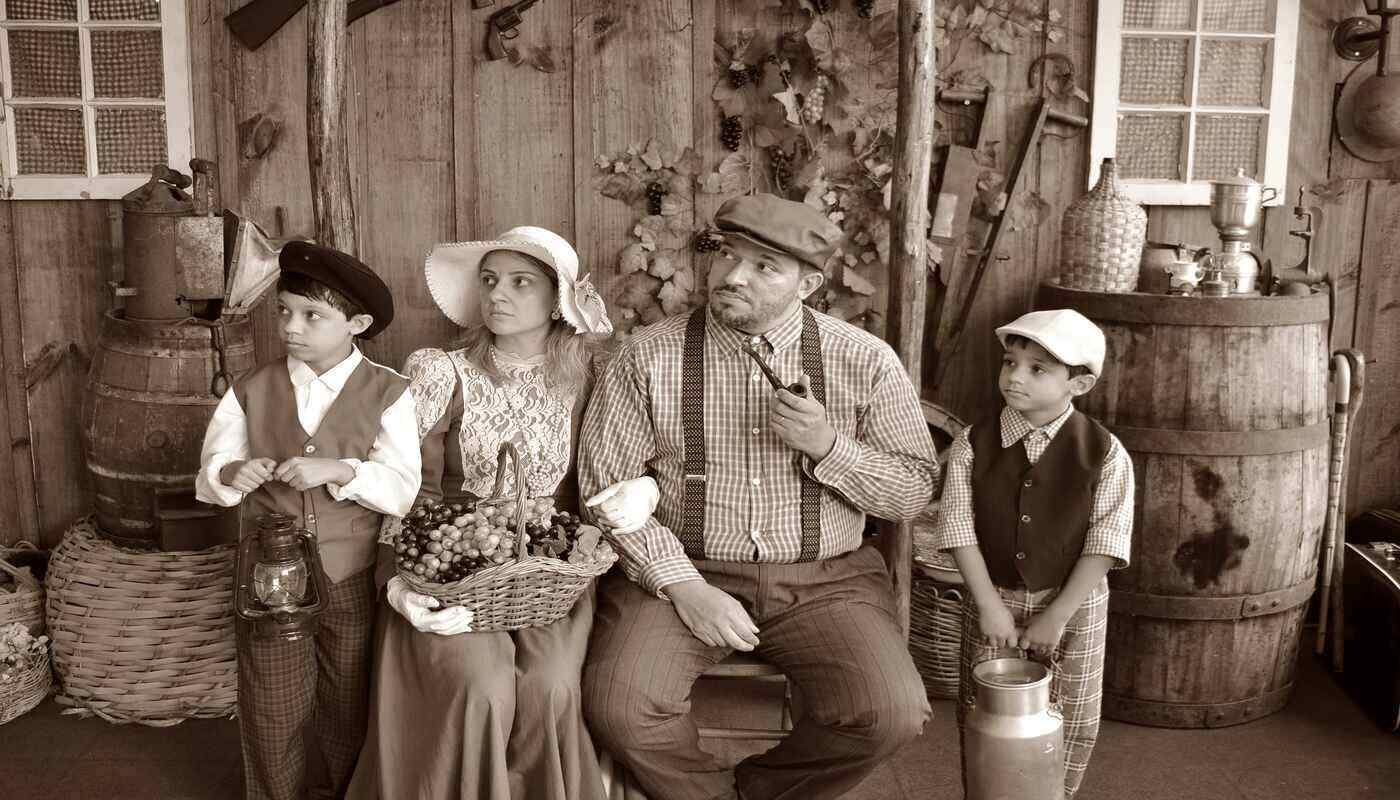
Some years later, it was my live-in grandfather’s brother and his wife who arrived from California. That Auntie also wore flowery dresses, and she spoke like some of the movie women on our black-and-white TV. Once, in one of their airmail letters back to Ireland, the Californian relatives included a snapshot of their ranch-style house with its sun-dappled garden with its very own orange tree. In 1970s Ireland, that orange tree was as alien and alluring as a sci-fi movie.
It wasn’t just our family. Most of our neighbours had close relatives or adult children who lived in England or America or Australia. Every Christmas, I sat in our parish church while secretly playing “Spot the Emigrant.” The home-from-England girls always wore a hip, stylish coat. The young men wore too much cologne and dressy overcoats over their pinstripe suits. These were the “good” emigrants.
Then, there were those visiting emigrants who were a little tatty around the edges, or who spent most of their vacation sitting at the bar in the village pub. These were the “not-so-good” emigrants. Read: these emigrants were faltering or failing the script about being upwardly mobile and looking good back home.
“He made great use of his time over there.” If I had a shilling for each time I heard that comment get whispered around our rural village or the kitchen table, when it came to my turn in 1986, I could have flown here in business class.
The new Irish in America

Over the years I’ve pulled a few transatlantic show-‘n-tell stunts of my own, including those gushy airmail letters and carefully chosen snapshots. Then there was that time I bought a brand-new outfit just to squish myself into a tiny green airline seat for a night flight in coach class.
In the 1980s, more than 200,000 of us youngsters left Ireland. Here, stateside, they called us “the new Irish in America.” And, silly me, I thought that “new” meant “different.” Or I was too cool and too busy to admit that, I, too, had bought into that intergenerational narrative about leaving your country for a better life—even though nobody had quantified or qualified what “better” actually meant.
Now, in 2022, I’m counting down to my 60th birthday. I’m also counting down to the second anniversary of when, during our pandemic lockdown, I lost my full-time, salaried job. It took me 35 American years and a worldwide pandemic to see how that “good emigrant” narrative had driven way too many of my life decisions—including those job interviews when the red flags were waving but, in the name of a title and an office and a salary, I chose to ignore them.
How many movies and novels and memoirs are based on that trope of the naïve emigrant who boards a ship or a plane, all in the name of making a life overseas? For example, there’s that scene in the 2015 movie Brooklyn where the main character, Eilís Lacey, stands in line to clear U.S. Immigration. Then, successfully processed, we follow the émigré as she crosses to a blue door that cranks open to a special-effects, fluorescent America.
But here’s the thing about scriptwriters and family letter writers: They get to edit out the tough or boring parts. They get to delete our two-job, low-wage years—those years that happen between our arrival day and that day when we pose for our Instagram photo.
In spring and summer 2020, amid pandemic shutdowns and job cuts, 30 million of us lost our full-time jobs. Now, rather than setting our morning alarm clocks, many of us set out to find a reliable face mask and to score some decent baking flour.
Speaking of flour, my favourite pandemic essay, published in May 2020, is “ @#&* the Bread. The Bread is Over.” It’s written by an American university professor who, pre-pandemic, was hunting for a tenured position. Then, two months into COVID homeschooling her kids, she’s on the hunt for bread flour. She writes:
“Our touchstone is changing colour. Our criteria for earning a life, a living, are mutating like a virus that wants badly to stay alive.”
Posing some tough questions

For me, changing the “touchstone” wasn’t that easy. It required copping to and then challenging the old narratives. It required posing some tough questions about myself, my values and America.
If I was supposed to be living a “better life” here, why had I squandered so much of that life either commuting or working—at the cost of my soul and sacred solitude?
If I was supposed to be living a “better life” here, why had I squandered so much of that life either commuting or working—at the cost of my soul and sacred solitude? Why was I working to pay for a life that had, in Ireland and America, mostly been measured in economic terms and ignored the mental health statistics about new-arrival immigrants and refugees? Plus, in our public psyche, why did time in an air-conditioned office rank higher than time spent sitting on my back doorstep gazing at the treetops or scribbling in my journal?
And the big question: If we immigrants are supposed to be “making good use of our time,” who the heck gets to hold the stopwatch or hand out the prizes?
Now, as we face the two-year anniversary of all the pandemic’s bereavements and deaths—which, among other subgroups, has disproportionately impacted our front-line, low-wage immigrant workers—I’m still struggling to answer my own questions.
These days, I work part-time. These days, I write more. I walk more. Most importantly: I treat the people around me with a little more mercy.
These days, I know this: While it makes for great Hollywood movies, that old immigrant narrative is neither deep enough nor viable enough to be our life’s raison d’être, our daily reason for being.
«RELATED READ» BUDDHIST IRELAND: A week at Dzogchen Beara Buddhist Meditation Centre»
image 1 Joey Velasquez from Pixabay 2 image by Maurojr83 from Pixabay 3 image by Gerd Altmann from Pixabay