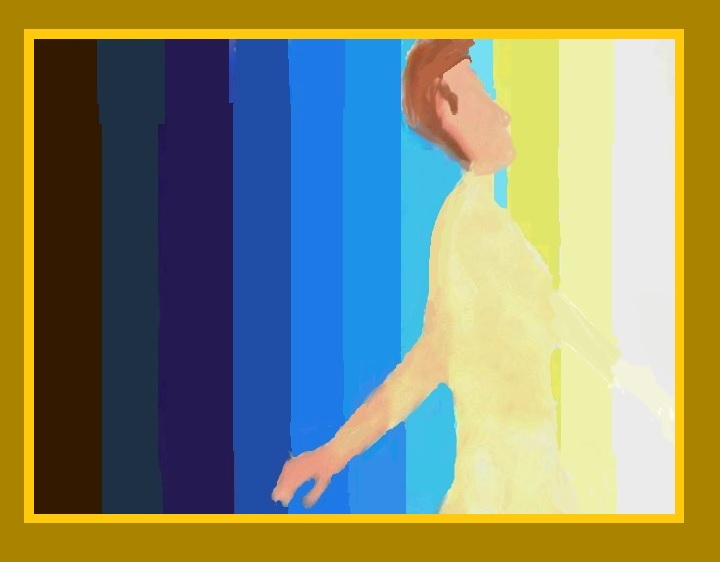

Every time I sit down to write, two things arrive before the words do: Fear and noise.
The fear whispers that I may not be good enough. The noise comes as 100 unsettled thoughts competing for attention. None of them feel complete, and none feel worthy of beginning with.
Even before I consciously decide (and find the time) to write them down, the thoughts begin forming sentences of their own. It is almost as if the writing has already started somewhere in my head. Perspectives appear one after another. Ideas stretch into possibilities, and for a moment it feels like everything wants to be said at once.
With all of that rush comes doubt:
- Will these thoughts connect with each other?
- Will there be a flow?
- Will any of this make sense beyond my own mind?
And perhaps the question that lingers the most: Will it be worth a reader’s time?
A similar pattern of chaos
Over time, I began to notice that most of my writing, and even many of my problems in life, follow a similar pattern of chaos. I learned to give that chaos space to settle. Often, while I’m absorbed in my daily routine, my mind quietly continues reflecting in the background.
In one of my earlier reflections, I tried to describe this pattern through three stages:
- Complications
- Contradictions
- Confusion
Life rarely gives us neat, straight answers. Most of the time, we only understand things after we’ve lived through them. What first appears as a complication slowly brings contradictions along with it; different thoughts, emotions and perspectives pull us in different directions at the same time. And when those contradictions start piling up, confusion becomes almost unavoidable. At first, I believed this observation itself was enough.
Introducing 3 more stages
Simply recognizing the pattern helped me sort through many of my thoughts. It felt like a small but meaningful step on my inner journey. And for a long time, I allowed this understanding to settle as my natural pattern—until one day, a reader extended the reflection further and introduced three more stages:
- Consciousness
- Clarity
- Clairvoyance
The idea stayed with me.
I paused to observe what might exist beyond confusion. While I’d begun to understand the nature of the problem, I hadn’t yet explored what the response to it could be.
Recognizing Complications, Contradictions and Confusion had helped me see the surface of many problems. But Consciousness, Clarity and Clairvoyance seemed to suggest a deeper way of navigating them.
So I tried something different. For the first time, I attempted to observe myself the way I might observe someone else. The same advice I might easily offer another person, I tried offering to myself.
Somewhere in the middle of that confusion, a subtle shift began to happen. Instead of being completely consumed by the noise of my own thoughts, I began to notice the noise.
Oh… this is what my mind has been doing!
That act of noticing felt like the beginning of consciousness: becoming aware of my reactions, my fears and the patterns within my thinking.
Reflection replaces reaction
Sometimes this awareness begins with something as simple as pausing and looking at a situation as if we were standing slightly outside of it. When we learn to observe our thoughts instead of reacting to them immediately, the storm inside the mind slowly begins to settle. Reflection begins to replace reaction.
The situation outside didn’t change very much. But something within me certainly did. I was no longer entirely lost inside the noise.
As consciousness slowly steadied my thoughts, it created space for clarity to emerge. Not as a sudden answer, but as a gradual understanding. When we observe our thoughts without rushing to react, the noise begins to untangle itself. What once felt overwhelming slowly reveals its threads.
Clarity isn’t the absence of complications. It’s the understanding of how those complications fit together, and how the knots can be gently sorted instead of being quietly carried forward while escaping notice.
And perhaps the final stage is something quieter than the word suggests.
The 6 stages apply to writing and life

Clairvoyance may not be about predicting the future or possessing extraordinary insight. Perhaps it’s simply the ability to recognize patterns earlier; in life, in people and within ourselves.
When we’ve walked through confusion enough times, we begin to notice the early signs of it. The same complications, the same contradictions that once overwhelmed us start becoming familiar. Experience sharpens awareness and awareness deepens understanding.
Seen this way, the journey through these six stages isn’t limited to writing. It mirrors many of the challenges we face in everyday life. Problems often begin as complications, grow into contradictions and eventually leave us sitting in confusion.
The journey through these six stages isn’t limited to writing. It mirrors many of the challenges we face in everyday life.
But if we can pause long enough to become conscious of what is happening within us, clarity slowly begins to form. And over time, even a quiet form of wisdom—something that feels close to clairvoyance—forms.
Perhaps this is all the mind is asking from us: a little patience and the willingness to pause.
If these six stages appear in your own life—in your thoughts, in your struggles or even in your writing—they aren’t signs that something is wrong. They may simply be the mind’s way of moving toward understanding.
And sometimes, all it takes is the willingness to pause just long enough to notice that the journey itself is already shaping us.
«RELATED READ» COMPLICATIONS, CONTRADICTIONS, CONFUSIONS: 3 words that became markers on a mindful path»
image: romanticfatman